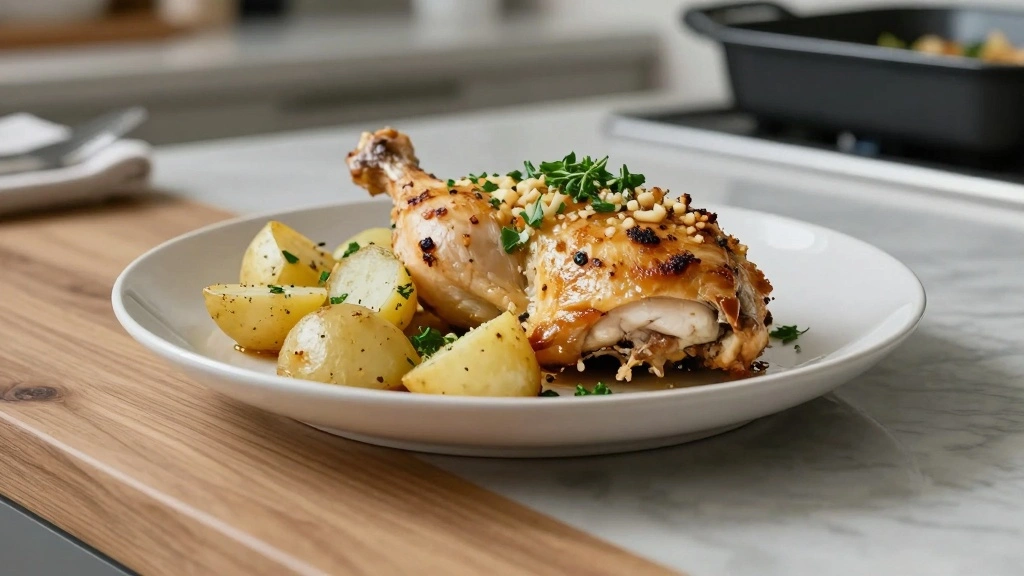
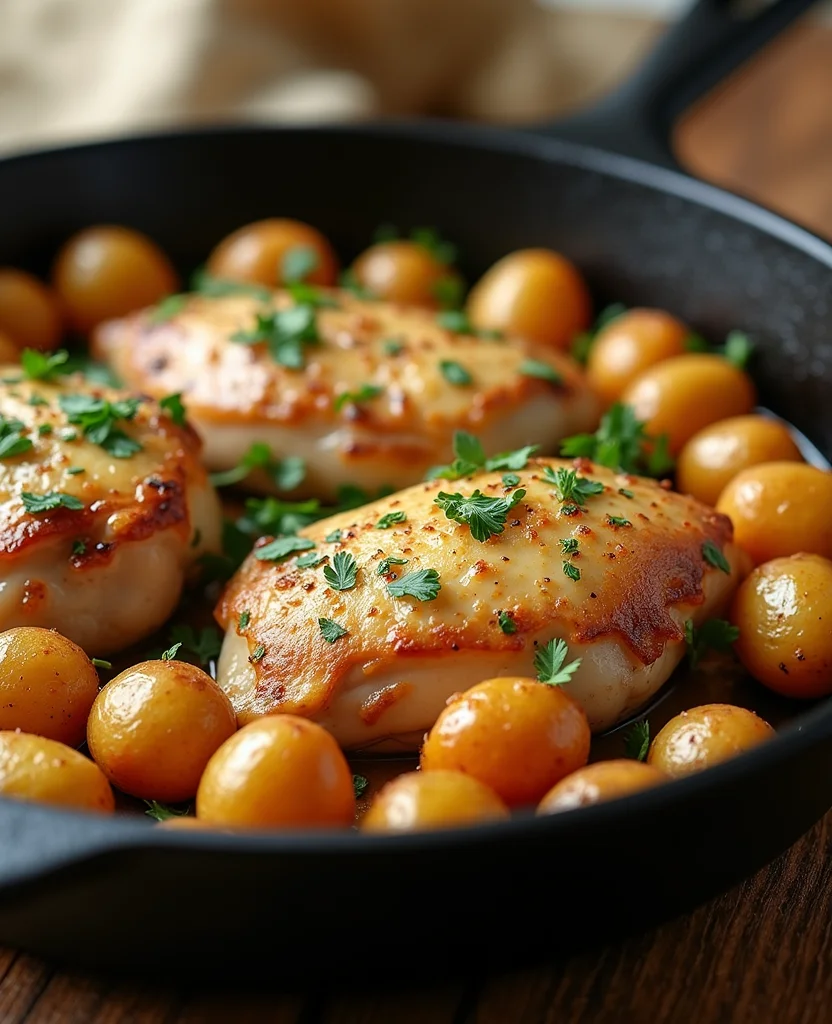
Garlic Parmesan Chicken and Potatoes is a comforting, one-pan dish that brings together the robust flavors of garlic and the creamy richness of parmesan.
The aromatic blend of herbs with tender chicken and crispy potatoes offers a delightful culinary experience.
This recipe is perfect for those cozy nights in when you crave something hearty yet easy to prepare.
The simplicity of a one-pan meal makes it an ideal choice for busy weeknights or a relaxed weekend gathering.
The combination of textures and savory flavors will make this dish a family favorite.
Prepare to impress your guests with a dish that requires minimal effort but delivers maximum taste.
The History and Cultural Significance
• Garlic Parmesan Chicken traces its origins to Italy, where it was originally created by resourceful home cooks using simple, fresh ingredients.
• The dish evolved over decades as the incorporation of cheese and herbs became more prevalent, eventually becoming the beloved version we know today.
• In Italian culture, this dish traditionally appears at family gatherings, symbolizing warmth and togetherness.
• While many variations exist across different regions, the authentic version maintains the use of fresh garlic and parmesan cheese that sets it apart from imitations.


Recipe Overview
Nutritional Information (per serving)



Essential Equipment Guide
Cast Iron Skillet: A cast iron skillet is essential for achieving the perfect sear on the chicken and even cooking throughout. Alternatives include a heavy-bottomed stainless steel pan, but cast iron retains heat better for consistent results. Look for a skillet with a well-seasoned surface to prevent sticking.
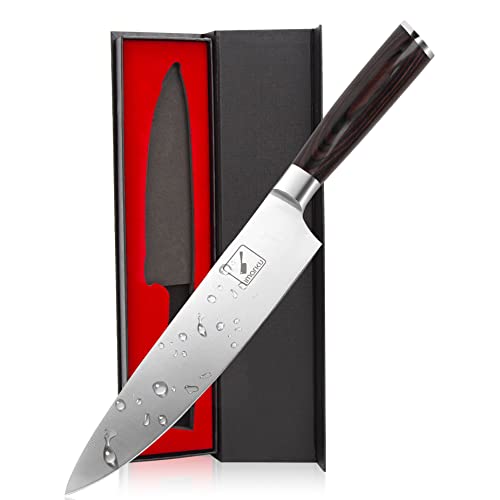
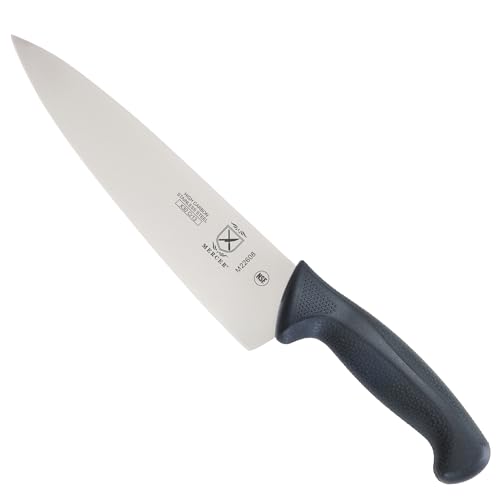
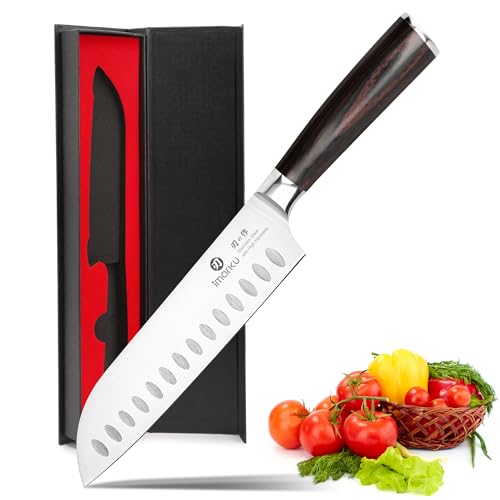
Sharp Chef’s Knife: A sharp chef’s knife is crucial for efficiently chopping garlic and slicing potatoes. While a paring knife can work for smaller tasks, a chef’s knife offers more control and precision. Ensure the knife is well-balanced and comfortable to hold.
Oven Thermometer: An oven thermometer ensures accurate cooking temperatures, which is vital for achieving perfectly cooked chicken. While many ovens have built-in thermometers, they can be inaccurate. Choose an oven thermometer that is easy to read and can clip onto an oven rack.


Ingredients
For the Chicken
|
|
| Amount | Ingredient | Notes |
|---|---|---|
| 4 pieces | chicken thighs | bone-in, skin-on for flavor and moisture |
| 1 tablespoon | olive oil | for searing |
For the Potatoes
| Amount | Ingredient | Notes |
|---|---|---|
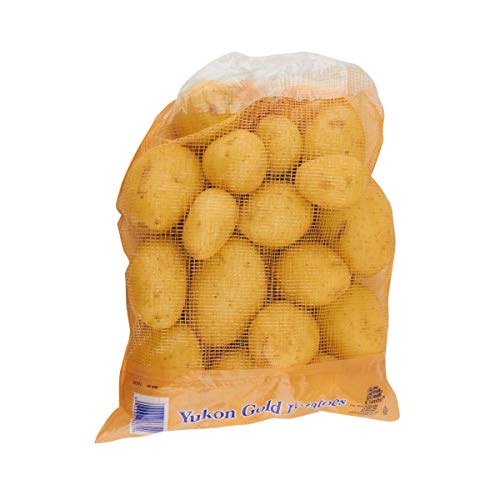
| 2 large | russet potatoes | cut into wedges for even cooking |
| 1 tablespoon | olive oil | helps in crisping |
For the Seasonings
| Amount | Ingredient | Notes |
|---|---|---|
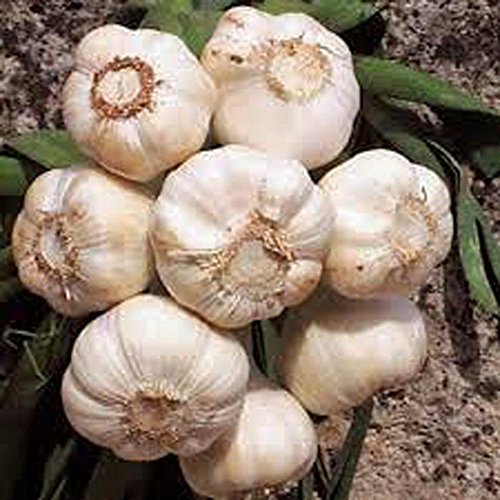
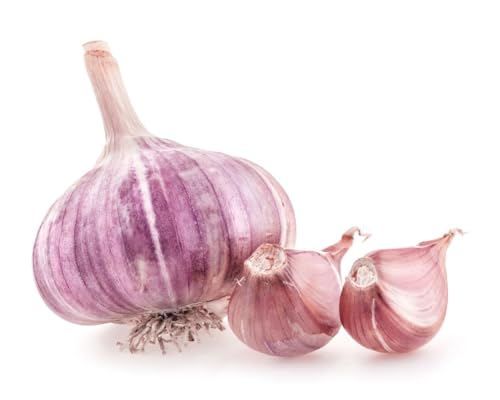
| 4 cloves | garlic | minced, for aromatic flavor |
| 1 teaspoon | salt | enhances overall taste |
| 1 teaspoon | black pepper | adds a hint of spice |
| 1 tablespoon | Italian seasoning | for herbal notes |
For the Topping
| Amount | Ingredient | Notes |
|---|---|---|
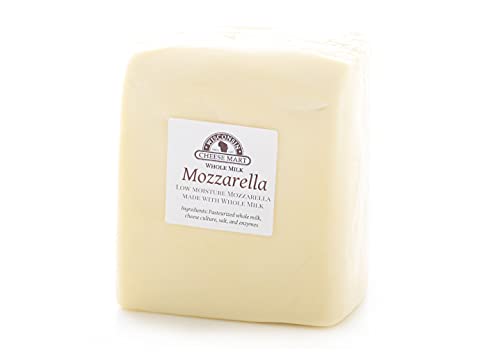
| 1/2 cup | parmesan cheese | grated, for richness |
| 2 tablespoons | parsley | chopped, for garnish |


Preparation Methods
Searing: Searing the chicken is crucial for locking in juices and creating a flavorful crust. Heat the skillet until it’s smoking hot before adding the chicken. This technique ensures that the chicken skin crisps up while keeping the inside tender. Practice maintaining a consistent high heat without burning the skin.
Even Cutting: Ensuring that the potatoes are cut evenly is important for consistent cooking. Use a sharp knife and aim for uniform wedges to prevent some pieces from overcooking while others remain underdone. Aim for approximately 1/2-inch thickness.
Layering Flavors: Adding garlic and parmesan at different stages builds complex flavors. Start by cooking garlic with chicken to infuse aroma, then finish with parmesan for a creamy finish. Avoid adding the cheese too early to prevent burning.


Step 1: Prepare Ingredients
Wash the potatoes thoroughly under running water.
Pat dry with a kitchen towel and cut them into wedges.
Ensure all the wedges are of similar size for even cooking.
Set aside in a bowl.


Step 2: Season the Chicken
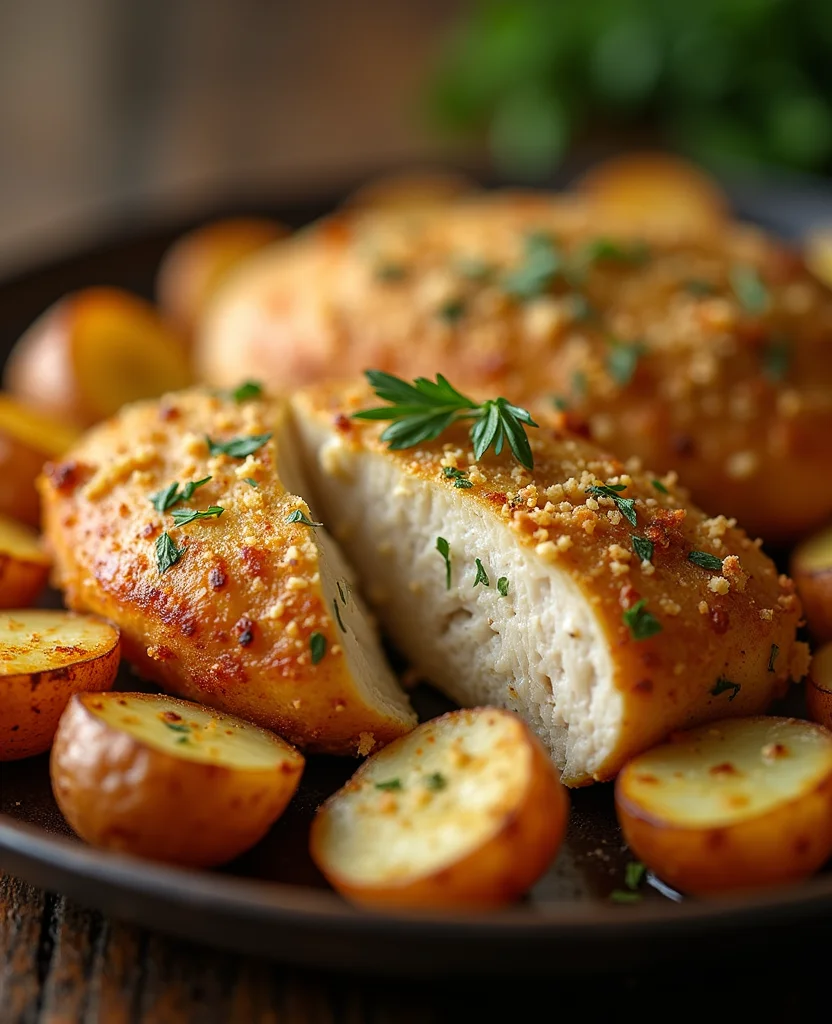
Pat the chicken thighs dry with paper towels to remove excess moisture.
Rub them with olive oil and season generously with salt, pepper, and Italian seasoning.
Ensure the seasoning is evenly distributed on both sides.
Let them rest for a few minutes to absorb the flavors.


Step 3: Preheat the Skillet
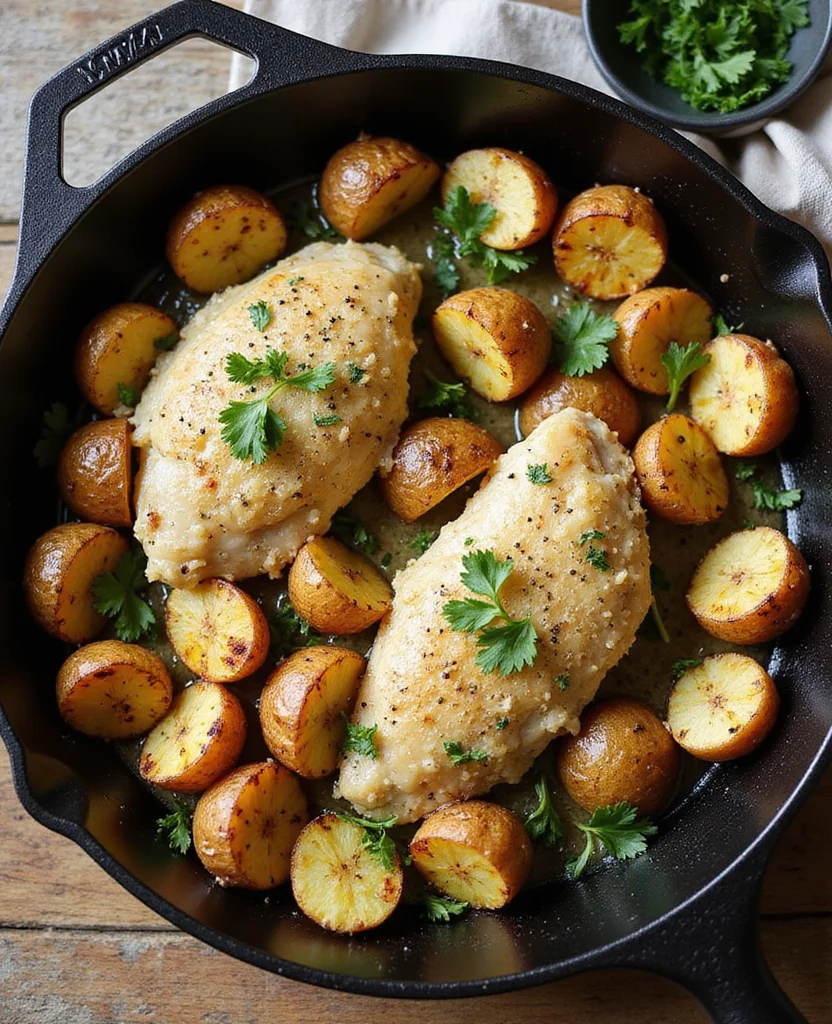
Place a cast iron skillet over medium-high heat on the stove.
Add olive oil and allow it to heat until it shimmers.
Ensure the skillet is evenly coated with oil.
This step is critical for achieving a good sear on the chicken.
Step 4: Sear the Chicken
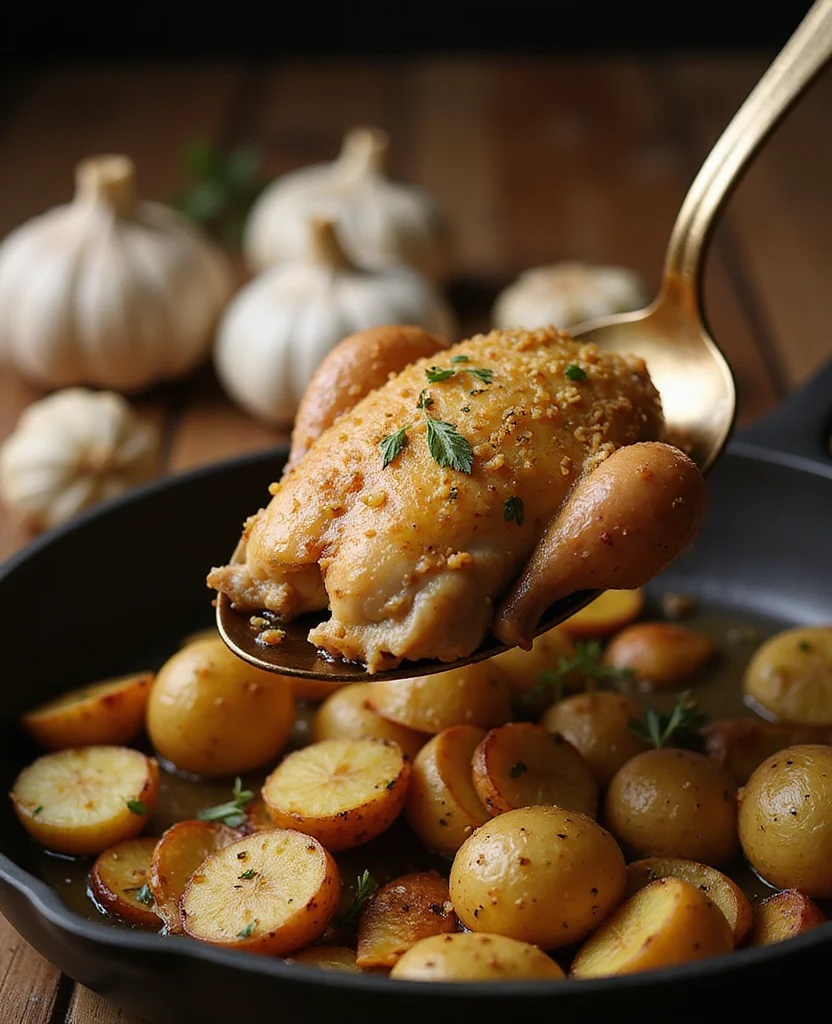
Add the chicken thighs to the hot skillet, skin side down.
Cook without moving them for about 5-7 minutes to develop a golden-brown crust.
Flip the chicken and cook the other side for another 5 minutes.
Remove the chicken and set aside on a plate.
Step 5: Cook the Potatoes
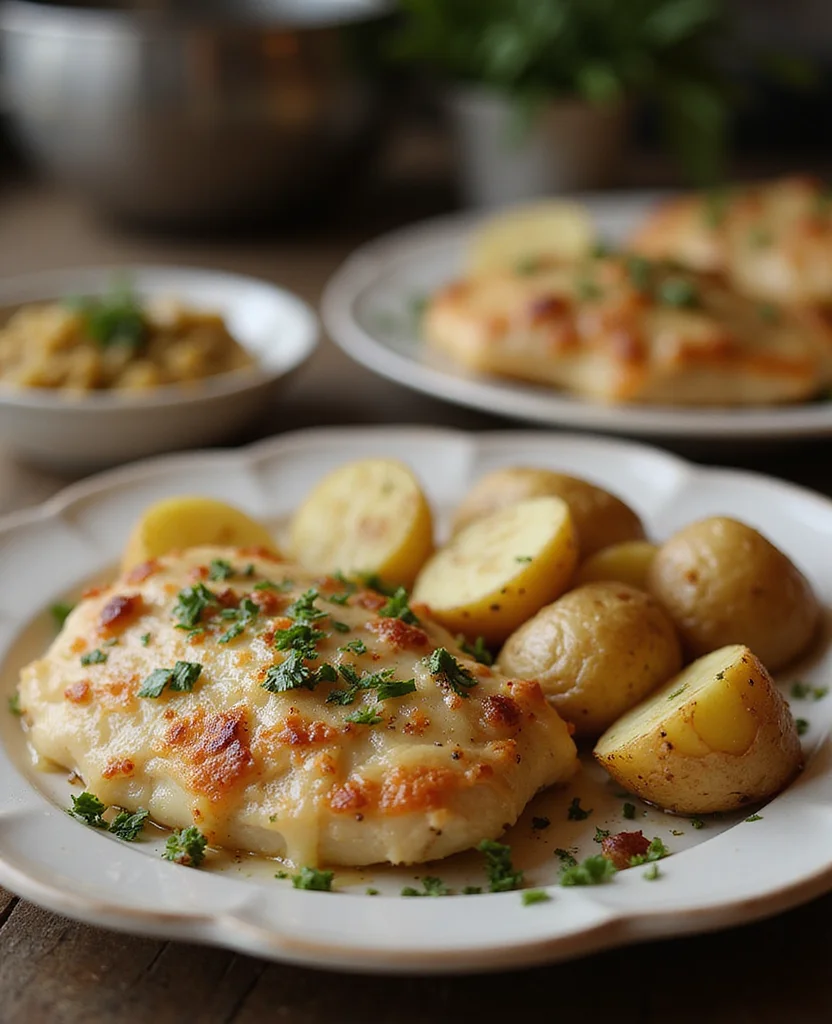
In the same skillet, add the potato wedges and season with salt and pepper.
Stir occasionally to ensure even cooking and browning.
Cook for about 10 minutes or until potatoes are fork-tender.
Ensure they have a crispy exterior before proceeding.
Step 6: Add Garlic and Chicken
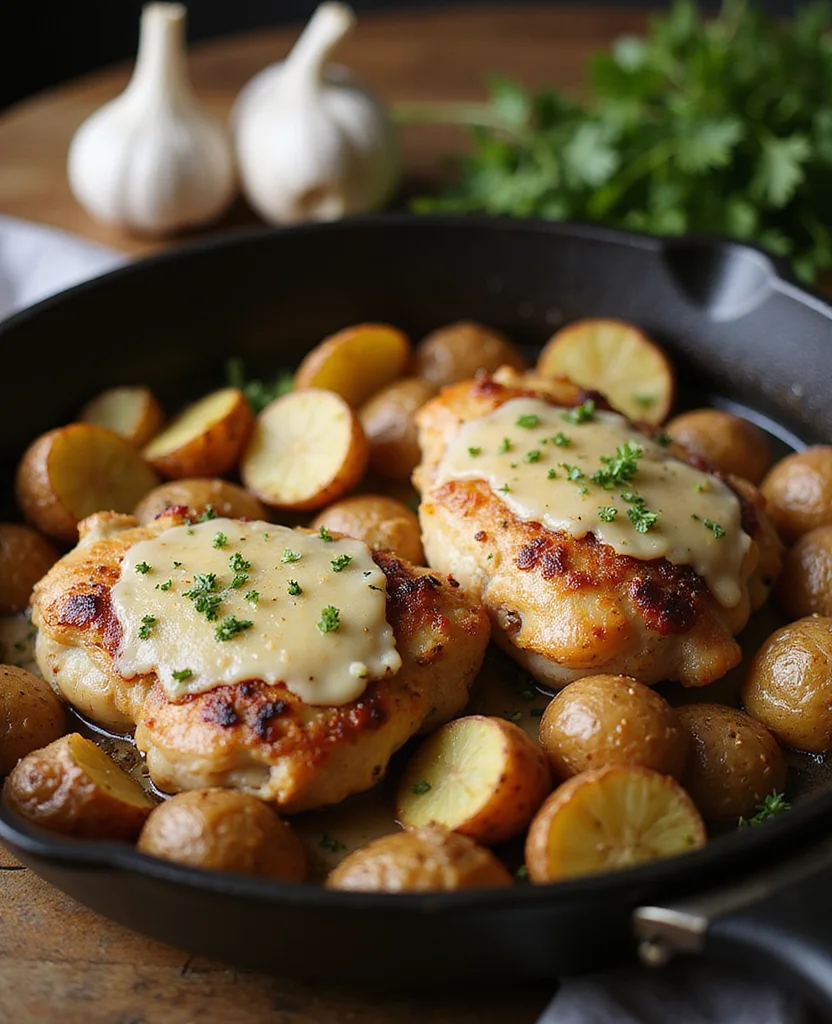
Lower the heat and add minced garlic to the potatoes.
Stir quickly to avoid burning the garlic.
Return the seared chicken thighs to the skillet, nestling them among the potatoes.
Ensure the chicken is skin-side up.
Step 7: Bake in the Oven
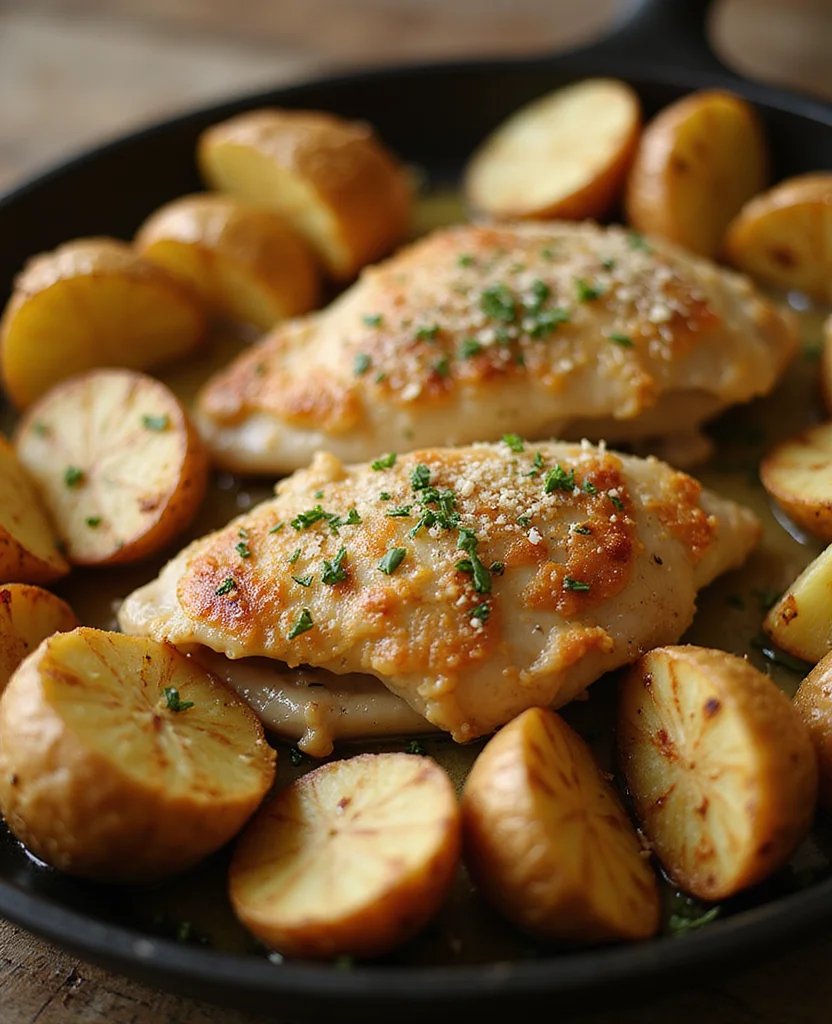
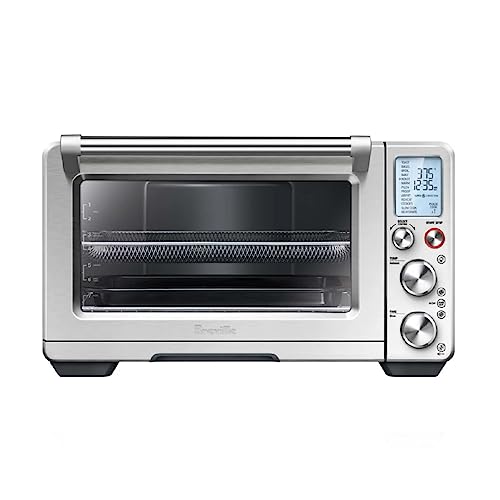
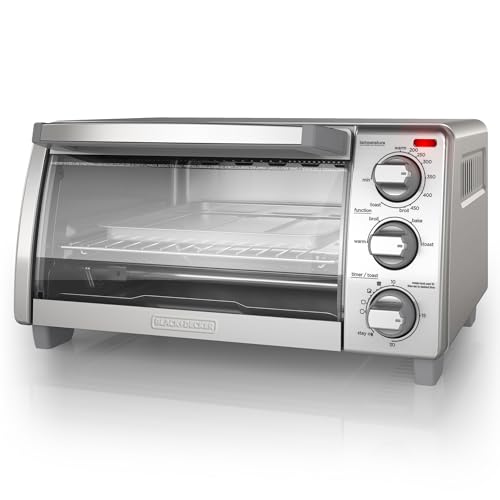
Preheat your oven to 400°F (200°C).
Transfer the skillet carefully to the oven.
Bake for 20 minutes or until the chicken is cooked through.
Use a meat thermometer to check if the internal temperature reaches 165°F (75°C).




Step 8: Add Parmesan and Serve
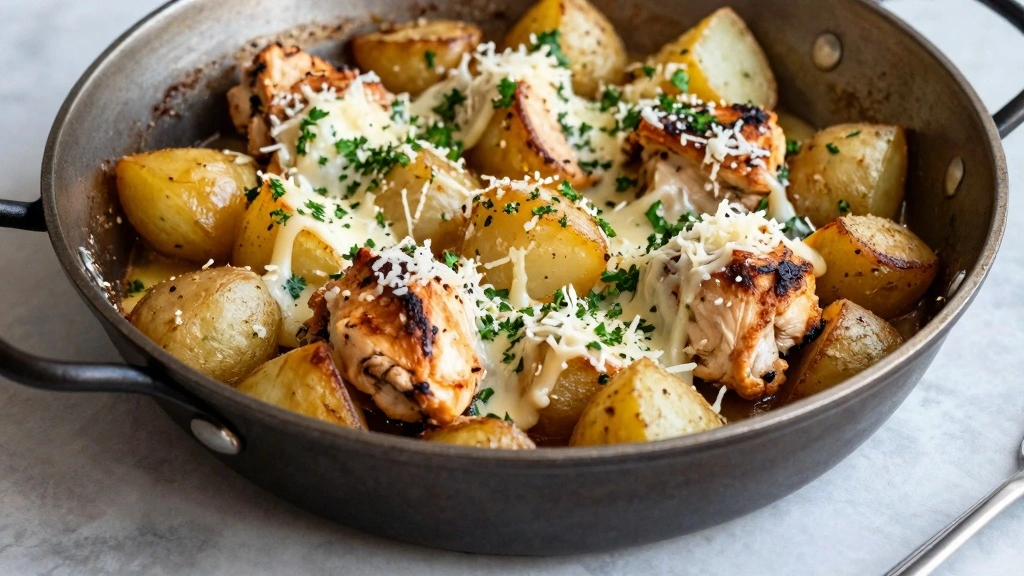
Remove the skillet from the oven once the chicken is done.
Sprinkle grated parmesan cheese evenly over the chicken and potatoes.
Garnish with freshly chopped parsley before serving.
Serve hot directly from the skillet for rustic presentation.


Critical Timing and Temperature Guide
Chicken Searing: Maintain medium-high heat for 5-7 minutes per side until golden brown. Avoid overcrowding the pan as it lowers the heat and prevents proper searing.
Potato Cooking: Cook for about 10 minutes until fork-tender. Ensure the skillet remains at a consistent medium heat to achieve crispy edges without burning.
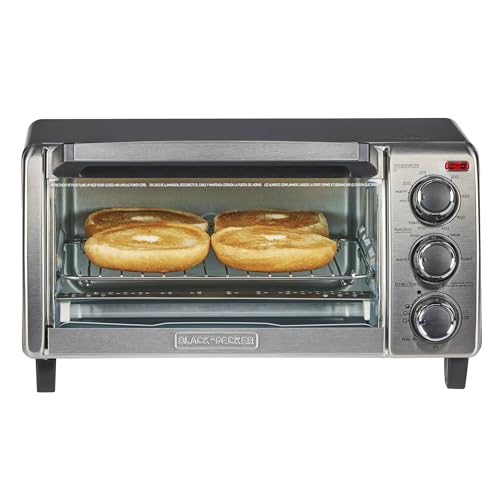
Baking: Bake at 400°F (200°C) for 20 minutes. Check for an internal temperature of 165°F (75°C) for doneness. Avoid opening the oven frequently as it drops the temperature.


Pro Tips for Garlic Parmesan Chicken
• Ingredient Selection: Choose bone-in, skin-on chicken thighs for the best flavor and moisture retention. Fresh garlic and high-quality parmesan significantly enhance the dish.
• Preparation Secret: Let the chicken rest with the seasoning for at least 10 minutes before cooking to absorb flavors better.
• Temperature Management: Ensure the skillet is properly preheated to avoid sticking and achieve a good sear.
• Texture Enhancement: For extra crispy skin, pat the chicken dry thoroughly before seasoning.
• Flavor Layering: Add garlic just before returning the chicken to the skillet to prevent it from burning and to infuse the potatoes with its flavor.
• Make-Ahead Strategies: Season the chicken up to a day ahead and store in the refrigerator to deepen the flavor.
• Restaurant-Quality Finishing Touches: Finish with a squeeze of lemon juice before serving for a brightening touch.
• Equipment Optimization: Use a lid or foil during the initial baking to prevent the dish from drying out, and remove it for the final 5 minutes for browning.


Troubleshooting Common Issues
• Texture Too Dense: This can be caused by overcooking the chicken. Use a meat thermometer to ensure it reaches 165°F (75°C) and no more.
• Flavors Unbalanced: Too much garlic can overpower the dish. Taste the potatoes before returning the chicken to adjust seasoning as necessary.
• Chicken Not Crispy: Ensure the skin is dry and the skillet is hot before searing. Avoid moving the chicken too soon.
• Potatoes Undercooked: Cut the potatoes into uniform pieces for even cooking. Cook until fork-tender before transferring to the oven.
• Burnt Garlic: Add garlic after lowering the heat to prevent it from burning. Stir quickly after adding.
• Cheese Not Melting: Add parmesan when the skillet is hot from the oven to ensure it melts properly. If needed, return to the oven for a couple of minutes to finish melting.
Variations and Regional Differences
• Italian Variation: In Italy, the dish often incorporates fresh rosemary and lemon zest for additional aromatic flavors.
• American Twist: Some American versions add a cream-based sauce for an extra rich and indulgent dish.
• Spicy Variation: Add red pepper flakes for a spicy kick, popular in Southern regions of the United States.
• Vegetarian Option: Replace chicken with hearty vegetables like cauliflower or eggplant, seasoned similarly for a vegetarian twist.




Food Science Behind the Recipe
• Maillard Reaction: The searing process initiates the Maillard reaction, enhancing flavor and color through complex chemical changes between amino acids and sugars.
• Heat Conduction: Cast iron skillets excel in even heat distribution, crucial for consistent cooking of both chicken and potatoes.
• Emulsification: The combination of oil and parmesan creates an emulsified sauce that coats the chicken and potatoes, enhancing moisture and flavor.



Frequently Asked Questions
What's the most common mistake people make when preparing Garlic Parmesan Chicken and Potatoes? Overcrowding the skillet, which prevents proper searing and results in soggy chicken skin.
Can I use boneless chicken breasts instead? Yes, but reduce the cooking time to avoid drying out the meat, as breasts cook faster than thighs.
How can I make this dish ahead of time? Season the chicken and cut the potatoes up to a day in advance, storing them separately in the refrigerator.
What sides pair well with this dish? A fresh green salad or steamed vegetables complement the rich flavors of the chicken and potatoes.
How do I prevent the garlic from burning? Add it towards the end of cooking the potatoes and ensure the heat is reduced.
Is there a substitute for parmesan cheese? Pecorino Romano or Grana Padano can be used as alternatives, offering a similar rich flavor.
Can this dish be cooked without an oven? Yes, cover the skillet with a lid and cook on the stovetop over low heat until the chicken is done.
Serving and Presentation Guide
• Traditional Presentation: Serve directly from the cast iron skillet to maintain rustic charm and keep the dish warm.
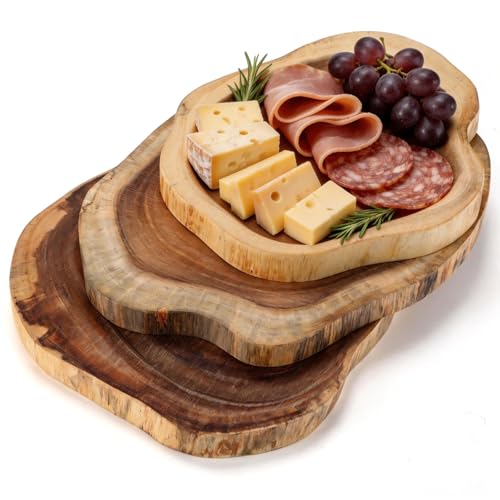
• Family Style: Transfer to a large serving platter, arranging chicken around the potatoes, and garnish with fresh herbs.
• Individual Plates: Serve each plate with a chicken thigh atop a bed of potatoes, drizzle with pan juices, and sprinkle with parmesan and parsley.
• Garnishing: Add a wedge of lemon on the side for guests to squeeze over their serving for a fresh finish.


Conclusion
Garlic Parmesan Chicken and Potatoes is a delightful one-pan meal that combines ease of preparation with a burst of flavors.
Whether you're cooking for family or friends, this dish is sure to impress with its hearty and savory profile.
With a few simple ingredients and techniques, you can create a restaurant-quality meal in the comfort of your home.
I encourage you to try this recipe and enjoy the satisfying experience of a well-prepared, flavorful dish.
About The Author