The best thing to serve with chili depends on whether you need speed or something that feels like an occasion.
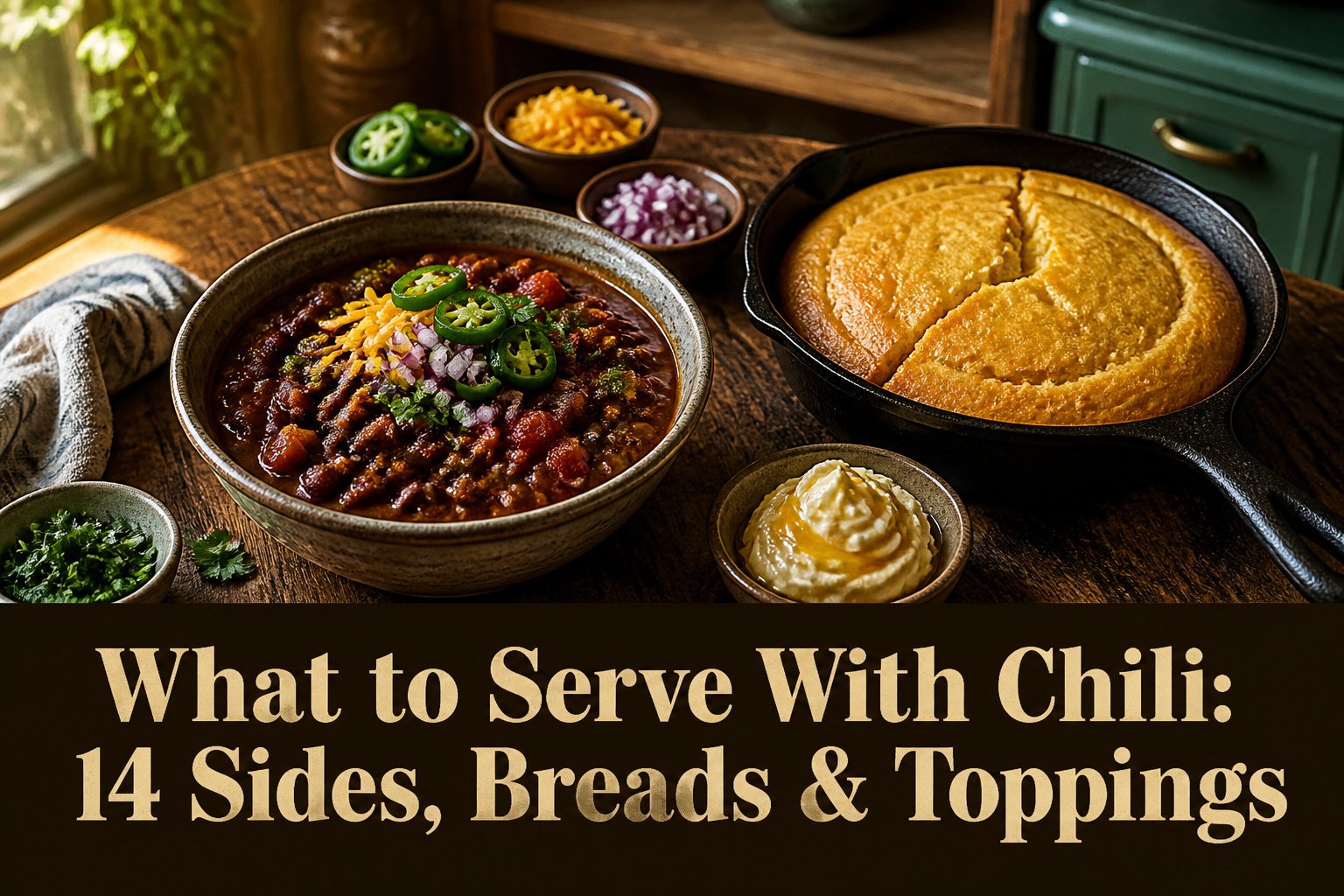
Cornbread lands on the table most often in my house because that slight sweetness against the spice actually works, and a 25-minute bake at 400°F in an 8-inch pan is the timing that gets the center set without drying the edges.
The real split is practical: a Jiffy mix stirs together while the chili simmers, but the cast-iron skillet version with whipped honey butter is what I pull out when company’s coming.
Cornbread
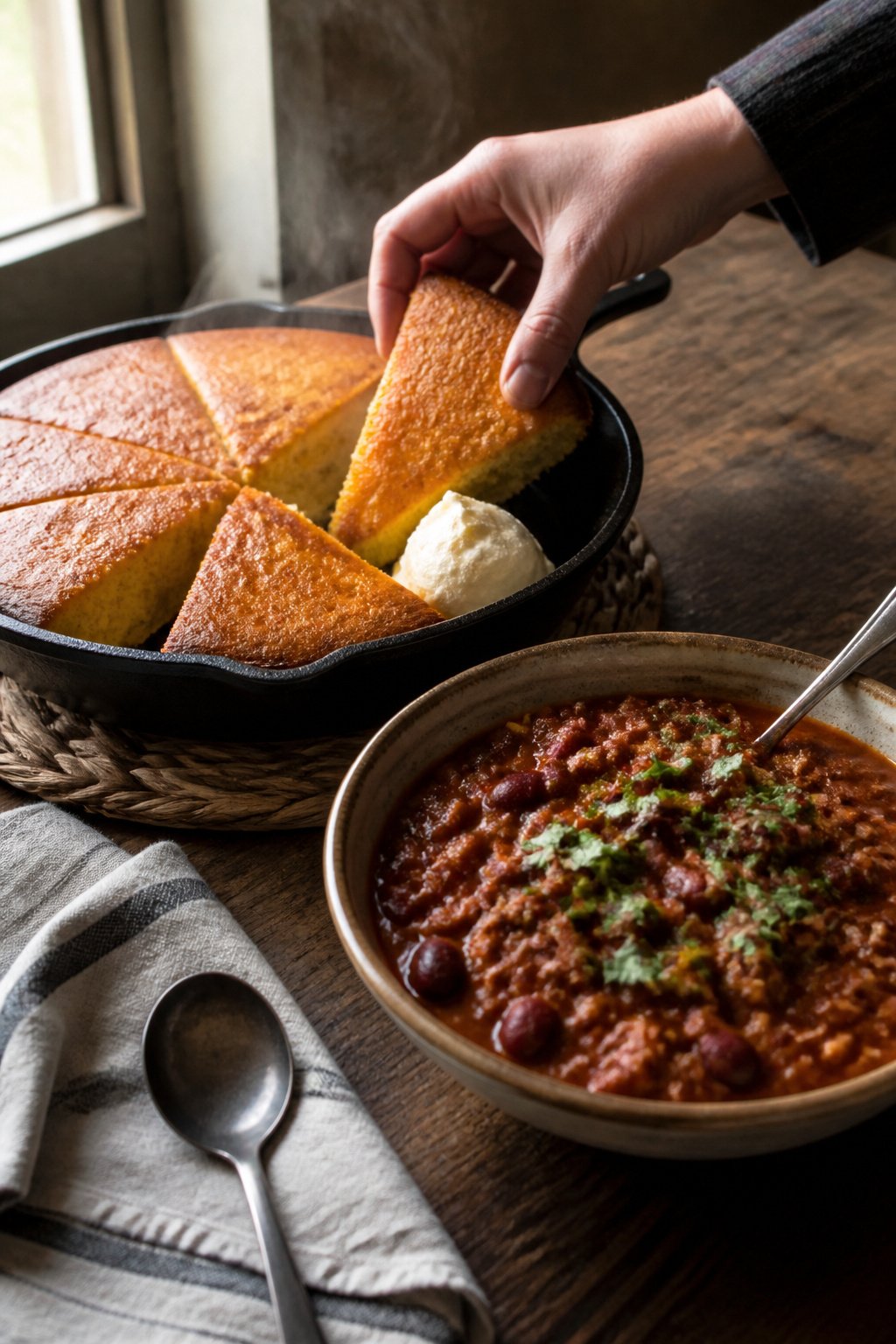
Cornbread lands on the table with chili more often than anything else in my house, and the reason is simple: that slight sweetness against the spice, the butter soaking into the crumb, and the way a torn-off corner drags through the bowl until the last of the sauce is gone.
A 25-minute bake at 400°F is what actually works for a standard 8-inch square pan; anything less and the center stays damp, anything more and the edges go from golden to dry.
From-scratch cornbread with buttermilk and honey is what weekend afternoons are for, but weeknights run on a different clock. I keep a Jiffy box in the pantry for exactly this reason.
It stirs together in one bowl, bakes while the chili simmers, and the result is tender enough that nobody at the table asks whether it came from a bag of mix.
The cast-iron skillet version, with its crisp edges and whipped honey butter, is the one I pull out when company’s coming.
Two ways to play this: the box mix wins for speed and cleanup, and the skillet version wins when you want the meal to feel like an occasion.
Either way, the cornbread’s real job is the same: park it next to the chili and let it do what it was made for.
Biscuits
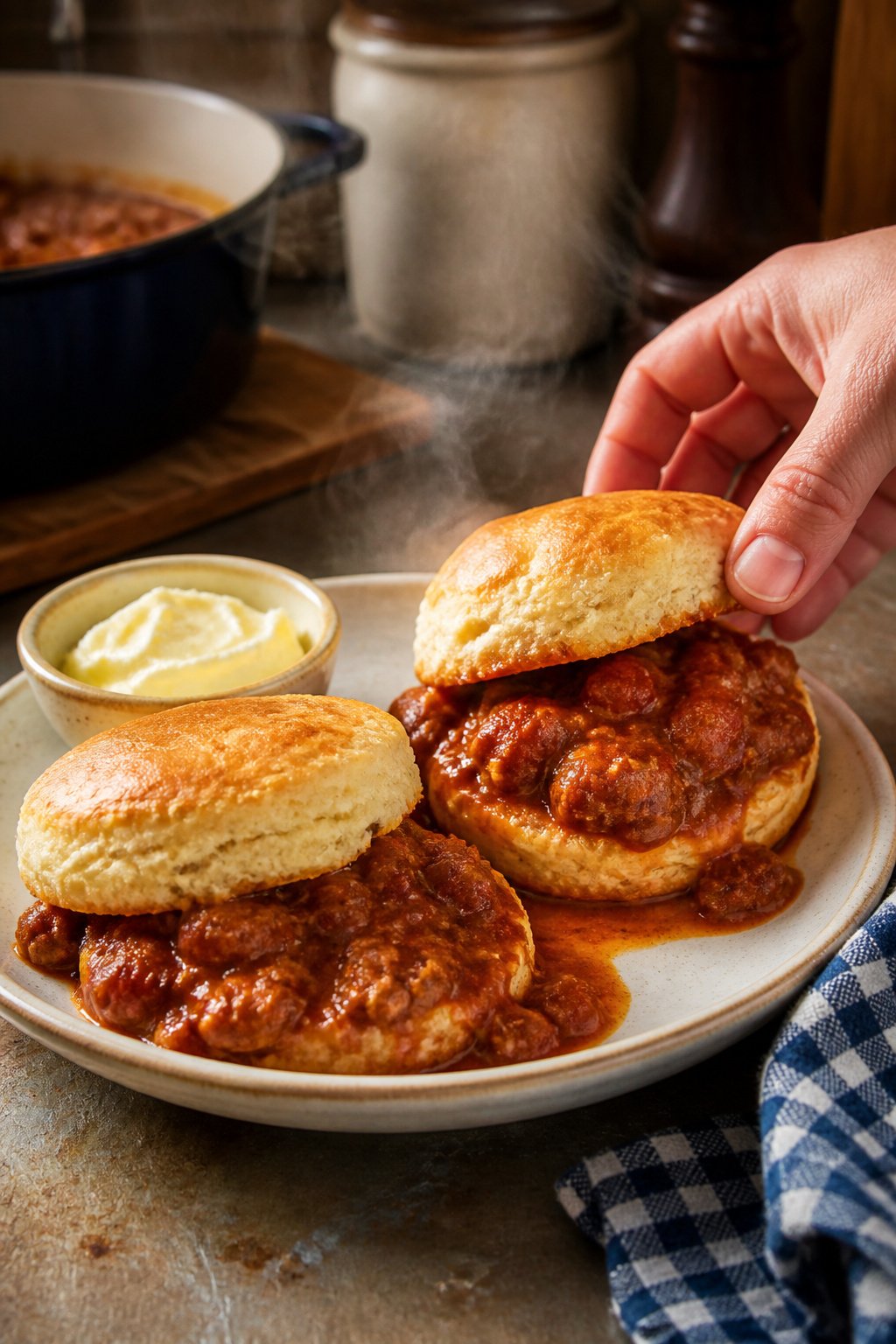
A warm biscuit against chili does two jobs at once: it soaks up the last of the sauce and gives your jaw something to work through between spoonfuls.
The split-and-ladle method turns the biscuit into the bowl itself, letting the bottom half go soft with meat and beans while the top stays flaky enough to tear off in pieces.
Butter on the side keeps the texture intact longer, which matters if you’re the type who lets a bowl sit while you settle a dispute over whose turn it is to choose the show.
For weeknights, refrigerated tube biscuits are the practical default. They bake in 12–14 minutes, cost less than a dollar a tube at most grocery stores, and require no cleanup beyond the sheet pan.
Most brands add enough sugar that the biscuit reads closer to a dinner roll against savory chili. If that clashes with your batch, split them and toast the halves face-down in a skillet before ladling.
A homemade shortcut that keeps the total time under 30 minutes uses self-rising flour, cold butter grated on a box grater, and buttermilk. The grater trick skips the pastry cutter and the 10 minutes of hand-chilling that usually slows biscuit recipes down.
They emerge less uniform than tube biscuits, with craggy edges that catch chili in pockets, and the salt level stays in your control.
Baked Potatoes
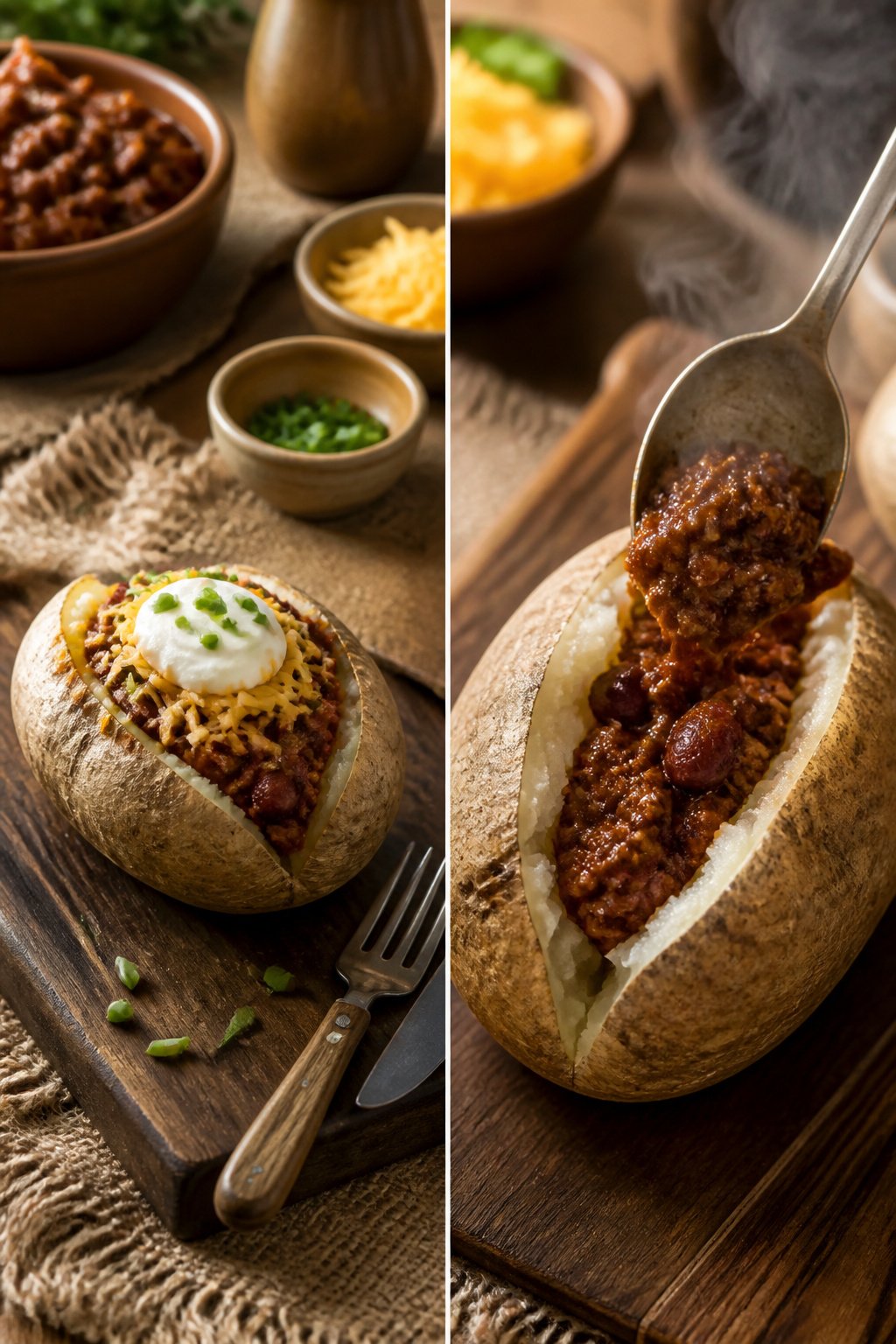
A fluffy baked potato split open and piled with chili, shredded cheese, and a cold dollop of sour cream is dinner that feels like an event without the work.
The temperature and timing are straightforward: 425°F for 45 to 60 minutes depending on size, until the skin crackles and a fork slides through the center without resistance.
The flesh should steam and separate into those light, mealy strands that catch every bit of topping.
When the oven is already packed with cornbread or a sheet-pan situation, the microwave gets you most of the way there.
I give the potato five to six minutes on high, then transfer it to the hot oven for ten minutes to firm up the skin. The texture suffers slightly, but not enough to matter once the chili hits.
Russets work best here. Their thick skin holds the load and the starchy interior stays distinct instead of turning gluey under the weight of cheese and sour cream.
Rice
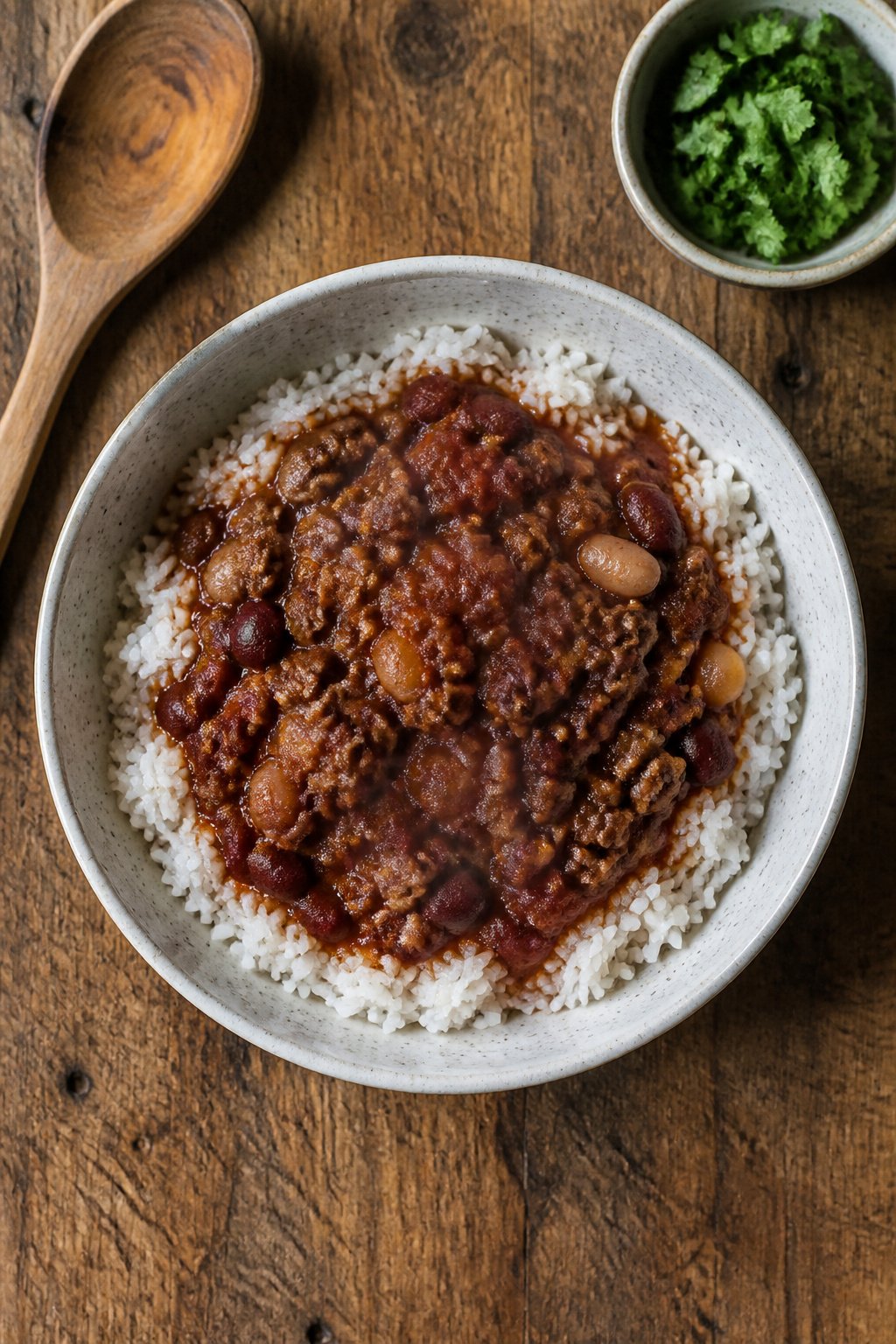
White rice does not get enough credit as a chili foundation rather than just a side.
A bowl with a scoop of chili poured over the top lets the grains absorb the broth and turn one batch into dinner for more people than chili eaten straight.
Brown rice works the same way, though it takes longer to soften and adds a nuttier chew that some prefer with meat-heavy recipes.
The rice cooker makes this nearly hands-off. I set mine in the morning or right after work, and it clicks to warm while the chili finishes on the stove.
No pot to watch, no timing to juggle. Either grain stretches the meal cheaply, and the leftovers hold better than most sides.
Coleslaw
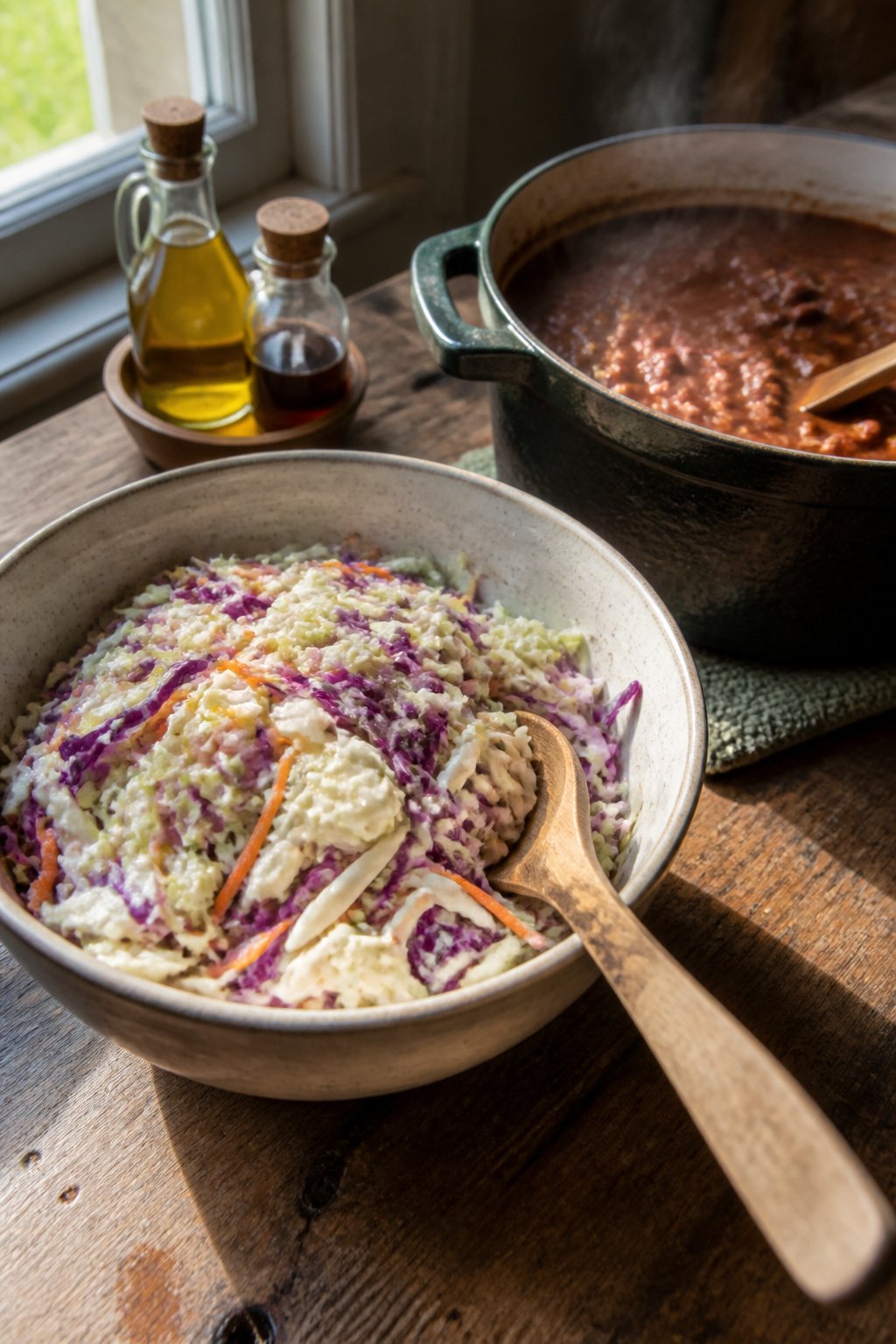
Creamy coleslaw earns its place at the chili table through straightforward contrast: the cool, crisp cabbage quiets the heat while the dressing adds a fatty richness that smooths out aggressive spice.
The crunch matters too, a textural break from the spoon-soft beans and meat.
The shortcut is the one that actually gets used. A 14-ounce bag of pre-shredded coleslaw mix skips the knife work entirely, and the dressing comes together in under a minute.
Two parts mayonnaise to one part vinegar is the ratio that works, thinned with a spoonful of the bag’s liquid if it needs loosening.
Green cabbage, purple cabbage, or a mix of both all do the job; the color is preference, not function.
Slaws are my favorite simple side to pair with any and all types of chili. The freshness, crunchy texture, and tangy bite are an ideal balance to hearty chili, plus slaws are a breeze to pull together. To cut down on prep time I often start with a bag of pre-shredded veggies.
This is a side that assembles while the chili simmers, uses ingredients already in most refrigerators, and improves after ten minutes of sitting.
Make it first, let it wilt slightly, and the cabbage becomes less aggressive, more willing to share the plate.
Sweet Potatoes
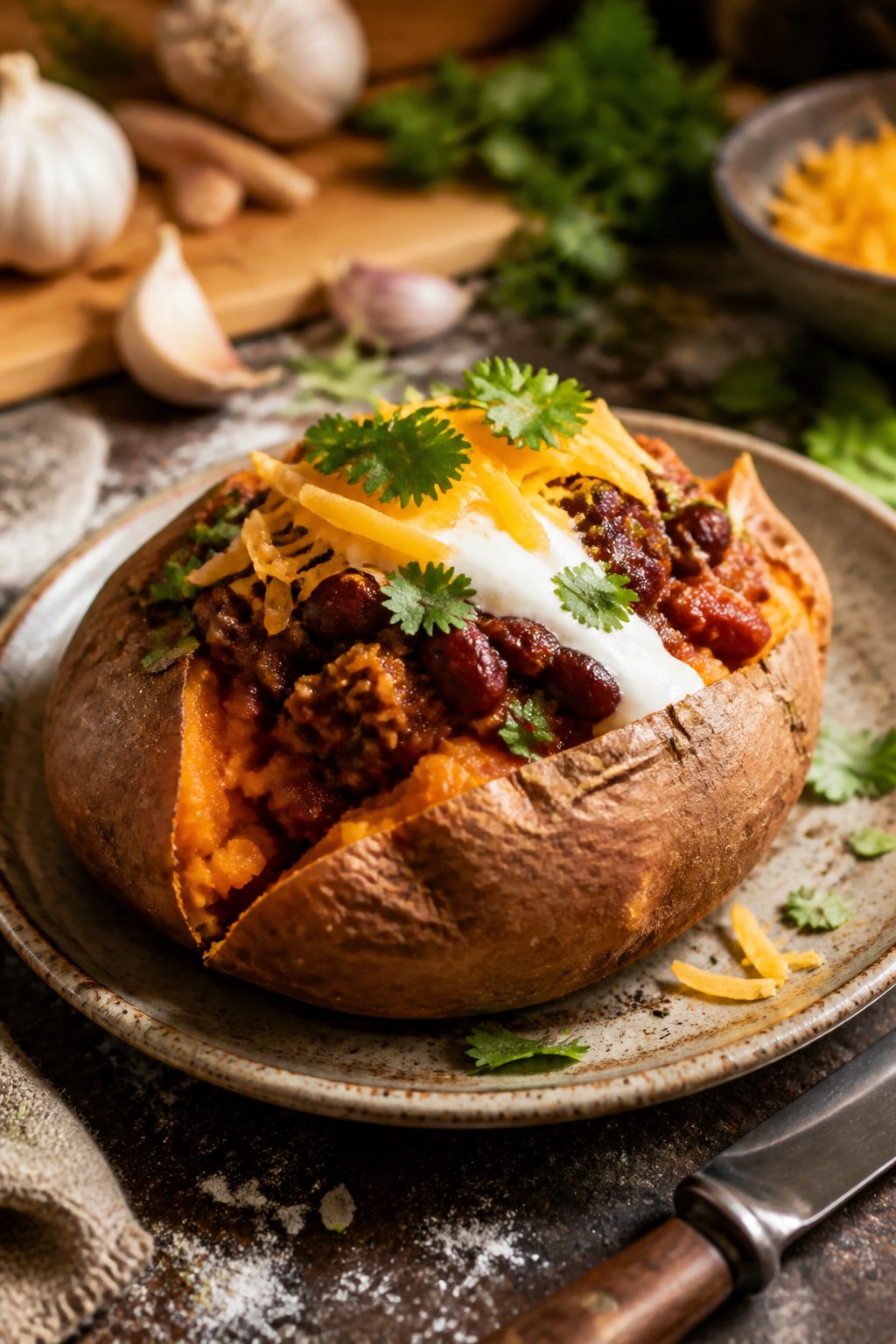
A baked sweet potato holds up to chili better than a russet.
The flesh is denser, so it does not turn to mush under a ladle of meat and beans, and the natural sweetness cuts through the smoke and heat in a way white potatoes never manage.
Roast them at 425°F if you want them fast. That temperature gives you a tender interior and a skin that actually crisps, not the leathery finish you get from a lower, slower bake.
Split one open, fluff the flesh with a fork, and spoon the chili right inside. Cheese and sour cream on top complete the usual loaded-baked-potato format, but the base flavor is more interesting.
Cubes work too, though that is a different dish entirely. Twenty minutes in an air fryer yields caramelized edges that contrast with the chili’s savoriness.
Either way, the sweet potato does something russets cannot: it keeps the meal from feeling heavy even when you have gone heavy on the toppings.
Nachos
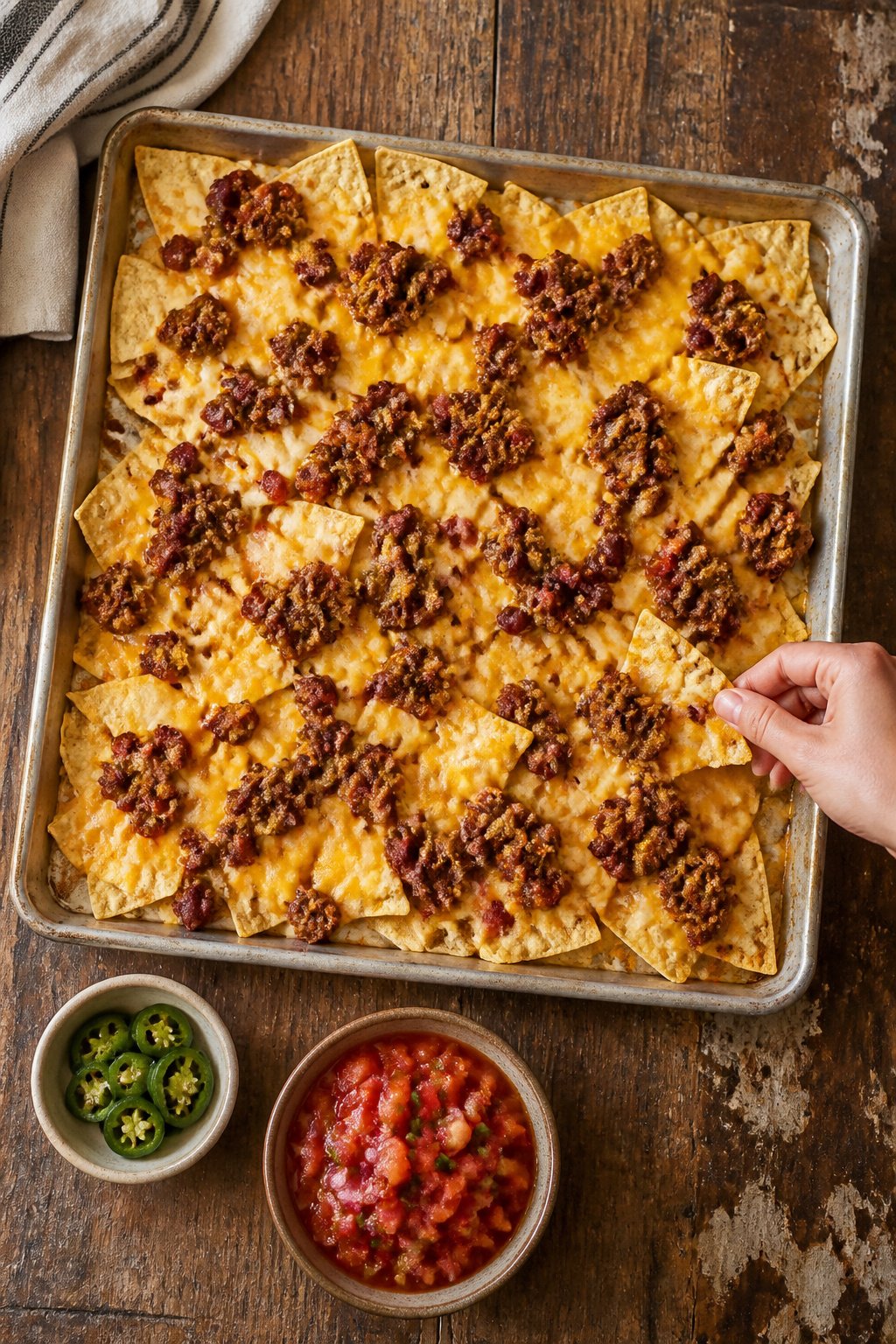
Nachos work as a delivery system for chili in almost any form, whether it’s meatless, bean-less, or a green chili verde. The chips give you something to scoop with, and the cheese binds the whole thing together once it melts.
For that melt, the oven beats the microwave every time.
Microwaved cheese turns rubbery in spots and scalding in others, while a hot oven gives you an even, bubbling layer that stays workable for the few minutes you need to eat it.
The single layer rule matters more than the amount of cheese. Spread chips in one even layer with no overlap, or the buried chips stay cold and the top ones burn.
Every chip needs direct heat and direct contact with cheese. Pile chili on after the cheese melts, not before, or the weight soaks the chips before they crisp.
Quesadillas
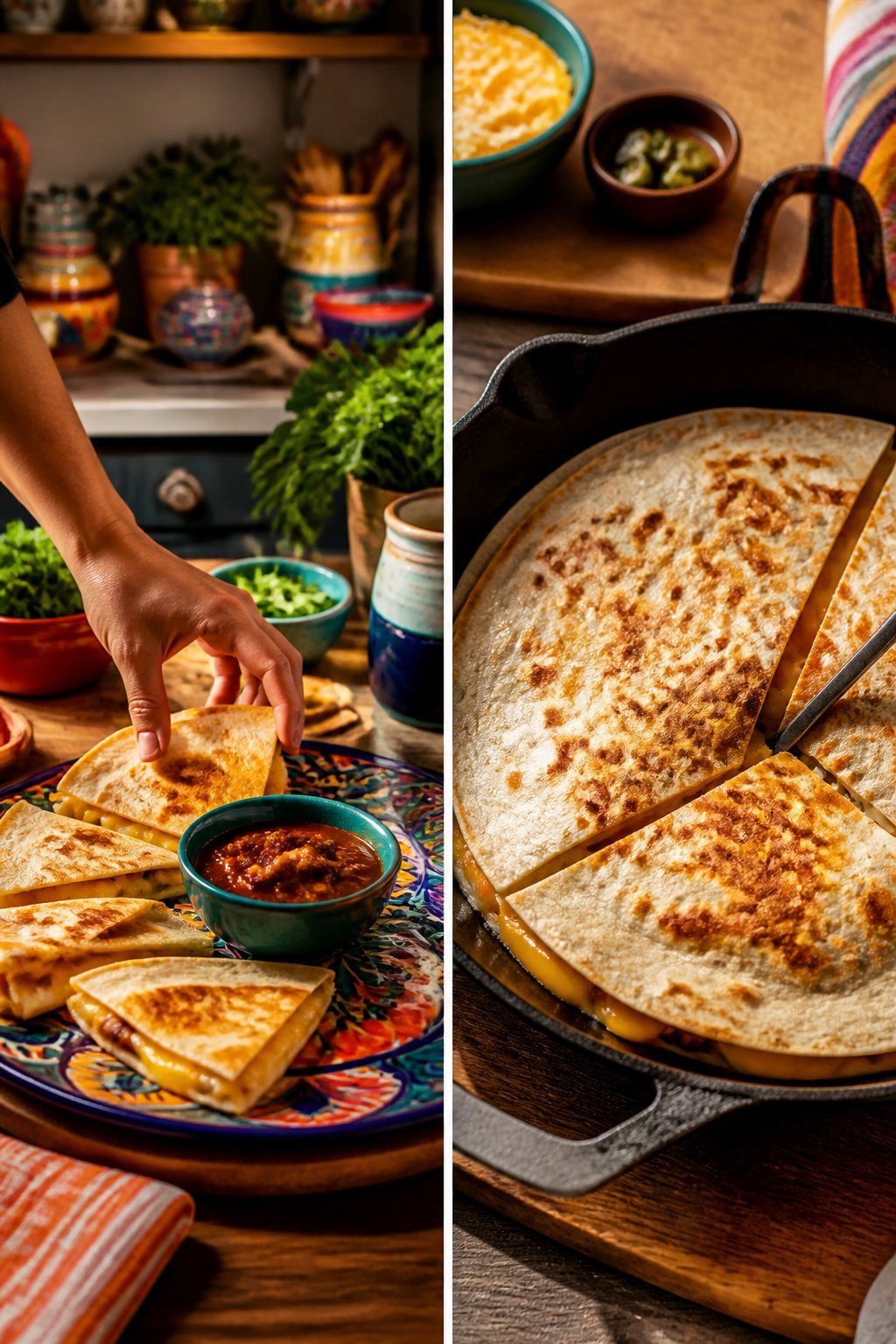
A hot quesadilla pulled from the skillet and cut into rough triangles works as both side and dipper: the melted cheese inside gives you something to pull against, and the crisp exterior holds up to a scoop of chili without turning to mush.
I build them in a dry skillet over medium heat, no oil, because the fat already in the tortilla renders slowly and fries its own surface to a speckled brown.
Two minutes a side is usually enough; the cheese should ooze at the edges but not run out.
The soggy quesadilla next to wet chili is a real risk. I keep them on a wire rack if I’m holding more than one batch, or I cut and plate them at the last minute rather than stacking.
A quesadilla cut and left sitting in its own steam for ten minutes goes flabby no matter how well it started.
If you’re feeding a table of four, make them to order or hold the finished ones uncovered in a warm oven; the slight drying actually helps the crunch.
Tater Tots
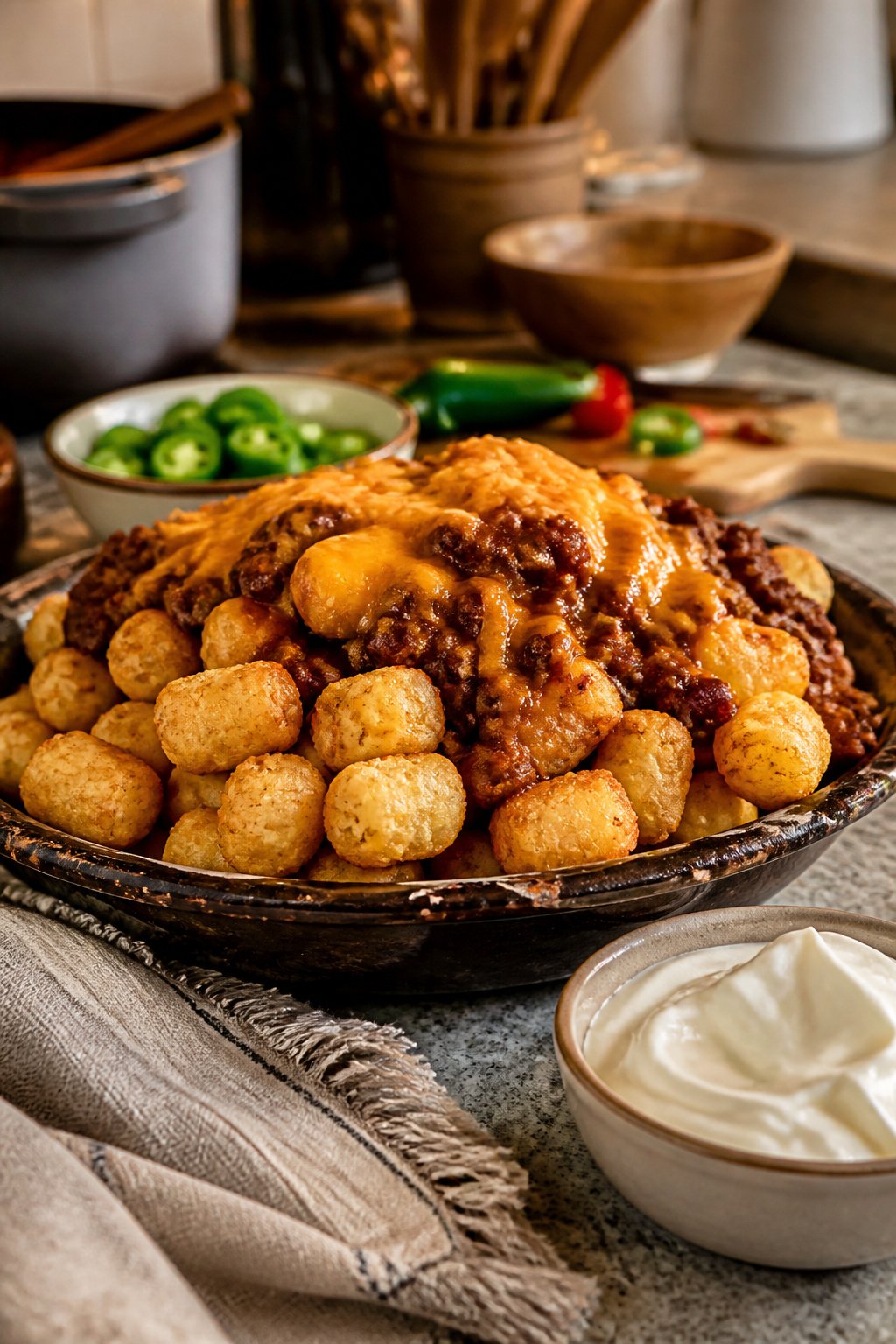
Crispy tater tots add the kind of crunch that soft, saucy chili needs on the side.
The contrast turns a bowl of chili into something you eat with your hands a little, which is exactly the right energy for game day or a casual weeknight when the kids are bouncing between the table and the couch.
The easiest path to that crunch is the air fryer. Set it to 400°F and run the tots for 15 minutes, shaking the basket once halfway through.
They come out evenly browned without the oven preheat or the oil splatter of a skillet.
You can also stop thinking of them as a side altogether. Pile the chili straight over the tots in a baking dish, blanket the whole thing with shredded cheese, and run it under the broiler until it bubbles.
The tots stay crisp on top while the ones underneath soften into something like a crust. Add sour cream and jalapeños at the table, or don’t.
The base structure is already doing the work.
Green Salad
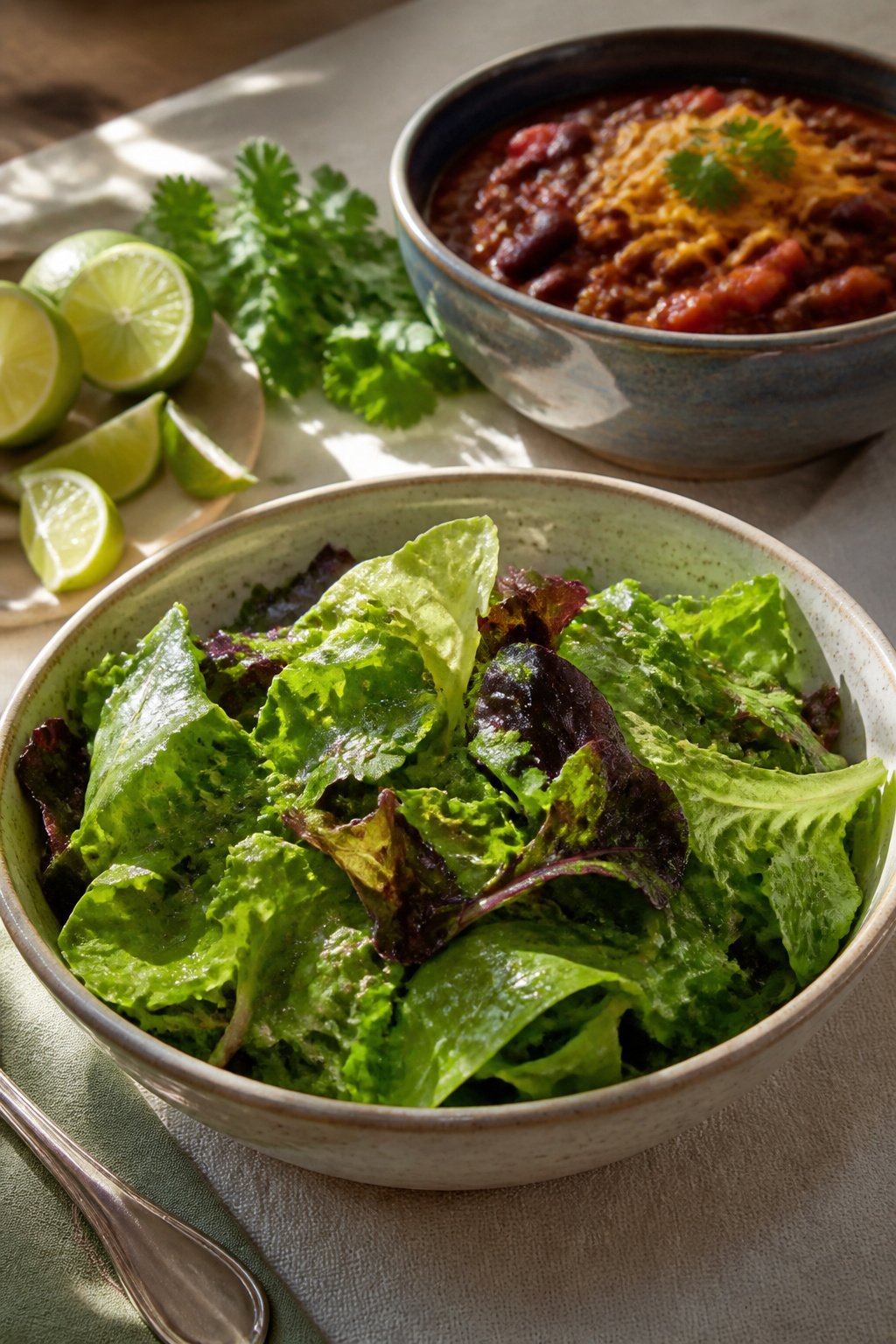
A bowl of chili sits heavy on the plate, and the next bite asks for something crisp to cut through it. Bagged mixed greens handle that job without adding work to the evening.
Lime-cilantro vinaigrette pulls the same direction as the chili’s seasonings rather than fighting them: lime juice, olive oil, and chopped cilantro shaken in a jar while the chili simmers. Three minutes of assembly, no cutting board beyond a quick rinse.
Keep the dressing simple on a weeknight; the greens alone do the work. The point is the contrast, not the salad’s complexity.
Garlic Bread
Sometimes cornbread with chili feels like wearing two flannel shirts at once, both of them competing to be the most rustic thing on the plate.
Garlic bread steps in when you want something crisp and sharp instead of dense and sweet.
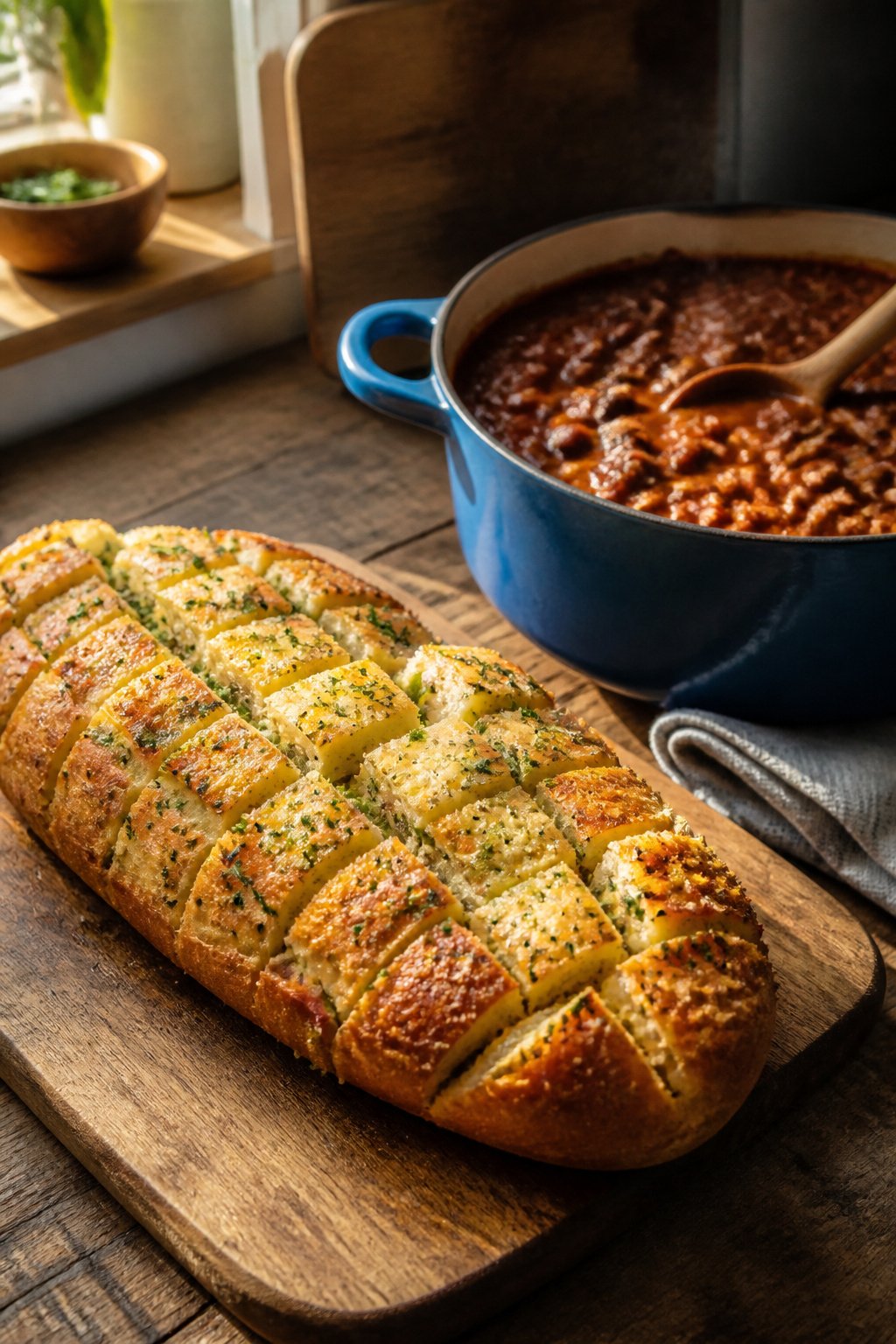
The split loaf method is the one that actually works at home: take a whole loaf, slice it almost through in crosshatch cuts, and work softened butter mixed with minced garlic down into the gaps.
Wrap the whole thing in foil for the first bake to let the heat steam the interior soft, then open the top for the last few minutes so the edges toast.
The timing lines up neatly if you are already running baked potatoes. Both need a hot oven, and the garlic bread finishes in roughly the final quarter of the potato’s hour.
Pull the potatoes to rest while the bread crisps, and everything hits the table at once without a second oven or a juggling act.
The crosshatch split matters more than the recipe: it creates pockets that hold the garlic butter without turning the whole loaf into a greasy sponge, and it lets you tear off pieces with your hands instead of sawing through a crust that fights the knife.
French Fries
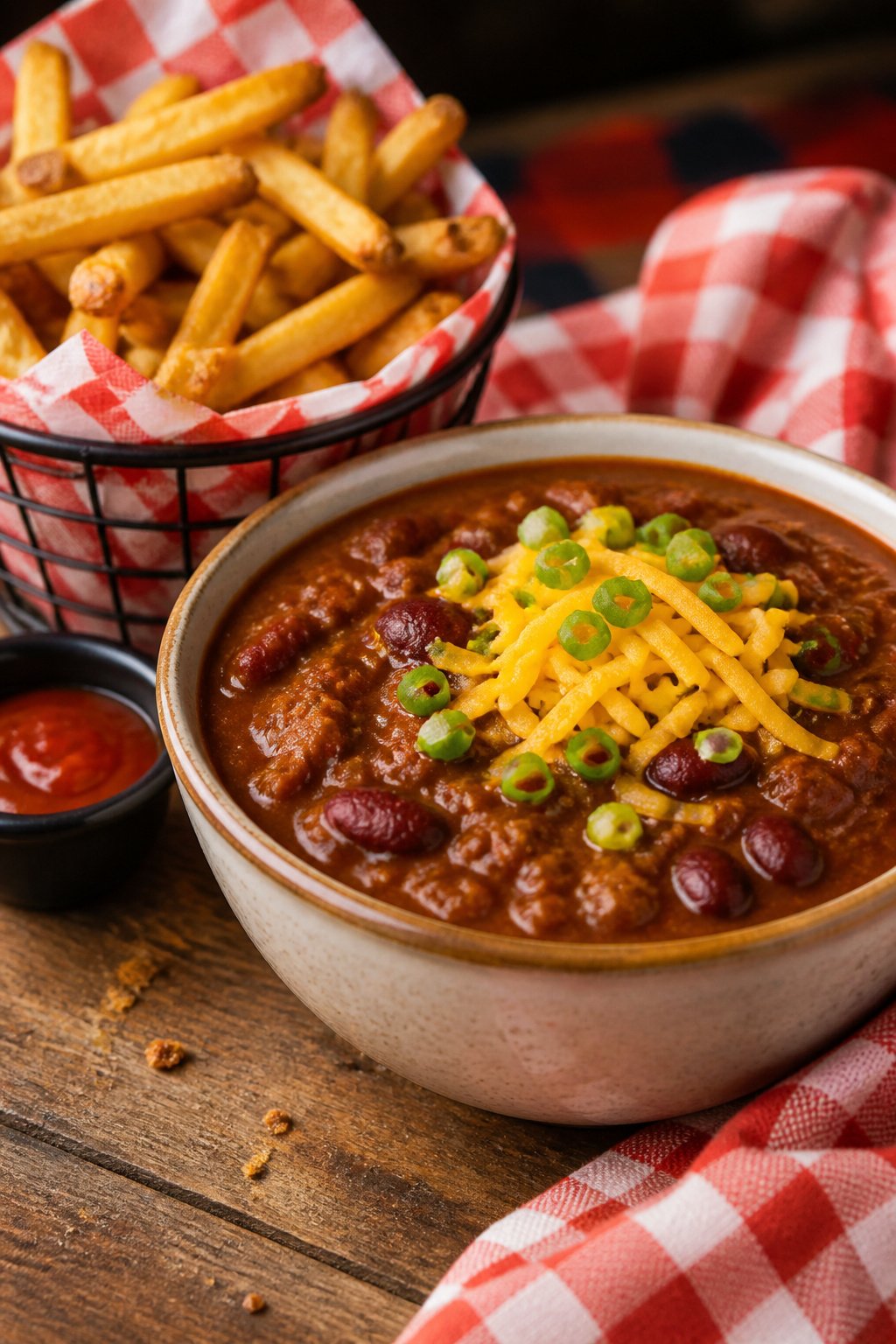
A diner-style bowl of chili demands something crisp to push against. Frozen fries handle this better than most home cooks admit, since hand-cutting russets for a weeknight dinner usually means limp centers and uneven browning.
The frozen bag wins on consistency, but only if the oven runs hot enough to drive off surface moisture before the interior turns mealy.
I’ve found 425°F does this: spread the fries in a single layer, no crowding, and they come out with actual crunch rather than that unfortunate steam-softened texture.
Chili cheese fries are the natural endpoint here, and there’s no shame in building them straight from the baking sheet.
Ladle the chili over while the fries are still hot, scatter cheese, and run the pan back under the broiler just until it melts.
The whole thing eats like a fork-and-knife meal that satisfies the same impulse as the loaded plates at a 24-hour counter, which is exactly what a Tuesday night sometimes needs.
Tortilla Chips
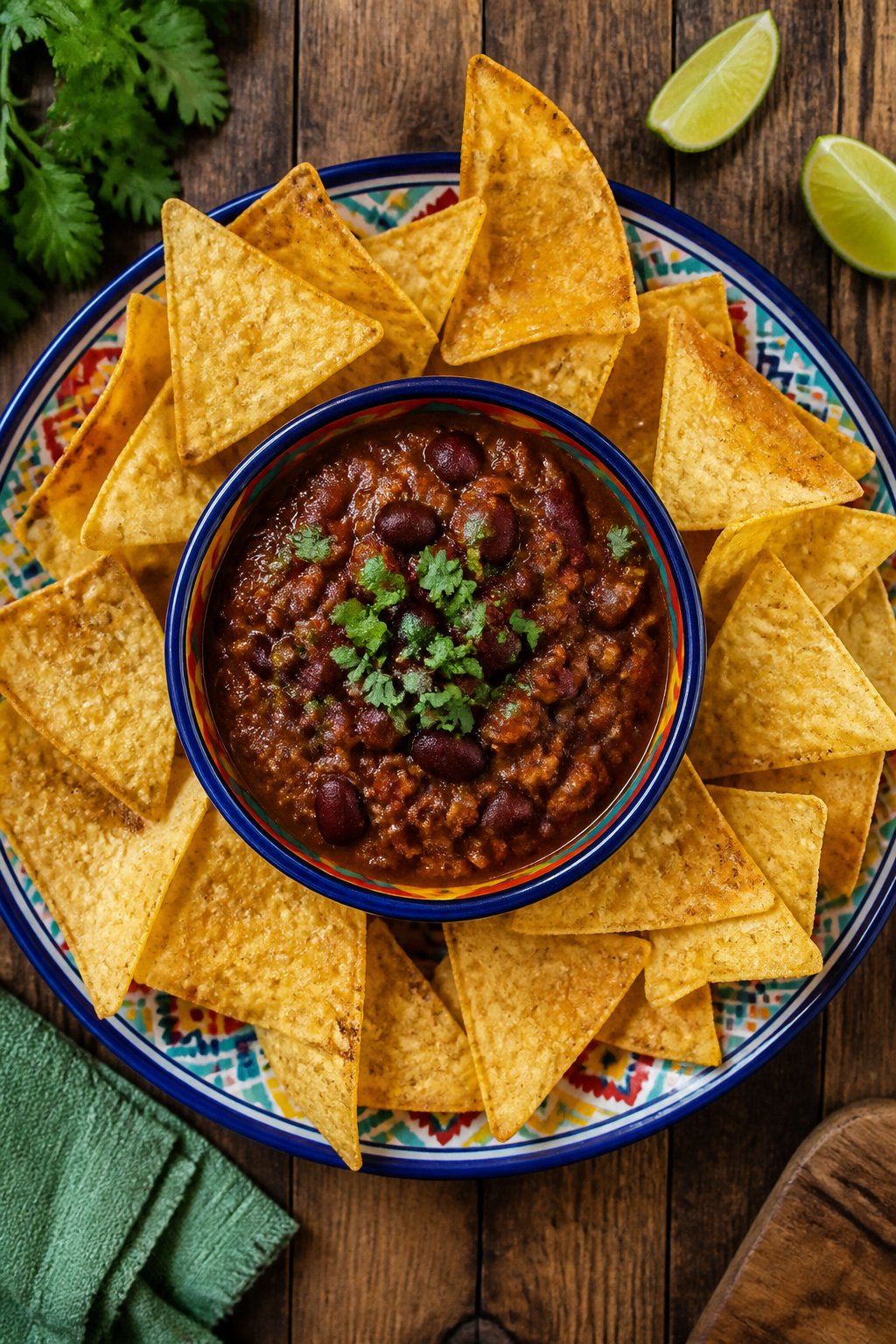
Tortilla chips do three jobs at a chili table, and the best approach depends on which one you need. As a scoop, a sturdy restaurant-style chip holds its shape against a thick bowl.
Crumbled over the top, chips add salt and crunch that last about two minutes before they soften, so the move is to crumble and eat immediately, not garnish and wait.
For Frito pie, the smaller, curlier corn chips are the base layer that soaks up the chili underneath while staying crisp on top.
Stale corn tortillas fry into better chips than fresh ones. The slight dryness means they crisp before they brown.
Cut six-inch tortillas into six wedges, heat a quarter-inch of neutral oil in a skillet to shimmering, and lay them in without crowding.
They need roughly two minutes per side, but the real signal is the sound: the vigorous bubbling quiets down right before they turn from golden to burnt.
Pull them then, salt while hot, and let them drain on a paper towel. The whole batch takes under ten minutes, and the difference from bagged chips is the kind of thing that makes people ask what you changed.
Mac and Cheese
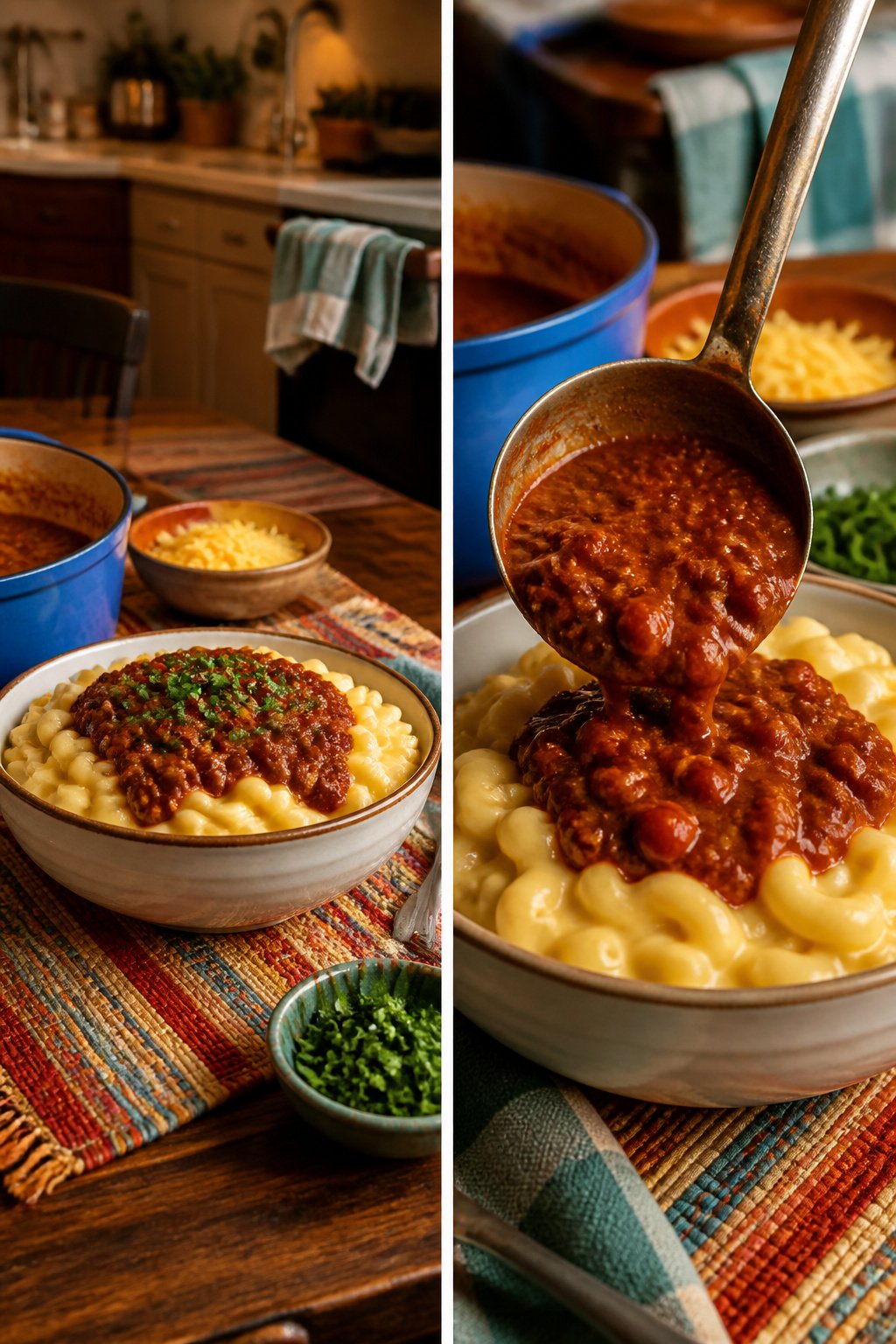
Mac and cheese is the indulgent double-carb pairing that turns a bowl of chili into something closer to a celebration. The creaminess cuts through the heat and the beans, and the pasta gives you something to chew besides meat.
On a weeknight, a box mix is the realistic move: the chili itself took time, and nobody at the table is grading your béchamel. Stir it up while the pot simmers, and both finish together.
The real play here is chili mac. Spoon the chili straight into the mac and cheese, or layer them in a baking dish and run it under the broiler until the top spots.
One dish, one fork, one cleanup. A 9×13 holds enough for four hungry people with the standard box scaled up by half.
The cheese crusts at the edges where it meets the chili, and that corner piece fights over itself.
Chili Toppings
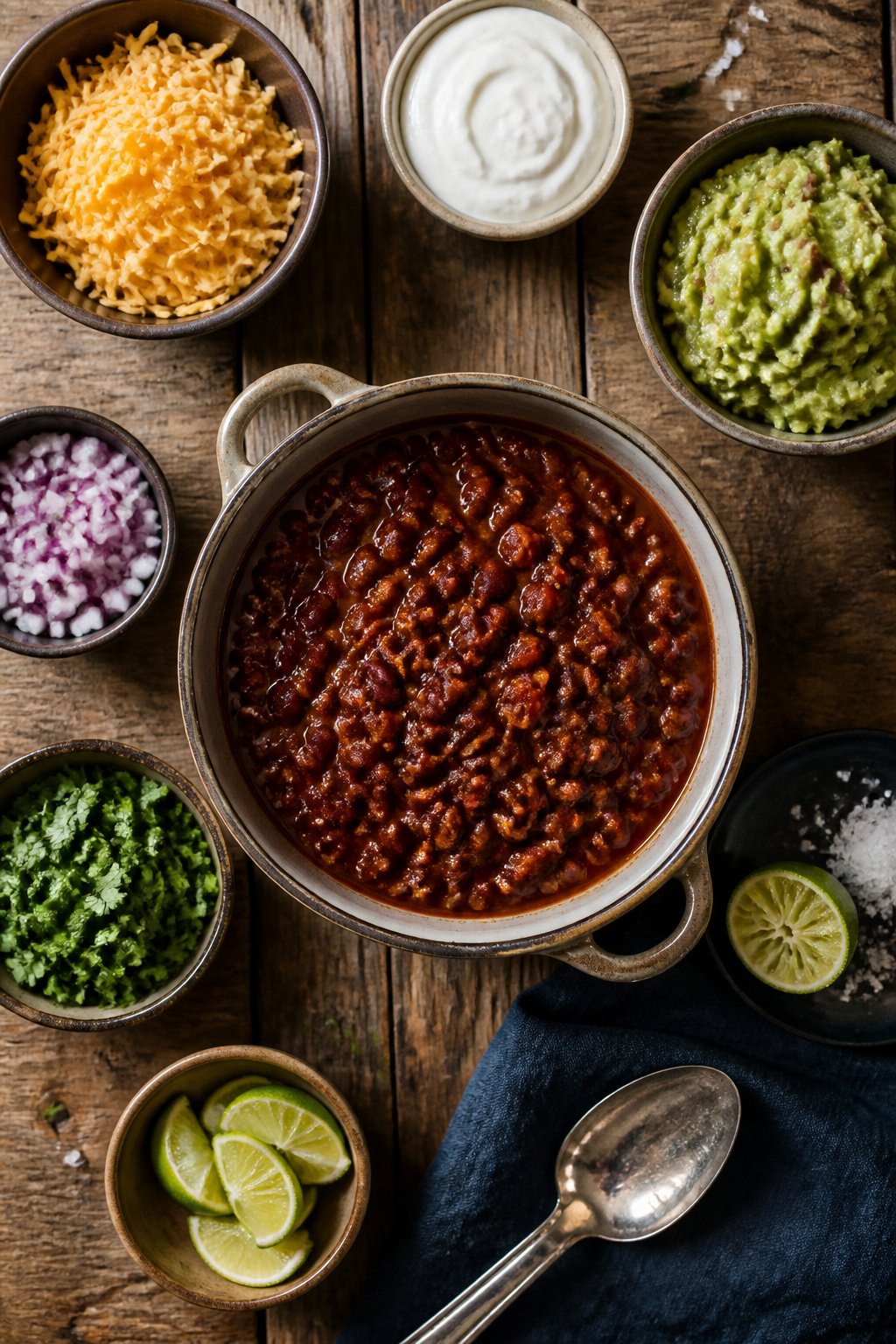
A topping bar turns a single pot of chili into dinner for a crowd without extra cooking. Layer from hot to cool and wet to dry so nothing melts too soon or sinks out of sight.
- Shredded cheese goes on first, while the chili is still hot. Cheddar, Monterey Jack, or a Mexican blend will melt into the surface and create a base the rest can sit on.
- Sour cream or Greek yogurt comes next. The cool, creamy layer tames heat and gives you something to drag a spoon through.
- Guacamole or avocado slices follow. They add richness, but they also hold their shape better when they are not the first thing hitting the steam.
- Diced white or red onion goes on after the creamy layers. The crunch stays intact, and the sharp bite cuts through the fat.
- Green onions or fresh cilantro finish the bowl. These wilt in seconds, so they belong on top where the heat barely reaches them.
- A squeeze of fresh lime at the table wakes up the spices without any advance work. Pickled jalapeños or pico de gallo can sit alongside for anyone who wants more heat or acidity.
Frequently Asked Questions
What are the best toppings for chili?
u003cpu003eThe best chili toppings are shredded cheese, sour cream, guacamole or avocado, diced onion, green onions or cilantro, and a squeeze of fresh lime.u003c/pu003e u003cpu003eLayer them from hot to cool and wet to dry so cheese melts into the surface while herbs stay bright on top. A full topping bar lets guests build their own bowls without extra cooking.u003c/pu003e
What are the best sides to serve with chili?
u003cpu003eCornbread, biscuits, baked potatoes, rice, coleslaw, sweet potatoes, nachos, quesadillas, tater tots, green salad, garlic bread, french fries, tortilla chips, and mac and cheese all pair well with chili.u003c/pu003e u003cpu003eThe right choice depends on whether you want something crisp, starchy, creamy, or fresh to balance the bowl.u003c/pu003e
Can you freeze leftover chili?
u003cpu003eYes, chili freezes very well. Let it cool completely, then store it in an airtight container for up to 3-6 months.u003c/pu003e u003cpu003eThaw it in the refrigerator overnight and reheat on the stove, in the microwave, or in a slow cooker on low.u003c/pu003e
What do most people eat chili with?
u003cpu003eMost people eat chili with cornbread above all else, though biscuits, rice, and baked potatoes run close behind.u003c/pu003e u003cpu003eCornbread’s slight sweetness against the spice and its ability to soak up the last of the sauce make it the default pairing in most households.u003c/pu003e
What to bring to a chili potluck for a party?
u003cpu003eA topping bar setup travels well and turns one pot into a crowd-pleasing spread. Bring shredded cheese, sour cream, diced onion, cilantro, lime wedges, and sliced jalapeños arranged so people can layer from hot to cool.u003c/pu003e u003cpu003eAlternatively, bake a pan of cornbread or bring a bag of sturdy tortilla chips for scooping.u003c/pu003e
What appetizer goes with chili for a party?
u003cpu003eQuesadillas cut into triangles work as both appetizer and dipper, with crisp exteriors that hold up to chili without turning mushy.u003c/pu003e u003cpu003eNachos built in a single layer with melted cheese and chili on top also function as a shareable starter that stays crisp long enough to pass around.u003c/pu003e
What goes with a chili bar?
u003cpu003eA chili bar needs sides that let guests build different meals from the same pot: baked potatoes or sweet potatoes as bases, rice to stretch the batch, cornbread or biscuits for soaking, and a full topping station with cheese, sour cream, avocado, onion, cilantro, and lime.u003c/pu003e u003cpu003eAdd tortilla chips, quesadillas, or tater tots for crunch, and coleslaw or green salad for freshness.u003c/pu003e
About The Author