Turkey breakfast sausage that actually tastes like sausage, not a dry compromise, comes together in fifteen minutes from bowl to plate. The difference is two tablespoons of applesauce folded into the meat.
Ground turkey has almost no fat, so without that moisture the patties crumble and seize in the pan.
What These Patties Are and When I Make Them
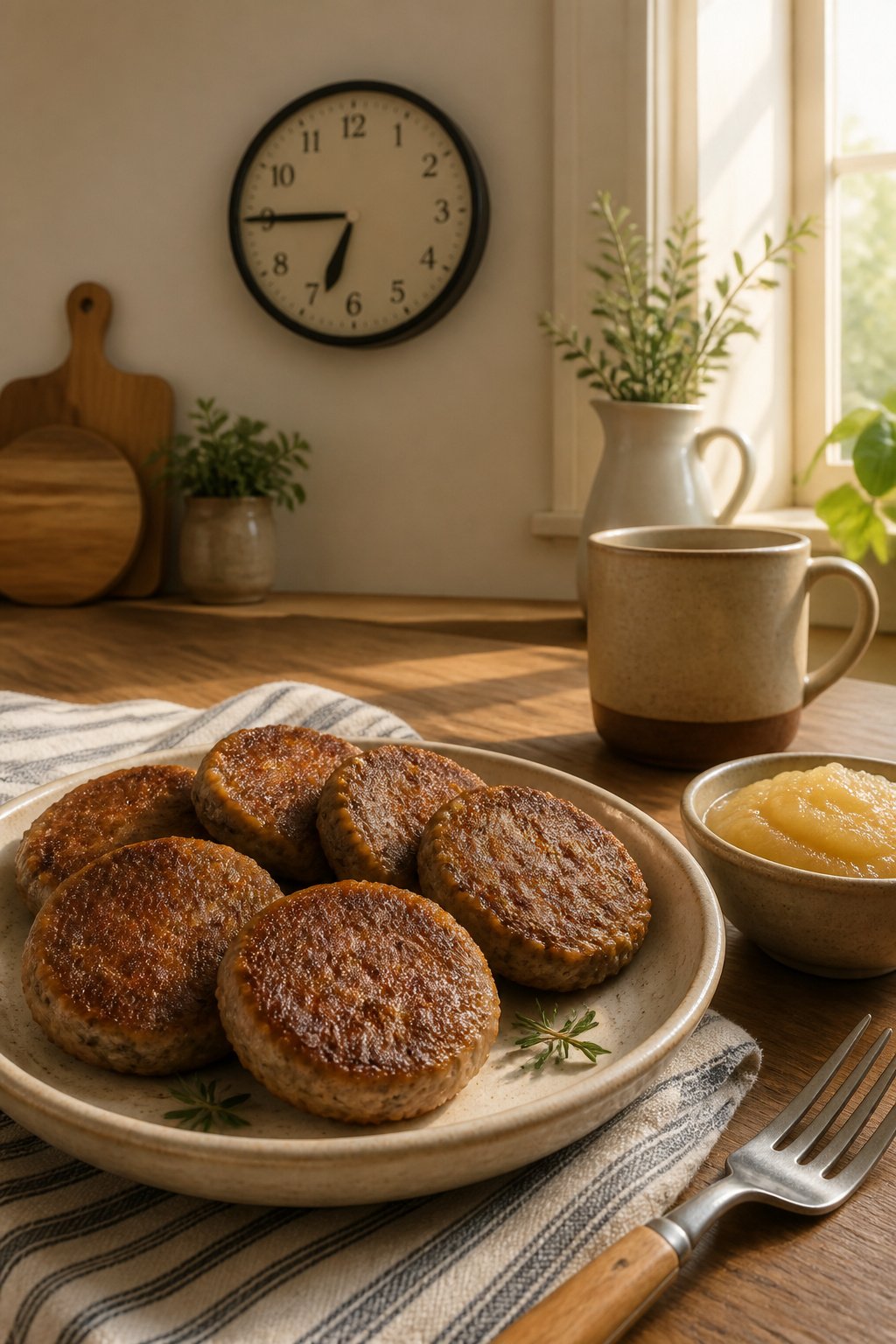
A lighter breakfast protein that still tastes like sausage, not a compromise, is what sends me to ground turkey on weekday mornings.
The whole batch takes 15 minutes from bowl to plate, which matters more than it should at 6:45 a.m. Ground turkey needs fat and moisture help to avoid dry patties, so the recipe builds in two tablespoons of unsweetened applesauce to keep things tender.
Some mornings I swap that for maple syrup instead. The applesauce version leans savory; the maple version reads a little sweeter on the plate with eggs.
Both work, neither needs hype.
Ingredients
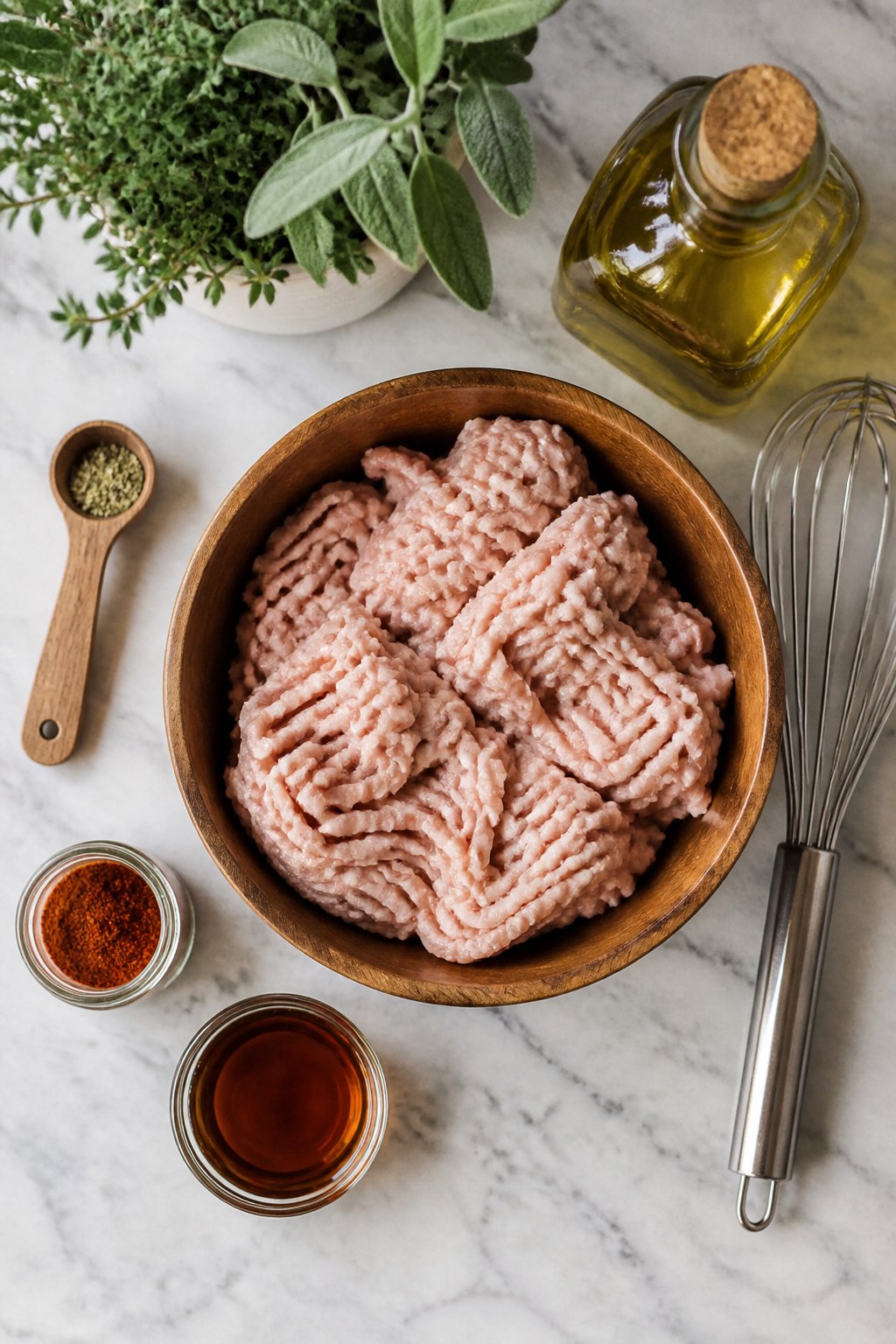
Ground turkey needs a little help to taste like breakfast sausage, and the binder is where the two paths split. I keep both options in the same bowl, just with different amounts of sage.
- 1 pound ground turkey
- 2 tablespoons unsweetened applesauce, or 2 tablespoons pure maple syrup
- ¾ teaspoon ground sage with the applesauce, or bump to 1 tablespoon if you go the maple route
- ½ teaspoon table salt
- ¼ teaspoon freshly ground black pepper
- ⅛ teaspoon cayenne pepper
- Olive oil or cooking spray for the pan
The applesauce version stays mild and savory. The maple version needs more sage because sweetness can flatten the other spices, and you will want that bigger hit to come through after cooking.
Either way, the fat in turkey is low, so a quick coat of oil or spray keeps the patties from sticking before they have released their own juices.
Method
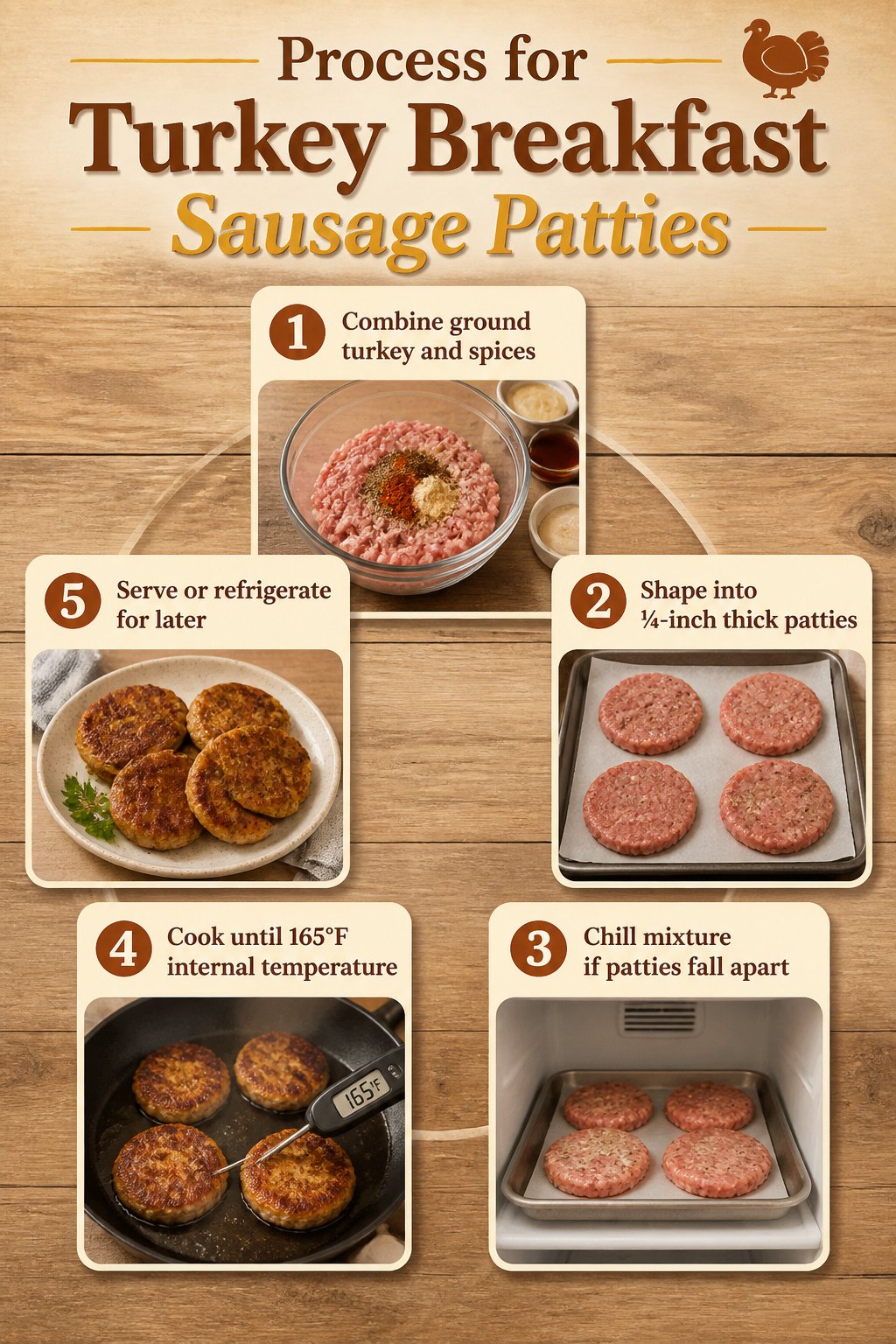
- Combine 1 pound of ground turkey with the spice blend and either 2 tablespoons of unsweetened applesauce or 2 tablespoons of pure maple syrup. Mix until the seasonings are evenly distributed; the mixture will feel softer than pork sausage, which is normal.
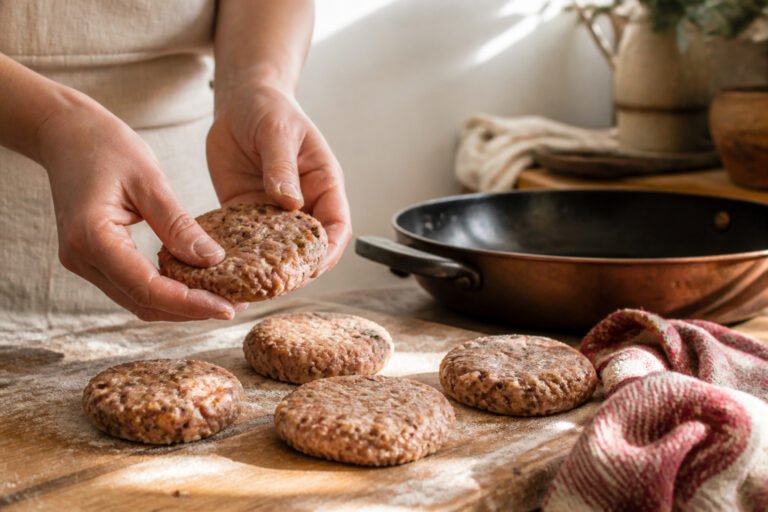
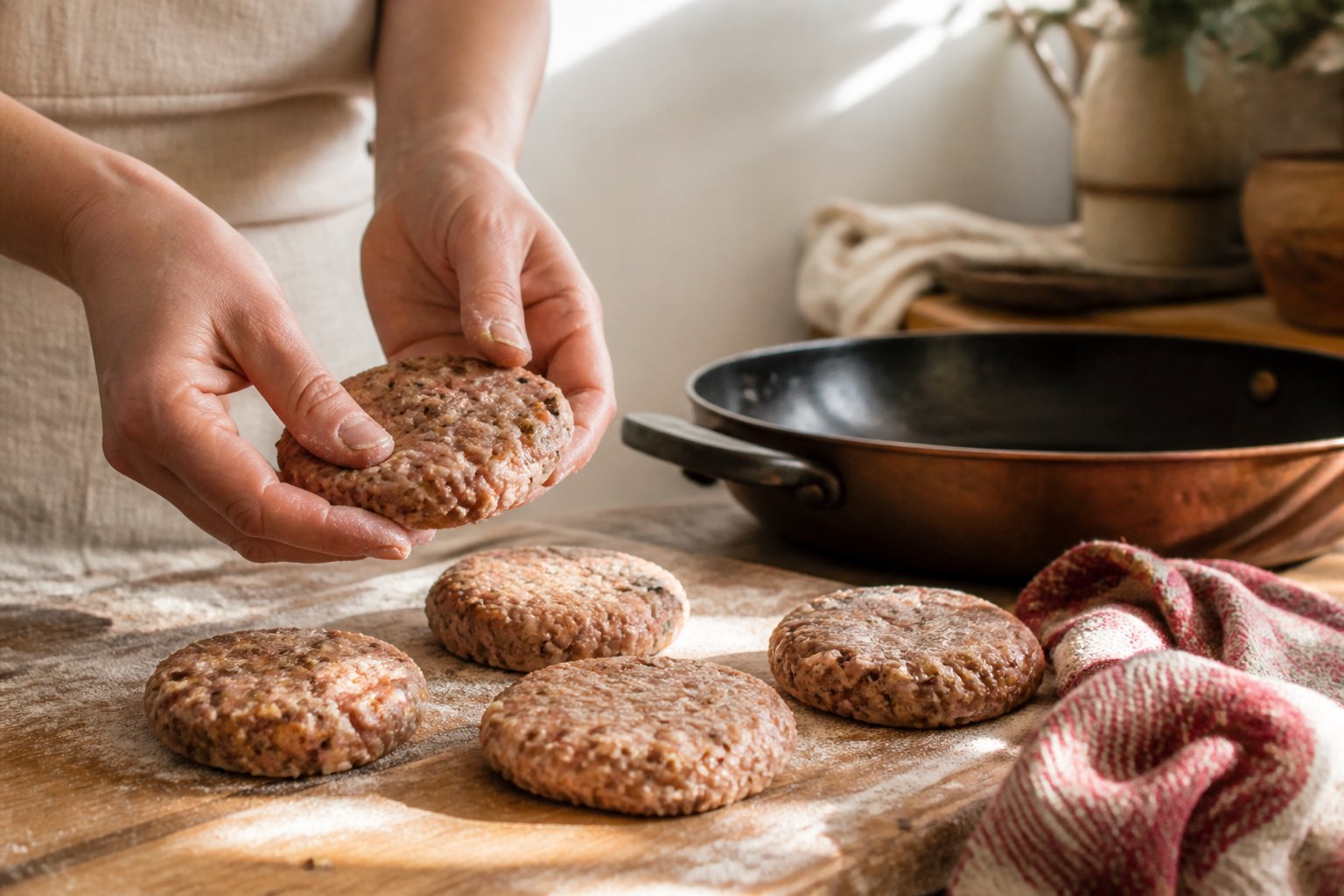
- Shape the mixture into golf ball-sized rounds, about 2 ounces each, then flatten them to ¼-inch thick. Wet hands keep the turkey from sticking. A spatula pressed flat against the ball works faster than fingers alone.
- If the patties are falling apart or your kitchen runs warm, slide the tray into the freezer for 15 minutes. Chill the mixture for 10 minutes so it firms up enough to move to the pan without falling apart.
- Heat a lightly oiled skillet or griddle over medium heat. Cook the patties 3 to 4 minutes per side, flipping once, until they reach 165°F internal temperature on an instant-read thermometer. The exterior should brown; the interior must read fully cooked, not just look it.
- Serve immediately, or cool and refrigerate for the week. The patties reheat well in a dry skillet.
Yield and Timing
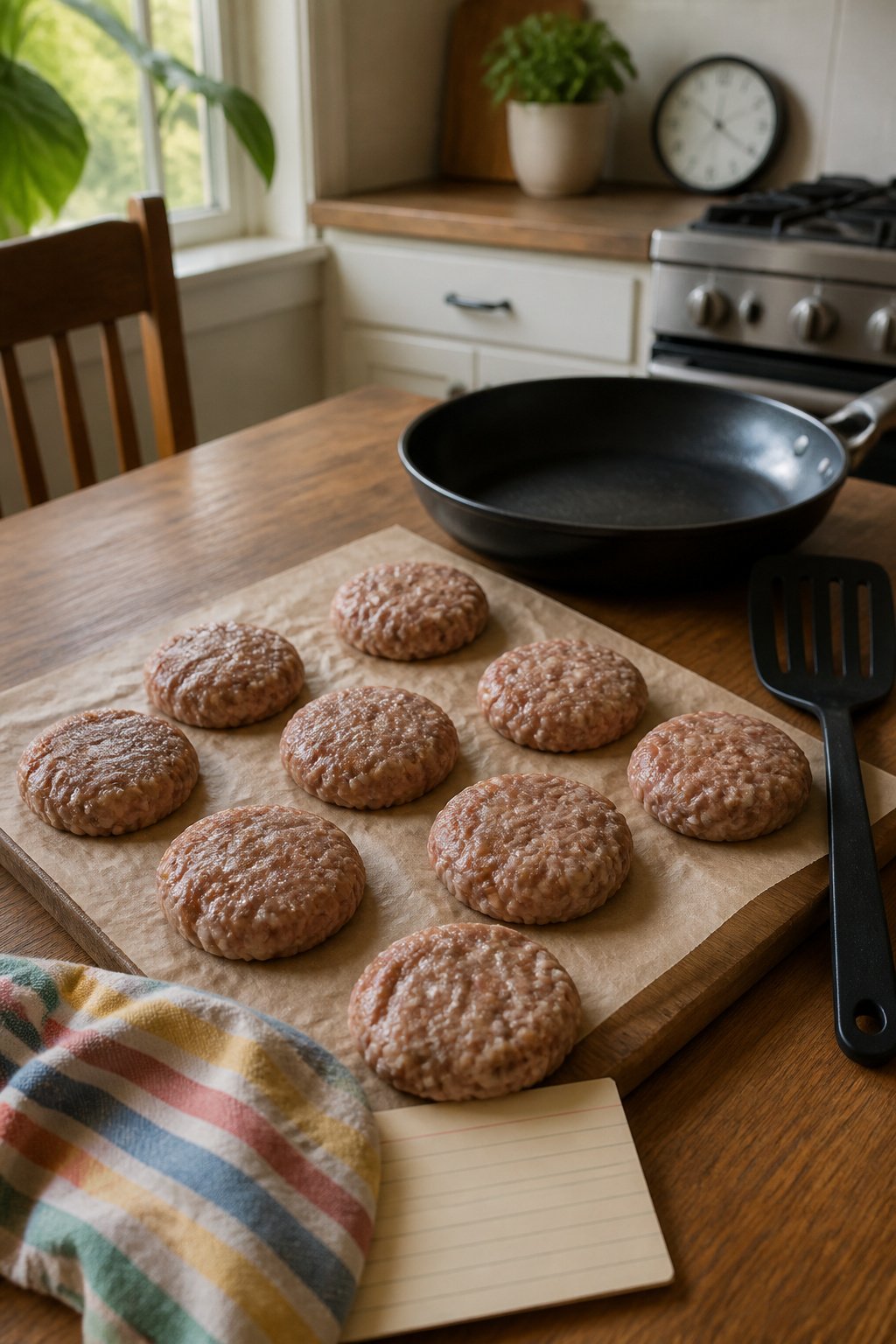
One pound of ground turkey makes eight patties at two ounces each, roughly golf-ball sized before you press them flat. The whole job takes about fifteen minutes of actual work: five to mix, ten to cook in batches.
Some recipes call for six larger patties instead, which changes the cook time to about four minutes per side rather than three to four.
The maple version sticks more. Sugars in the syrup caramelize against the pan, so a well-seasoned skillet or a light coat of cooking spray matters more than it does for the plain sage and pepper mix.
Either way, cleanup stays reasonable: one bowl for mixing, one skillet for frying, and a spatula.
If you have fifteen extra minutes to chill the formed patties in the freezer, they hold their shape better on the griddle, but that time is optional and hands-off.
Storage and Freezing
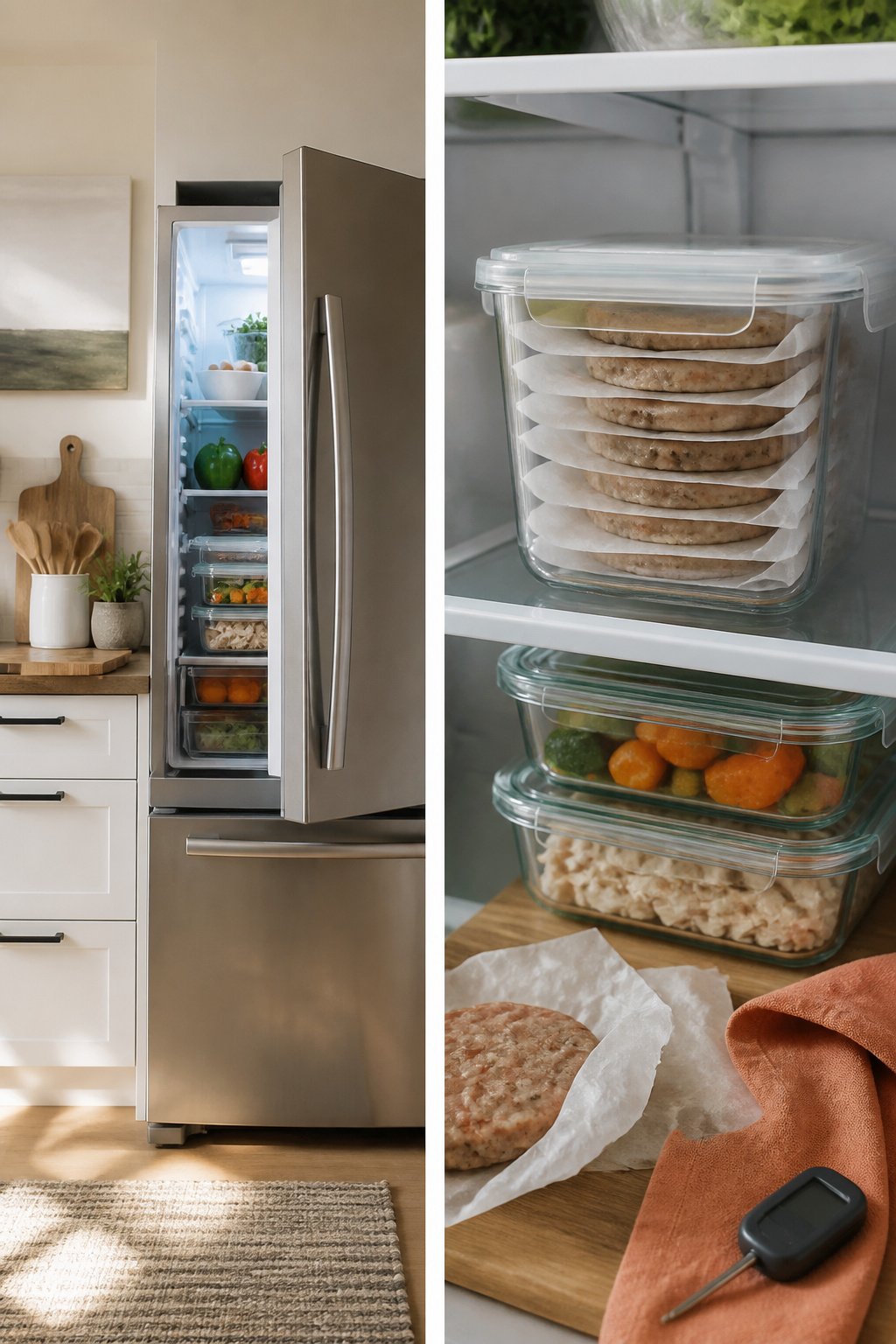
Leftover cooked patties keep in the refrigerator for 3 to 4 days, which is usually enough to get through a work week of quick morning reheats.
For anything longer, an airtight container or freezer bag holds them for up to 3 months without much loss of flavor.
Raw patties freeze just as well, though the optional 15-minute chill step becomes non-negotiable if you want them to hold their shape through bagging.
Lay them on a parchment-lined tray with space between them, freeze until solid, then stack with more parchment between layers before sealing. A quart bag fits about 16 patties this way.
From frozen, cooked patties reheat straight in a skillet or microwave until warmed through.
Raw ones go to the griddle frozen too, just add an extra minute or two per side and resist the urge to crank the heat; low and slow keeps the lean turkey from drying out before the center cooks through.
Serving and What Goes With
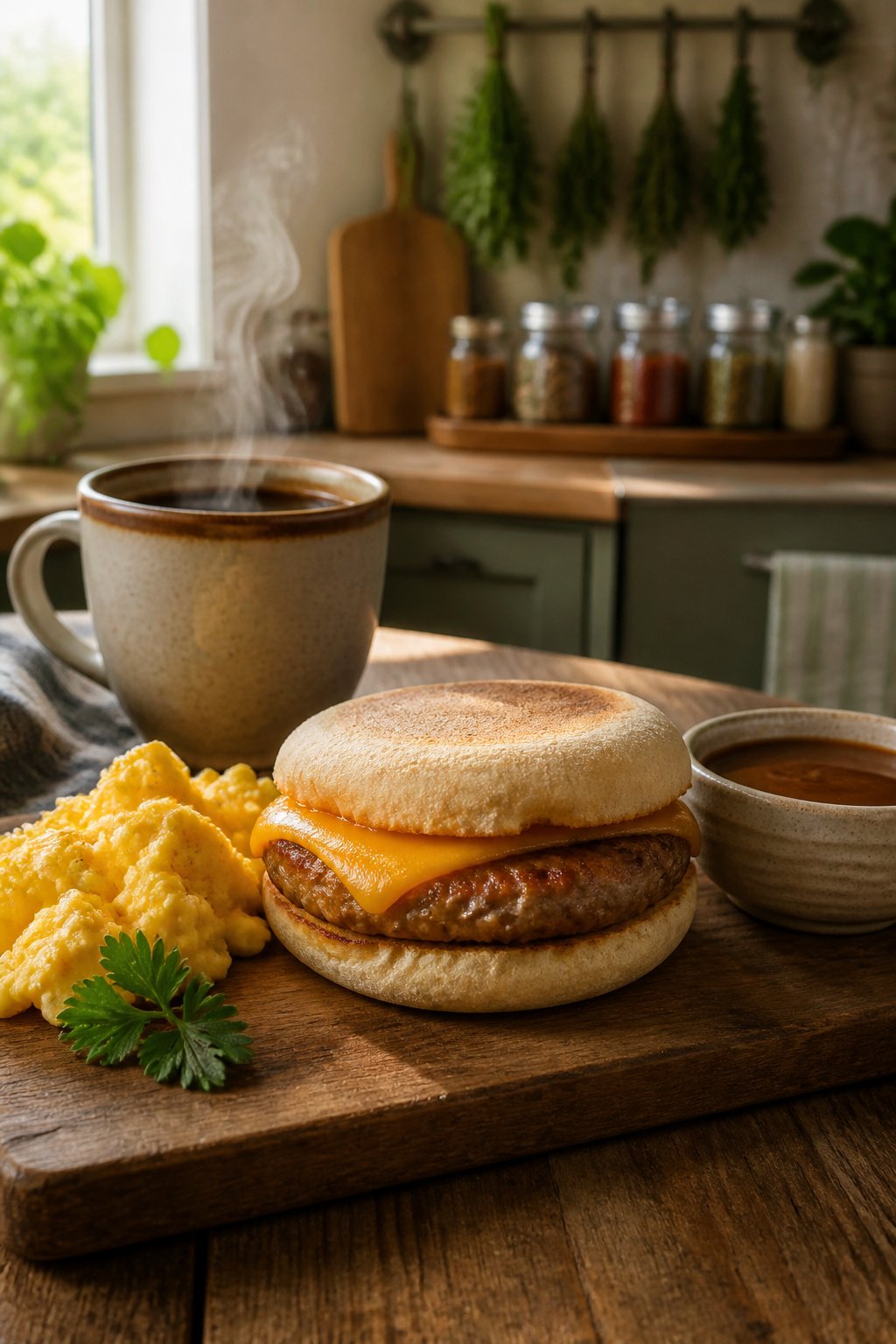
Scrambled eggs and toast are the obvious companions, but these patties really earn their keep in a breakfast sandwich.
Split a warm English muffin, tuck in a patty with a slice of melted cheddar, and the lean turkey keeps the whole thing from turning greasy before you finish it.
The less expected move, borrowed from late-night plates I’ve seen around Honolulu, is crumbling a patty over steamed rice with a fried egg on top.
A drizzle of brown gravy turns it into a lighter loco moco that still hits the same savory notes without the usual hamburger heft.
The turkey crumbles crisp better than you’d expect, and the rice soaks up any leftover maple or sage from the pan.
Leftover patties reheat fast in a skillet while the rice steams, so the whole assembly takes about the time it takes to fry one egg. Keep the yolk runny; it does the work gravy would otherwise have to do.
Substitutions and Problems
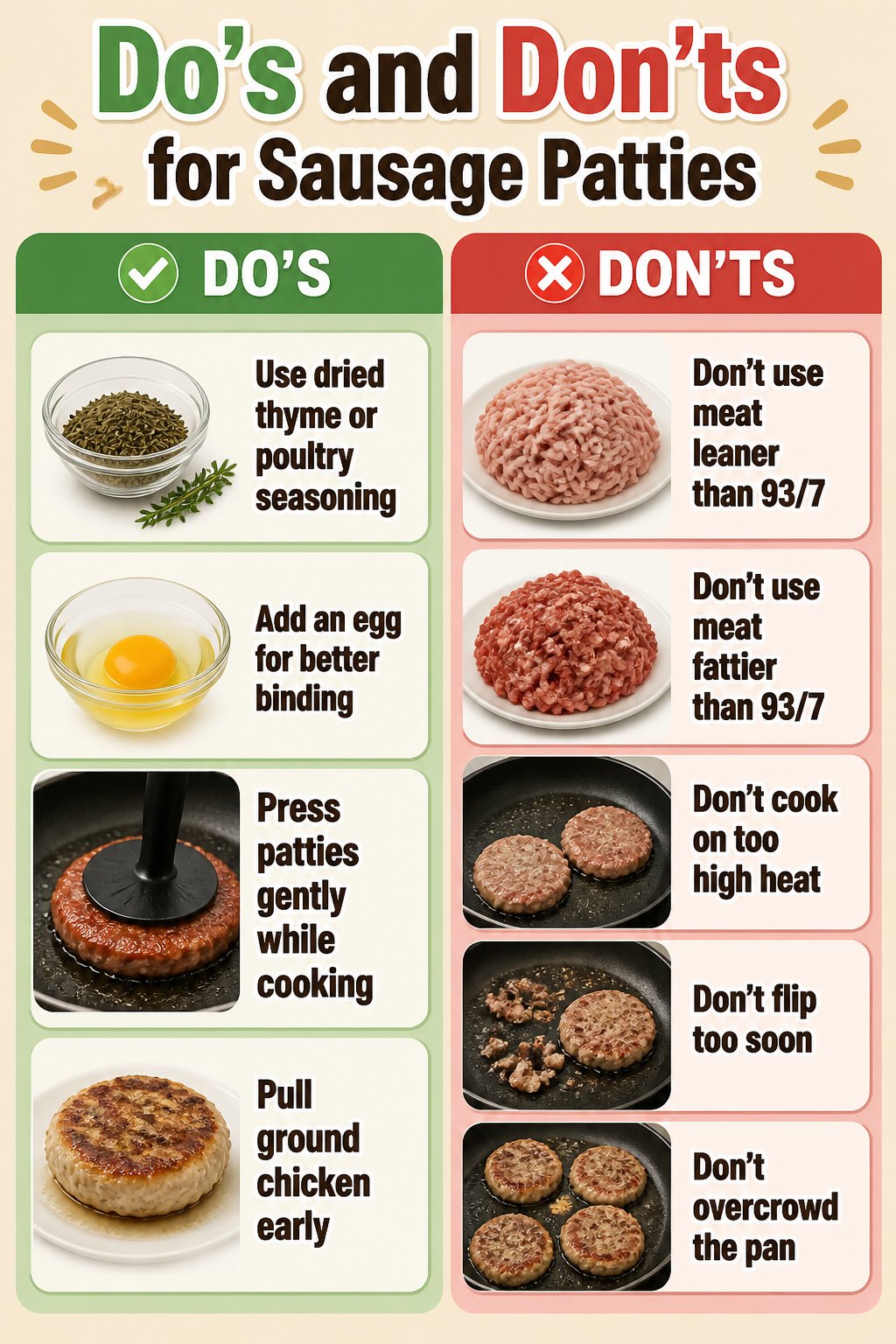
Sage is the flavor most people notice first in breakfast sausage, but dried thyme or poultry seasoning will carry the same warmth if the jar is empty.
A single egg mixed into the pound of meat helps the patties hold together, though 93/7 ground turkey already has enough moisture that you may not need it.
Leaner than that and the patties crumble in the pan; fattier and they shrink into greasy pucks that spit for ten minutes after you flip them.
If the patties fall apart while cooking, the pan was probably too hot or they went in before the surface had a good crust. Press them gently, wait longer than feels right, then turn.
Ground chicken works here too, but it cooks faster and turns dry without much warning, so pull it earlier and let carryover finish the job.
Frequently Asked Questions
Can you freeze turkey breakfast sausage?
u003cpu003eYes. Both raw and cooked patties keep for up to three months in the freezer.u003c/pu003e u003cpu003eLayer them with parchment between so they do not stick, then cook from frozen with an extra minute or two per side, or reheat cooked ones in a skillet or microwave.u003c/pu003e
What can I serve with turkey breakfast sausage?
u003cpu003eScrambled eggs and toast are the usual pair, but these patties work especially well in breakfast sandwiches with melted cheddar on an English muffin.u003c/pu003e u003cpu003eFor something less expected, crumble a patty over steamed rice with a fried egg and brown gravy for a lighter take on loco moco.u003c/pu003e
How long does it take to cook turkey breakfast sausage?
u003cpu003eAbout three to four minutes per side over medium heat, flipped once. The internal temperature needs to hit 165°F on an instant-read thermometer before they come out of the pan.u003c/pu003e
What spices are in turkey breakfast sausage?
u003cpu003eGround sage is the dominant flavor, backed by salt, black pepper, and a pinch of cayenne.u003c/pu003e u003cpu003eThe recipe calls for ¾ teaspoon of sage in the savory version with applesauce, or a full tablespoon if you use maple syrup, since sweetness dulls the other spices.u003c/pu003e
Is turkey breakfast sausage unhealthy?
u003cpu003eIt is leaner than pork sausage, which cuts saturated fat, but the health picture depends on what else is on your plate and how much sodium you watch.u003c/pu003e u003cpu003eThis recipe keeps added sugar optional and minimal, using either two tablespoons of unsweetened applesauce or pure maple syrup for moisture.u003c/pu003e
What can I add to ground turkey to make it taste like breakfast sausage?
u003cpu003eSage is the essential addition; without it, turkey reads as plain ground meat. A little fat and moisture help too, which is why the recipe uses applesauce or maple syrup plus a quick coat of oil in the pan.u003c/pu003e u003cpu003eAn egg mixed in can also help patties hold together if your turkey is especially lean.u003c/pu003e
What gives breakfast sausage its distinct flavor?
u003cpu003eSage carries most of the weight, supported by black pepper and a small amount of cayenne for warmth.u003c/pu003e u003cpu003eThe fat source matters too; pork brings its own richness, while turkey needs a little added moisture from applesauce or syrup to keep the patties tender and let the spices come through.u003c/pu003e
About The Author