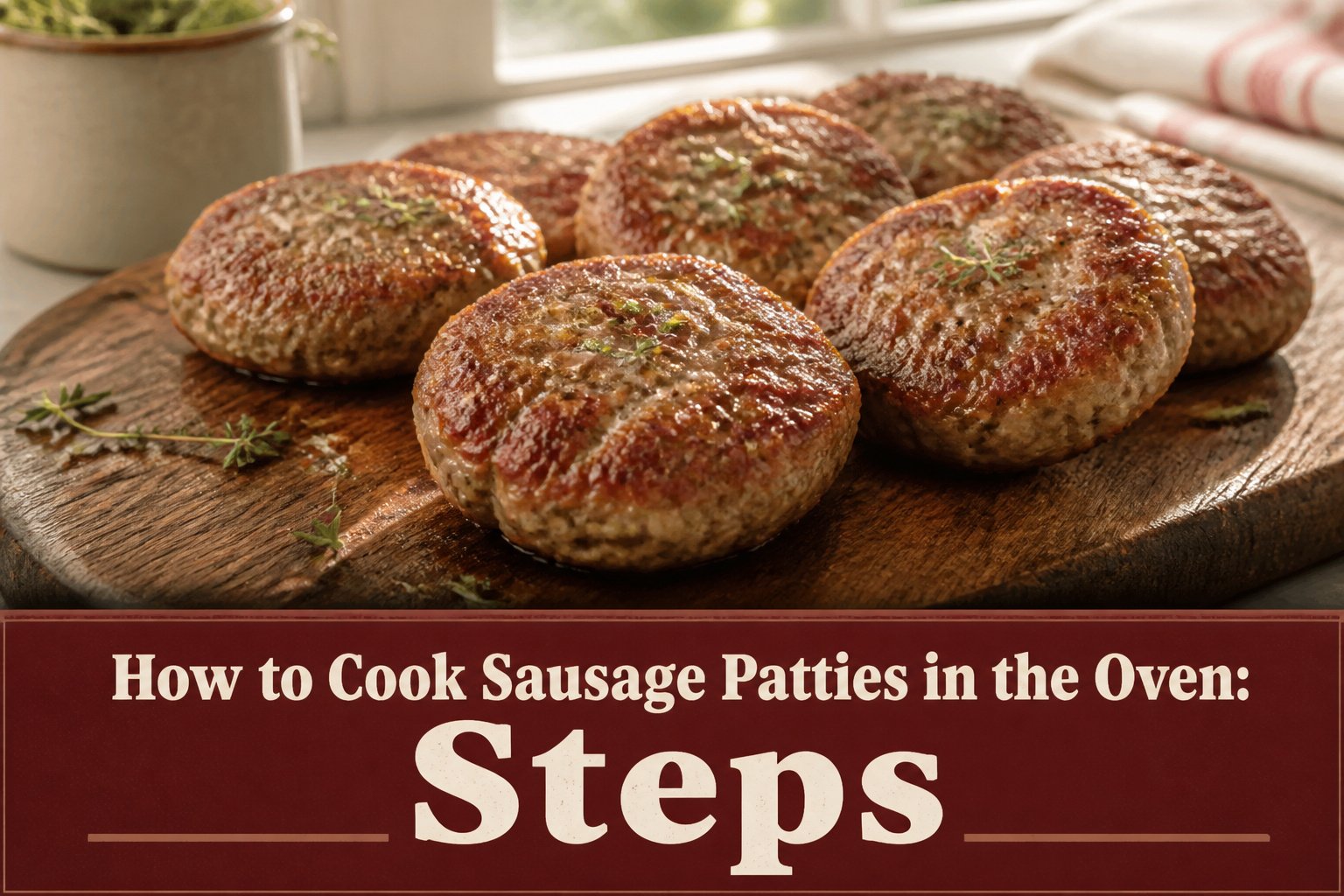
Oven-cooked sausage patties come out evenly browned and free of stovetop grease spatter in about 15 to 20 minutes, but only if you leave room for air to move.
Crowd the pan and the edges steam instead of crisping, turning what should be a hands-off batch into a pale disappointment.
A 3/4-inch thickness with a small dimple pressed in the center keeps the patties flat and juices where they belong.
1. Preheat the Oven
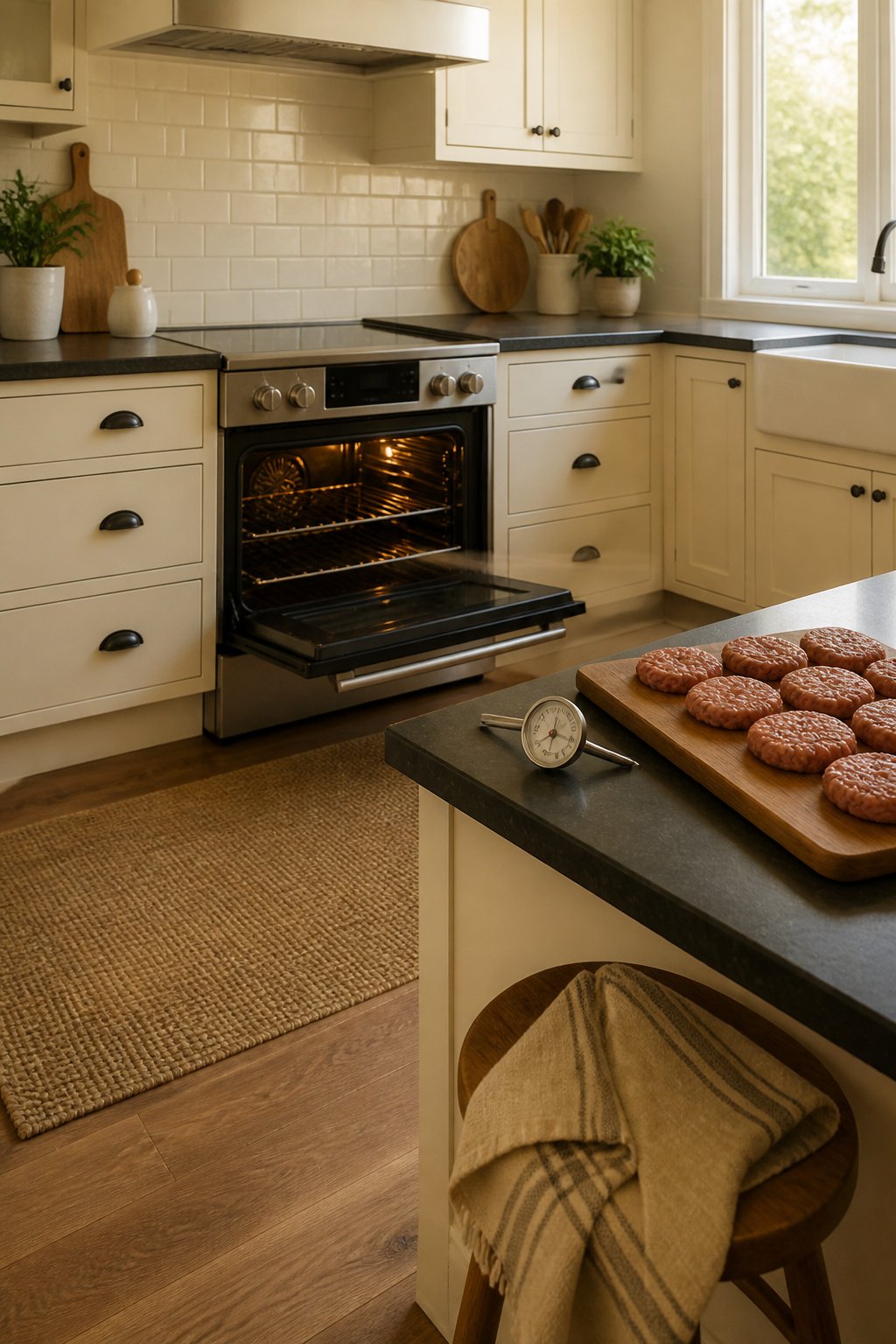
Set the oven to 400°F before you touch the sausage. That temperature browns the outside without pulling too much moisture from the middle.
A range of 350°F to 425°F will still work if you’ve got something else going in alongside, but 400°F is the temperature I settle on when the patties are flying solo.
Ovens vary, and some run hot. If yours has a history of scorching cookies or finishing things early, pull back to 375°F. The extra few minutes of cook time is a fair trade for keeping the fat where it belongs.
Recommended Products

Premium Value Egg Bites Silicone Mold Set: Muffin top pan crafted with food-grade silicone materials, this 2-piece silicone baking mold set features 12 total cavities (6 per tray) for cooking efficiency. The silicone muffin pan set is non-stick, heat-resistant, and long-term use. Ideal for preparing 18 egg bites simultaneously for meal-prepping families, helps streamline meal prep(We suggest placing a hard baking pan under silicone molds for food before filling them for easy transfer)

NONSTICK: Swiss-engineered heavy-duty coating allows for nonstick release when baking

PACKAGE CONTAIN: Include 300 sheet 4 x 4inch precut baking parchment paper squares, sufficient quantity to meet your separating, packaging, cooking and baking needs.
2. Line the Baking Sheet
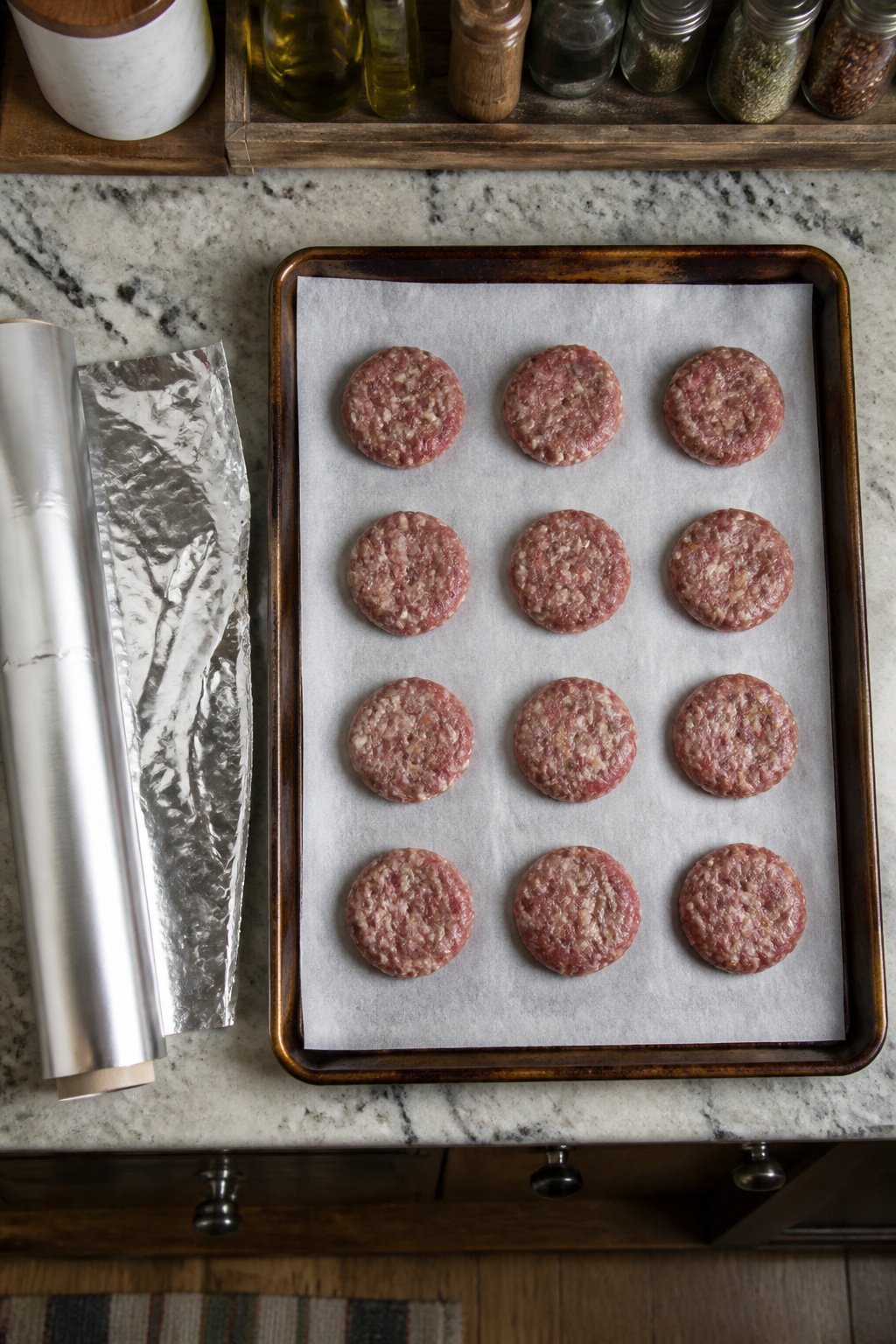
A flat baking sheet is the wrong tool here. Sausage patties render a lot of fat as they cook, and without a rim that grease runs straight onto your oven floor.
Use a rimmed baking tray instead, the kind with a shallow lip all around. Line it with parchment paper or aluminum foil before you set the patties down.
Parchment releases the meat more cleanly, so the patties keep their shape when you flip them. Foil sticks a little more but peels off in one sheet afterward, which means the tray itself barely needs washing.
Either one works; I reach for parchment when I want the cleanest release and foil when I want to toss the whole liner and move on.
Recommended Products
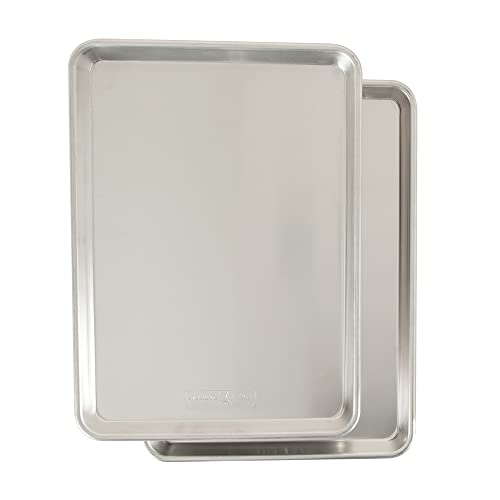
Naturals bakeware is made of pure aluminum for superior heat conductivity and produces consistently evenly browned baked goods every time.

Naturals bakeware is made of pure aluminum for superior heat conductivity and produces consistently evenly browned baked goods every time.
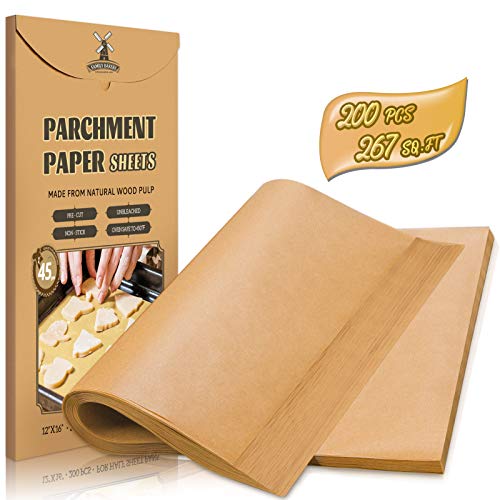
EXTRA THICKENED: Each of these 200 pieces of parchment is extra thick, and our parchment paper is 45gsm. more durable and less brittle, so you can easily pick up the food on the baking sheet by lifting parchment paper without any breaking. MOREOVER, IT IS MORE COST-EFFECTIVE
3. Shape the Patties
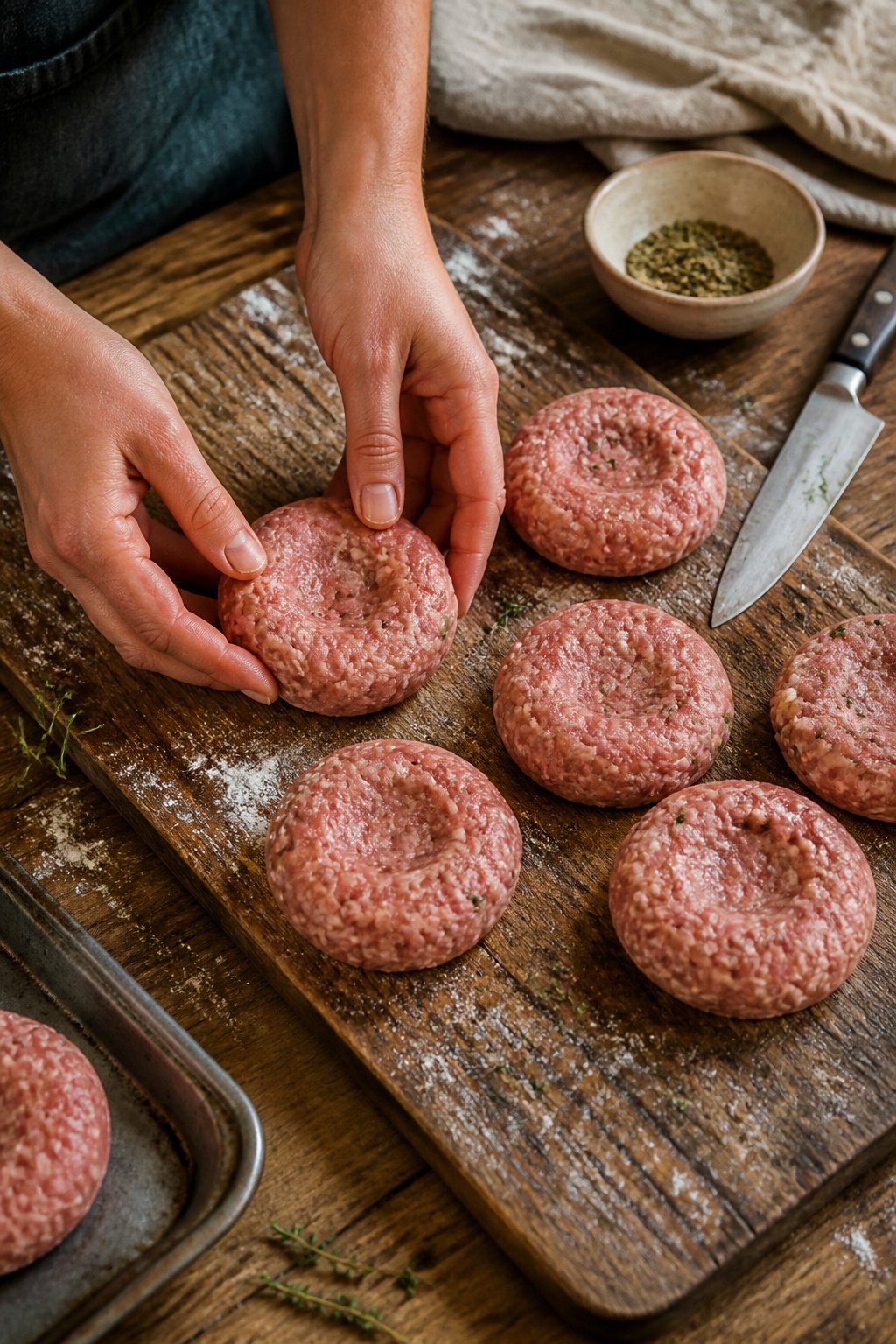
A 3/4-inch thickness gives you the right balance: thin enough to cook through in the oven, thick enough to stay juicy. Press a dimple about 1/4 inch deep and 3/4 inch wide into the center of each patty.
Heat drives moisture and fat toward the middle as the meat cooks, and without that depression the center balloons into a rounded puck that cooks unevenly and slides off the biscuit.
If you are working with bulk sausage, handle it as little as possible. Overworking tightens the texture and turns the patty dense and rubbery.
Divide the meat, shape it gently with your palms, and stop once the edges look even. The less you fuss, the more tender the bite.
Recommended Products

Temperature Range: 140° to 190°F / 60° to 87°C. Probe Length: 4.75-inches Dial Diameter: 2.375-inches

FOOD SAFETY: Thermometer displays true oven temperature instantly to ensure safe food preparation
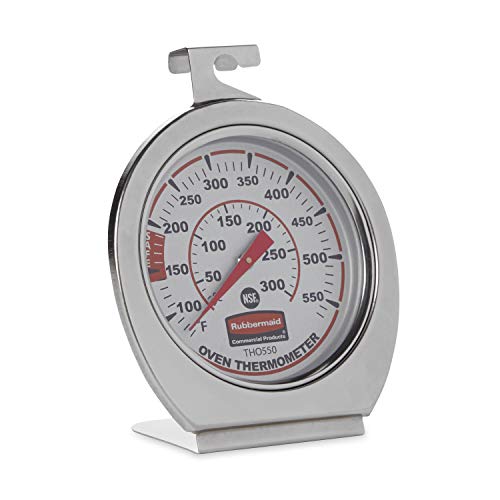
FOOD SAFETY: Thermometer displays true oven temperature instantly to ensure safe food preparation
4. Arrange Without Touching
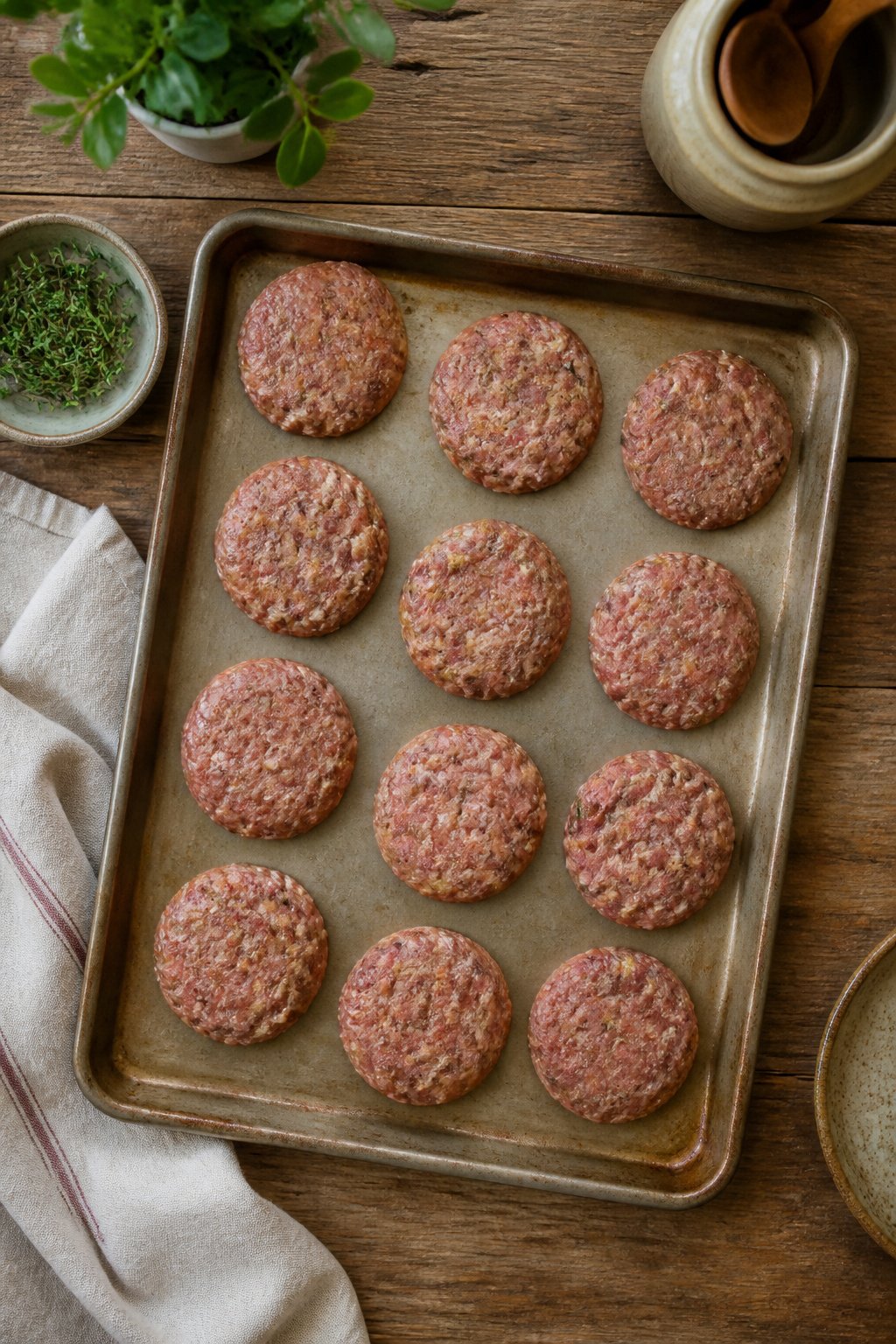
A standard half-sheet pan holds 6 to 8 patties comfortably, depending on their diameter. Anything tighter and the edges steam instead of browning, which ruins the reason you chose the oven.
I lay them out with at least an inch of space on all sides, more if the patties are on the larger side.
The hot air needs room to circulate; crowding turns what should be a crisp, golden edge into something pale and rubbery. If I’m cooking for more than six people, I don’t squeeze them onto one tray.
Two pans, swapped halfway through, or two batches. The extra few minutes are worth the texture you actually want.
Recommended Products

PERFECT SIZE PATTIES - TACGEA burger press delivers perfectly shaped patties complete with grooves for the professional burger look. Perfectly designed and engineered to ensure an enjoyable dining experience.

Food Grade 304 Stainless Steel: The smash burger press is made of 100% 304 stainless steel with 2.5mm thickness and 5.5 inches diameter

Package Contents: You Will Receive 1 Sausage Patty Press. This Is A Practical Kitchen Gadget For Your Family.
5. Bake and Flip at the Halfway Mark
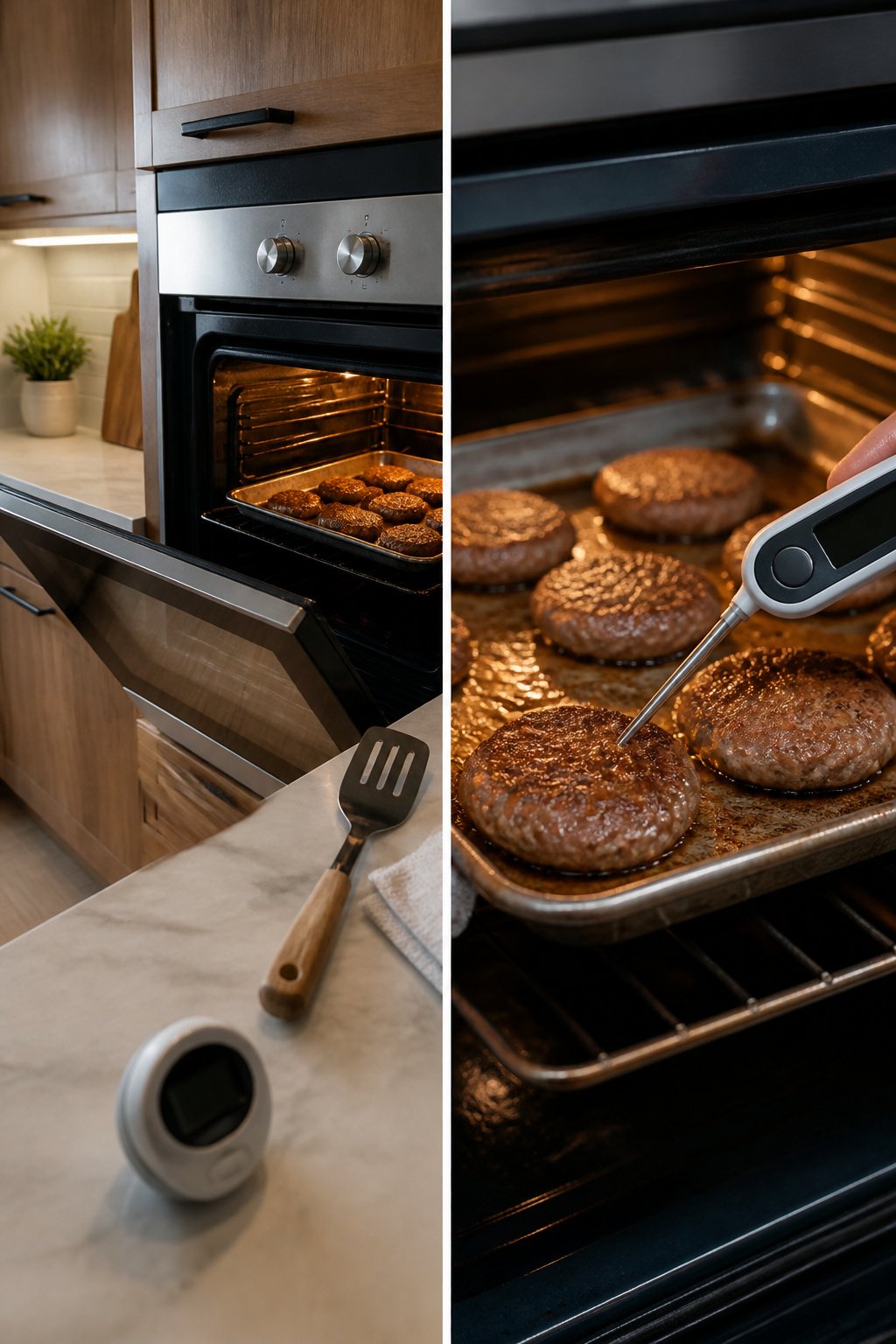
Bake the patties 12 to 20 minutes, flipping once at the halfway mark. Breakfast-sized links or thin patties land on the shorter end; hand-formed rounds closer to an inch thick need the full stretch.
For larger sausages, Italian or brat styles, budget 25 to 30 minutes at the same temperature.
An instant-read thermometer removes the guesswork.
Slide it into the center of the thickest patty, not near the edge where heat arrives first, and look for 160°F. That number holds for pork; push to 165°F only if the mix contains poultry.
Undercooked sausage gives itself away. The center stays soft and pale, and the juices run pink or cloudy.
Done sausage firms up, the interior turns gray-brown throughout with no pink remaining, and the juices run clear.
I pull the pan when the thermometer reads right and the patty resists gentle pressure like a cooked burger, then let them rest a minute before serving so the juices settle instead of running out across the cutting board.
Recommended Products
Non-Stick Aluminum Roll: This package contains one Reynolds Wrap Non Stick Aluminum Foil roll measuring 130 feet long by 12 inches wide (130 square feet total)

Dimensions : square aluminum foil pan.Please measure the dimension of the inner basket to make sure it fits in

【New Upgrade Materials】:Our Air Fryer Liner is made of high quality aluminum foil. So our product is more heat resistant than the parchment air fryer liner. It can withstand high temperatures of up to 600°C. No fire hazard and not easy to deform.
6. Broil for Color If You Want It
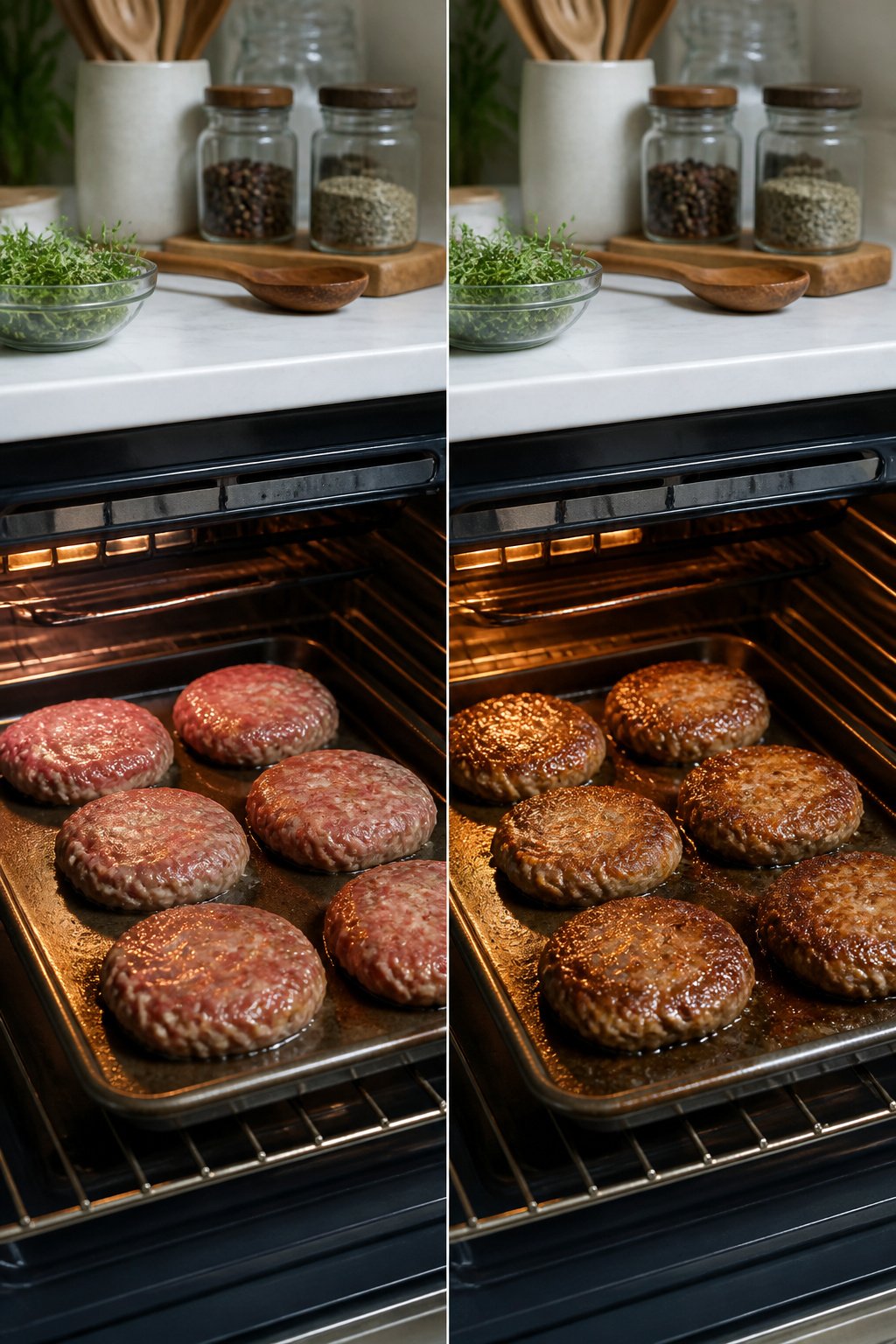
Once the patties hit their safe internal temperature, they sometimes look a little pale for the plate. Moving the sheet to the broiler fixes that fast.
One to two minutes is usually enough to lay down a golden crust, though thicker cuts or a slower broiler might need closer to five.
The heat is fierce and uneven up there, so the window between browned and burnt runs under a minute.
Standing nearby with the oven light on is not overcautious; it is the only way to catch the color you want before it turns to ash. The step is pure appearance.
The sausage is already cooked through, so skipping it changes nothing about safety or texture. For a weeknight breakfast thrown together while the coffee brews, the broiler pass is optional.
For a brunch where the patties sit out on a platter, that extra color sells the effort.
Recommended Products

ULTIMATE BAKING VERSATILITY: Perfect for everything from cookies and bars to vegetables and meats, ensuring versatility in your kitchen.

Heavy-gauge aluminized steel construction for even heat distribution

VARIOUS CUISINE AT WILL- The 2-pack nonstick 16 x 14'' cookie sheets is designed for commercial and family. It is a perfect size for baking cookies, pastries, scones, jelly rolls, pizzas, etc. Just one can easily satisfy your daily baking needs and help you take your baking skill to the next level.
Types of Sausage That Work
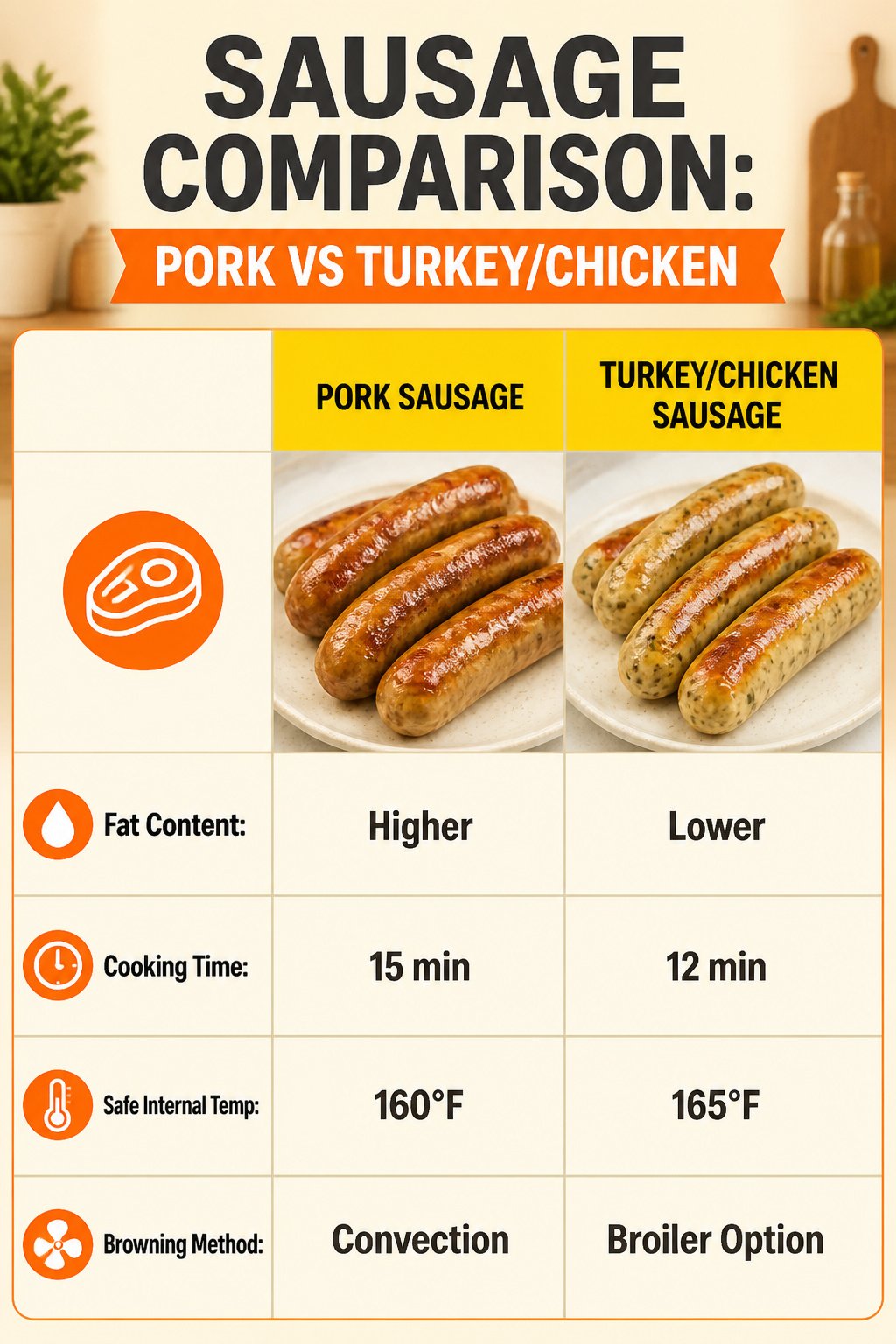
Pork, turkey, and chicken sausage all cook with the same oven method, but the leaner meats need closer watching.
- Pork sausage carries more fat, so it forgives an extra minute or two and still stays juicy.
- Turkey and chicken sausage cook faster and dry out quickly; start checking at 12 minutes instead of waiting the full 15.
- The safe internal temperature differs: pull pork or beef at 160°F, poultry at 165°F. An instant-read thermometer removes the guesswork.
- Convection helps any of them brown more evenly, though a quick 1–2 minute broiler finish works when the color lags behind the doneness.
Recommended Products

Precut and Half Pan Sheet: Includes 100 pcs Unbleached baking papers and each sheet is 12-3/16" x 16-3/8", perfectly fit the standard half sheet pan, making baking a breeze. Using pre-cut sheets allows you get rid of cutting parchment anymore.

Precut Parchment Paper: Get 200 parchment sheets perfectly sized at 12"x16" for half sheet pans. No rolling, measuring, or cutting—just grab a sheet and go

EXTRA STRONG - 200Pcs unbleached parchment paper made of extra thicker 45gsm paper vs commonly used 35gsm or 40gsm paper, it's about 12% thicker than others'. We define it as heavy duty parchment paper.
Oven Cooking vs. the Stovetop
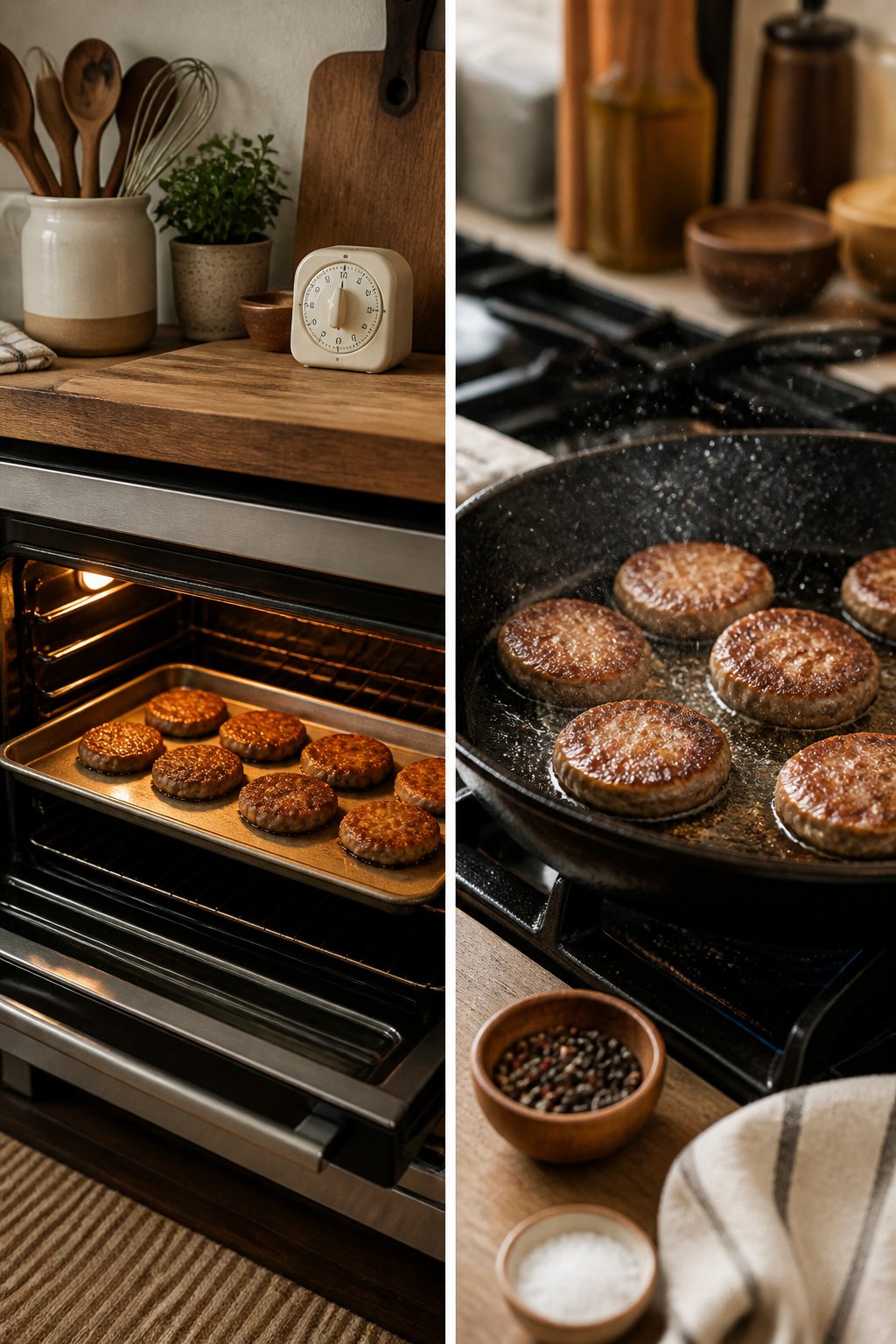
Oven cooking wins on three counts that matter in a real kitchen. First, no grease spatter across the range means the stovetop stays clean while the patties cook.
Second, a single sheet pan holds four, six, or eight patties at once without crowding a skillet.
Third, the heat wraps around each patty evenly instead of concentrating only where the pan makes contact, so the browning is more consistent from edge to edge.
You give up speed. Two patties in a hot skillet finish faster than the oven’s 15 to 20 minutes.
At four patties or more, the math flips: the oven handles the batch in one go, while the stovetop needs multiple rounds or a crowded pan that steams more than it browns.
For a household cooking breakfast for several people, the extra minutes are time saved on cleanup and on standing at the stove flipping.
Recommended Products

STAYS IN THE MEAT WHILE IT COOKS, NO BATTERY EVER: Push the 4.5-inch stainless steel probe into the roast, close the oven door and read the 2.5-inch dial through the glass. Bimetal mechanics: nothing to charge, nothing to replace, nothing to set up.

Oven Safe & Leave-In Design: Made from premium stainless steel, these thermometers are safe to leave in your roast, turkey, or casserole while it cooks in the oven or on the grill—no need to open the door or lose heat checking temps.

KT THERMO -【SET YOUR TARGET — ADJUSTABLE RED INDICATOR CLIP】 The clip-on red target indicator lets you mark your ideal finish temperature directly on the dial — no memorizing numbers. Slide it to 165°F for poultry, 145°F for pork, or wherever your recipe calls. When the needle meets the marker, your cook is done. Removable for easy cleaning
Frozen Patties in the Oven
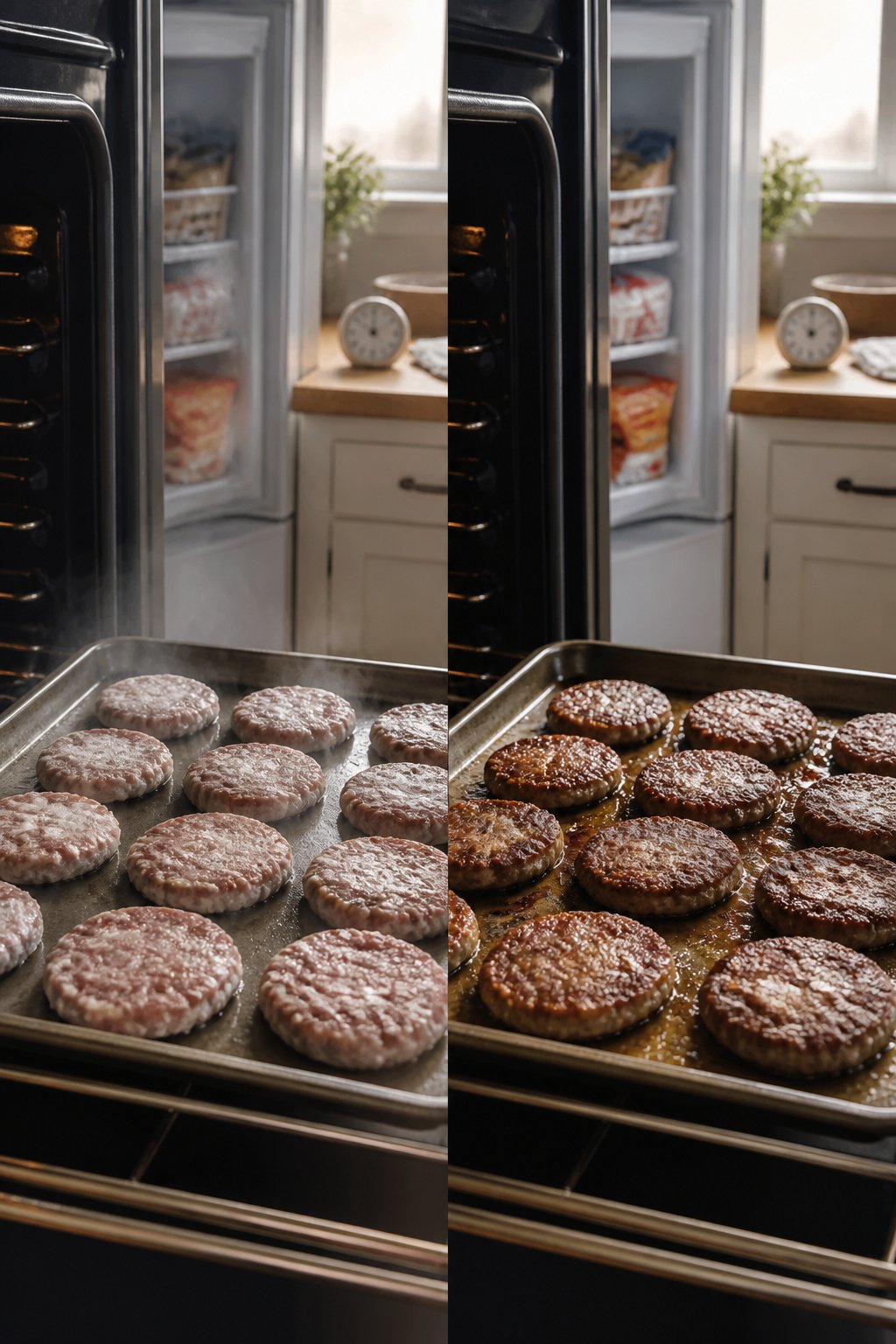
Frozen patties go straight from the freezer to the sheet pan. No thawing, no extra planning.
You pay in time: 20 to 30 minutes at 400°F, up from the usual 12 to 15. I flip mine at the 15-minute mark instead of 10, then start checking temperature.
The 160°F internal temp rule does not bend just because the meat started solid.
The dimple trick gets harder here. Pressing a dent into rock-hard pork takes effort, and the results are uneven.
I usually skip it with frozen patties. They puff a little more, but the longer bake time evens things out anyway.
Thickness matters more than brand. Small, thin packaged patties hit safe temp faster; hand-formed or thicker ones ride toward that 30-minute end.
An instant-read thermometer saves the guesswork, especially since frozen exteriors can brown before centers finish.
Recommended Products

THE PERFECT BURGER EVERY TIME: This Weston burger press patty maker makes uniform burger patties that cook evenly and don't fall apart on the grill.

2-IN-1 BURGER PATTY MOLD & PRESS - This hamburger patty maker can easily form uniform patties, then use the same tool to press burgers on the grill or griddle for crispy edges and juicy results. One versatile tool saves money, space, and prep time.

Create perfect, flat patties every time
Store and Reheat
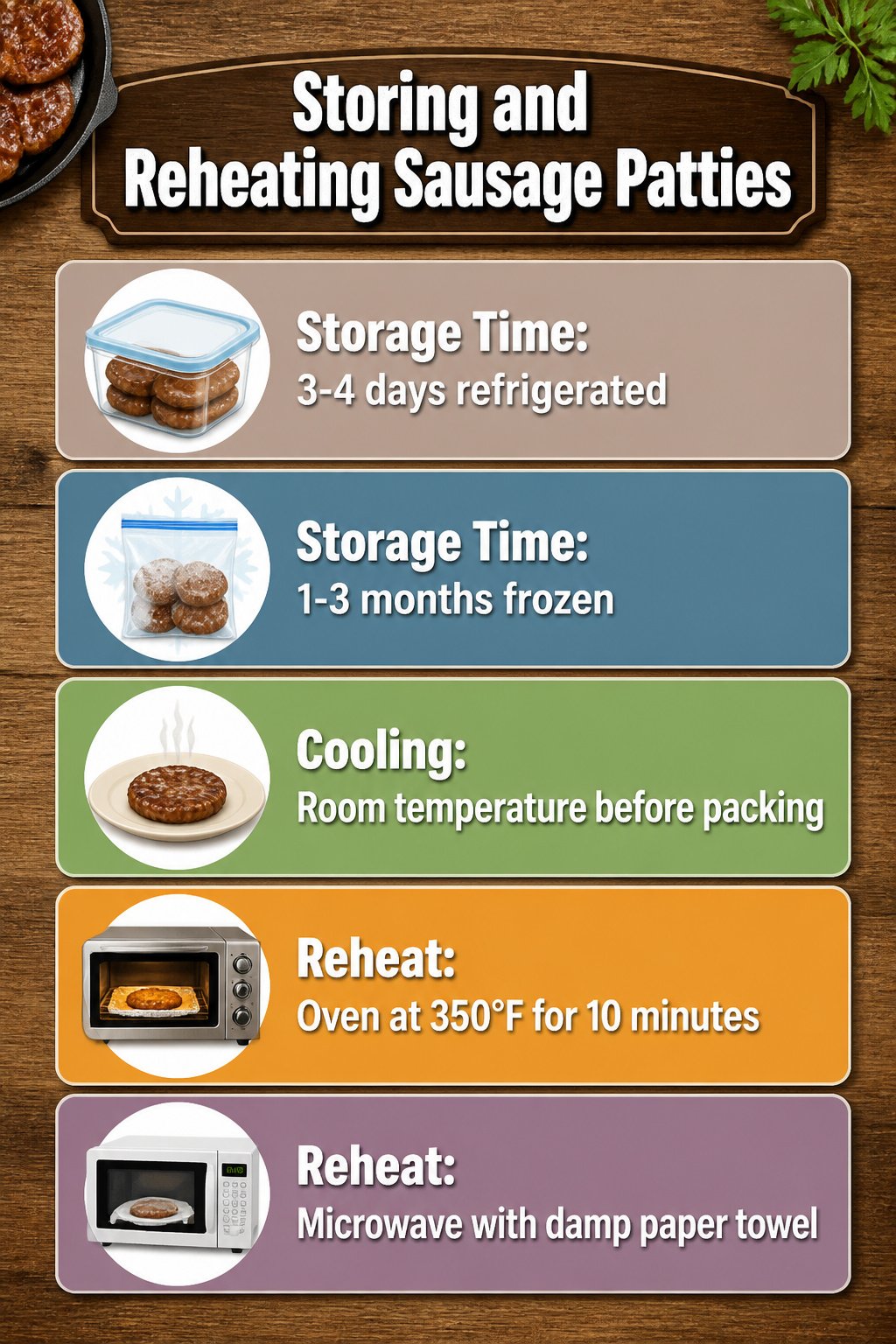
Cooked patties keep 3–4 days refrigerated or up to 1–3 months frozen. Let them cool to room temperature before packing them away; trapping steam against the meat turns the surface gummy.
For reheating, you have two workable paths:
- Oven at 350°F for 10 minutes — this is the move if you want the exterior to crisp back up. The dry heat pulls moisture from the surface the same way the first bake did.
- Microwave covered with a damp paper towel — faster by half, but the steam softens the crust into something closer to a steamed dumpling skin. Fine for a sandwich, disappointing on its own.
I keep a foil-lined toaster oven tray ready for this. Ten minutes while the coffee brews, and the patty comes back almost as it left.
Recommended Products

Package Includes: One (1) Reynolds Wrap Heavy Duty Aluminum Foil Roll measuring 50 feet long by 12 inches wide (50 square feet total)

Dimensions : square aluminum foil pan.Please measure the dimension of the inner basket to make sure it fits in

95 Square Feet: non-stick Heavy Duty Aluminum foil roll, providing better coverage and heat retention. Nonstick foil will provide a layer of protection or coverage in high-temperature environments, but not used for naked flame
Frequently Asked Questions
How long to cook sausage patties in the oven?
u003cpu003eBake fresh patties 12 to 20 minutes at 400°F, flipping once at the halfway mark. Thin breakfast links land on the shorter end; hand-formed rounds closer to an inch thick need the full stretch.u003c/pu003e u003cpu003eFrozen patties take 20 to 30 minutes at the same temperature.u003c/pu003e
Can you cook frozen sausage patties in the oven?
u003cpu003eYes. Put them straight from the freezer onto the sheet pan and bake 20 to 30 minutes at 400°F, flipping at the 15-minute mark.u003c/pu003e u003cpu003eThe 160°F internal temperature rule still applies, so start checking with a thermometer once the exterior looks done.u003c/pu003e
What temperature should sausage patties be cooked to?
u003cpu003ePork and beef sausage patties should reach 160°F in the center; poultry sausage needs 165°F. Slide an instant-read thermometer into the thickest patty, not near the edge, to get an accurate reading.u003c/pu003e
Is it better to bake sausage at 350 or 400?
u003cpu003e400°F is the better default for sausage patties alone; it browns the outside without drying the middle.u003c/pu003e u003cpu003eA range of 350°F to 425°F works if other dishes are sharing the oven, and 375°F makes sense if your oven tends to run hot.u003c/pu003e
How long do sausages take to cook at 350 degrees?
u003cpu003eAt 350°F, expect to add several minutes to that window; the exact time depends on thickness and whether the patties are fresh or frozen. An instant-read thermometer is the safest guide.u003c/pu003e
How long does it take to cook sausages in an oven?
u003cpu003eBreakfast-sized sausage patties or links take 12 to 15 minutes at 400°F. Larger sausages like Italian or brat styles need 25 to 30 minutes. Fresh patties cook faster than frozen, which need 20 to 30 minutes.u003c/pu003e
How long to cook breakfast sausage in the oven at 400 degrees?
u003cpu003eBreakfast sausage patties or links take 12 to 15 minutes at 400°F, flipped halfway through. If they look pale, a 1 to 2 minute pass under the broiler adds color without changing the texture.u003c/pu003e
About The Author