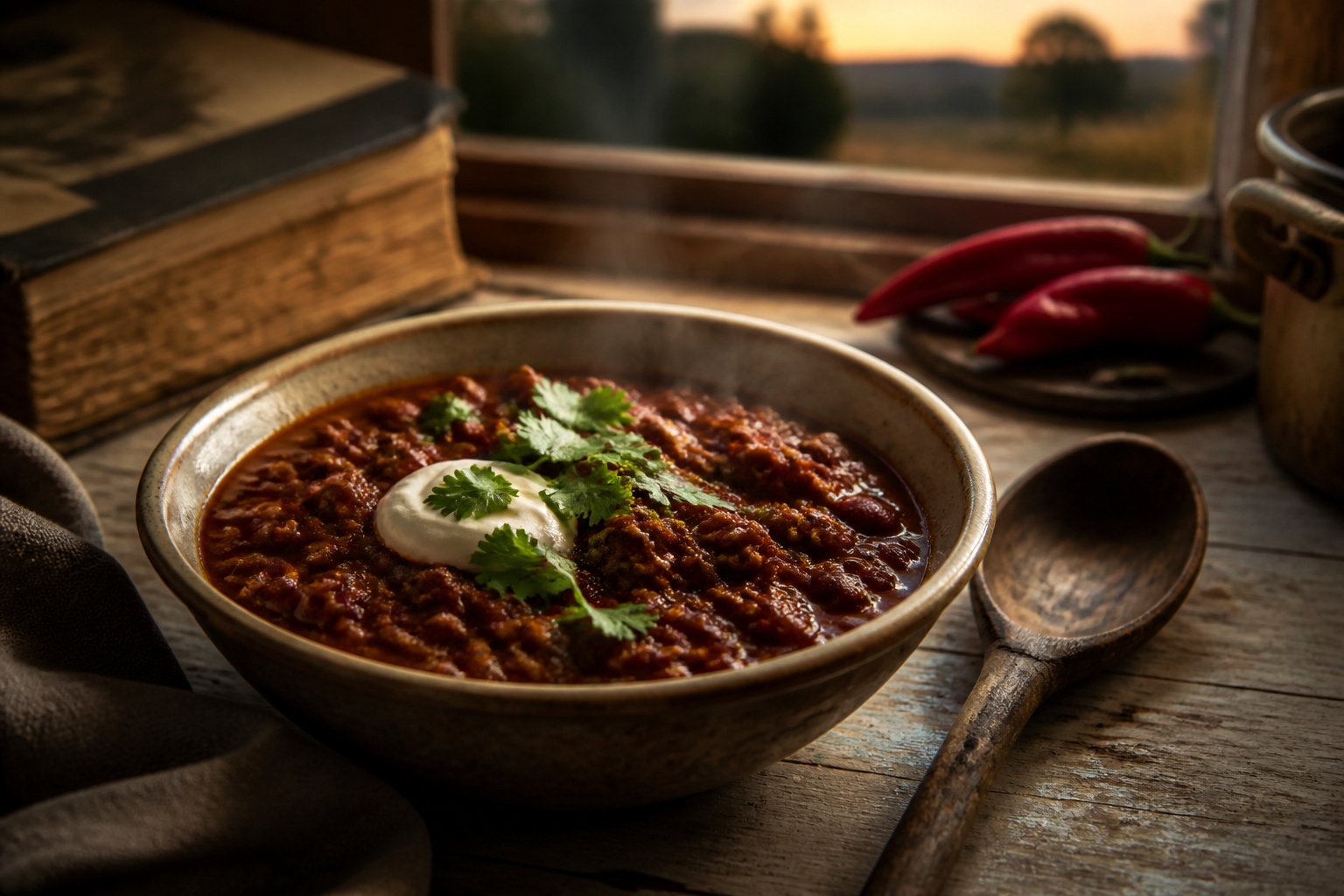
A proper pot of chili should coat the back of a spoon without sliding off, and getting there takes anywhere from one minute with quick oats to a full half-hour of uncovered simmering.
The mistake most people make is treating all thin chili the same. If yours tastes fully seasoned but pools on the plate, you need reduction; if it tastes watery and bland, you probably overdid the stock.
A cornstarch slurry works in ten minutes with no flavor shift, but only if you start with cold water, equal parts, and stir until the granules disappear before they ever hit the pot.
1. Simmer Uncovered
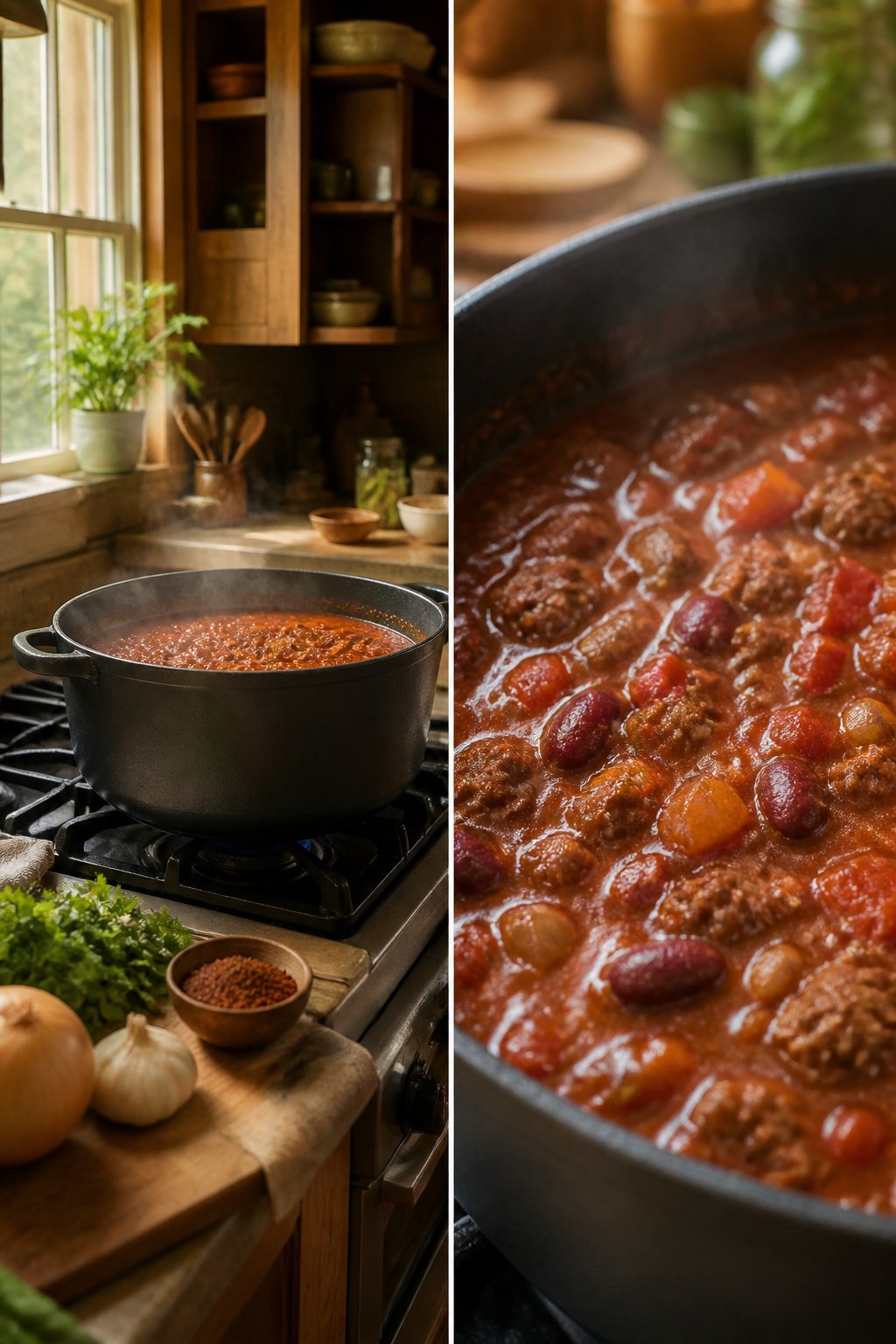
Taking the lid off the pot is the most straightforward move in the whole thickening playbook. Twenty to thirty minutes of uncovered simmering lets enough steam escape that the liquid reduces and the chili tightens up on its own.
No extra ingredients, no risk of changing the flavor you already built. The only cost is time, and the kitchen fills with the concentrated smell of it while you wait.
Stir it now and then so nothing settles and scorches on the bottom. Patience here is the whole trick; the chili was already good, it just needed less water in the room.
2. Cornstarch Slurry
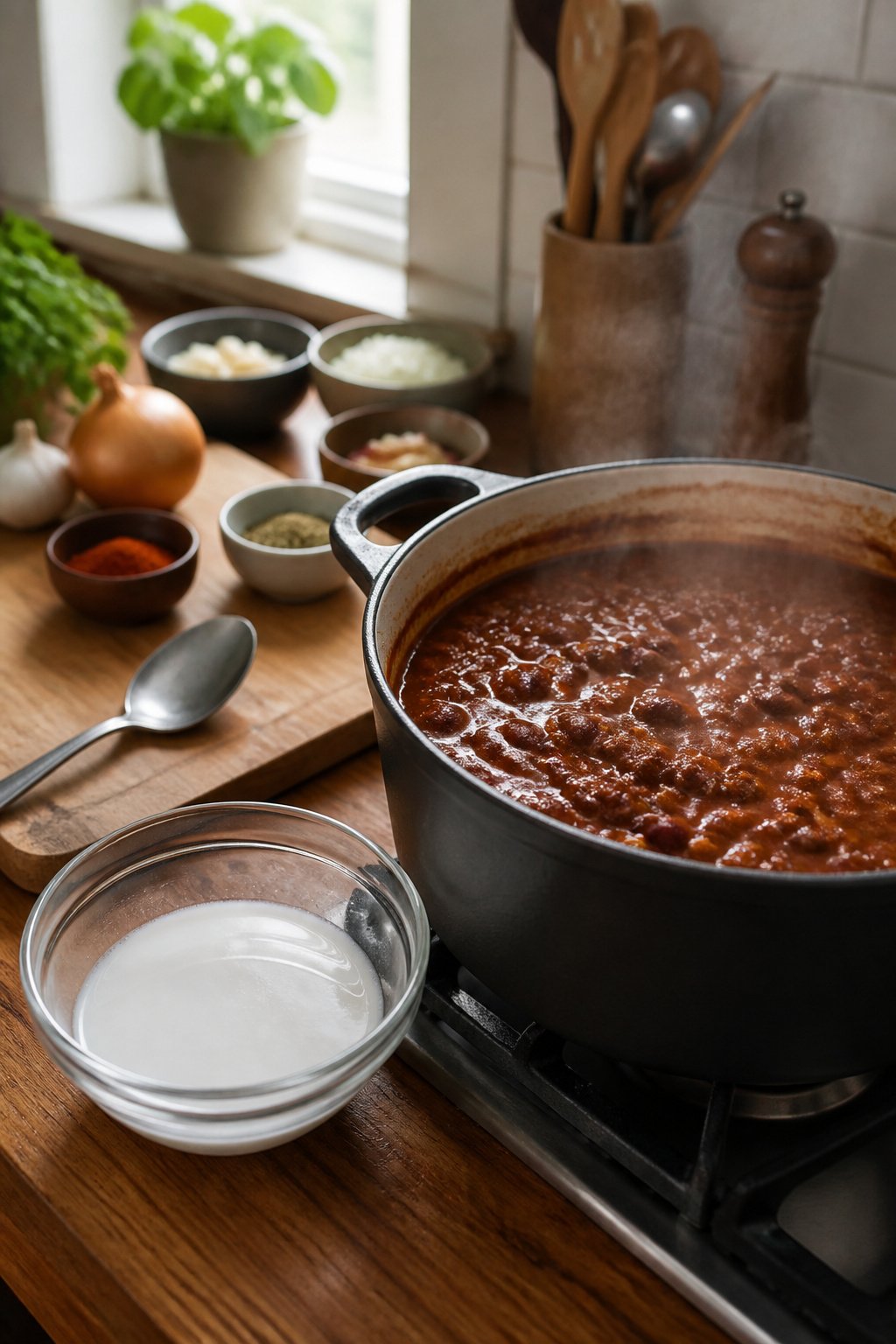
A cornstarch slurry thickens chili without adding any flavor of its own, which matters when you’ve already got the seasoning where you want it.
Mix 1 tablespoon cornstarch with 1 tablespoon cold water until it’s completely smooth, then stir it into the simmering pot.
The cold water keeps the granules from clumping on contact with the hot liquid; dump cornstarch straight in and you’ll end up with gummy, translucent lumps that never fully dissolve.
Let the chili simmer for about 10 minutes after adding the slurry. The starch granules swell and gel as they heat, binding the loose liquid into something that coats a spoon.
Some sources call for 2 tablespoons cornstarch with 2 to 3 tablespoons water, so if your pot is on the larger side or the chili is especially thin, that heavier ratio is the safer bet.
Either way, the result is neutral: no added taste, just body.
3. Flour Slurry
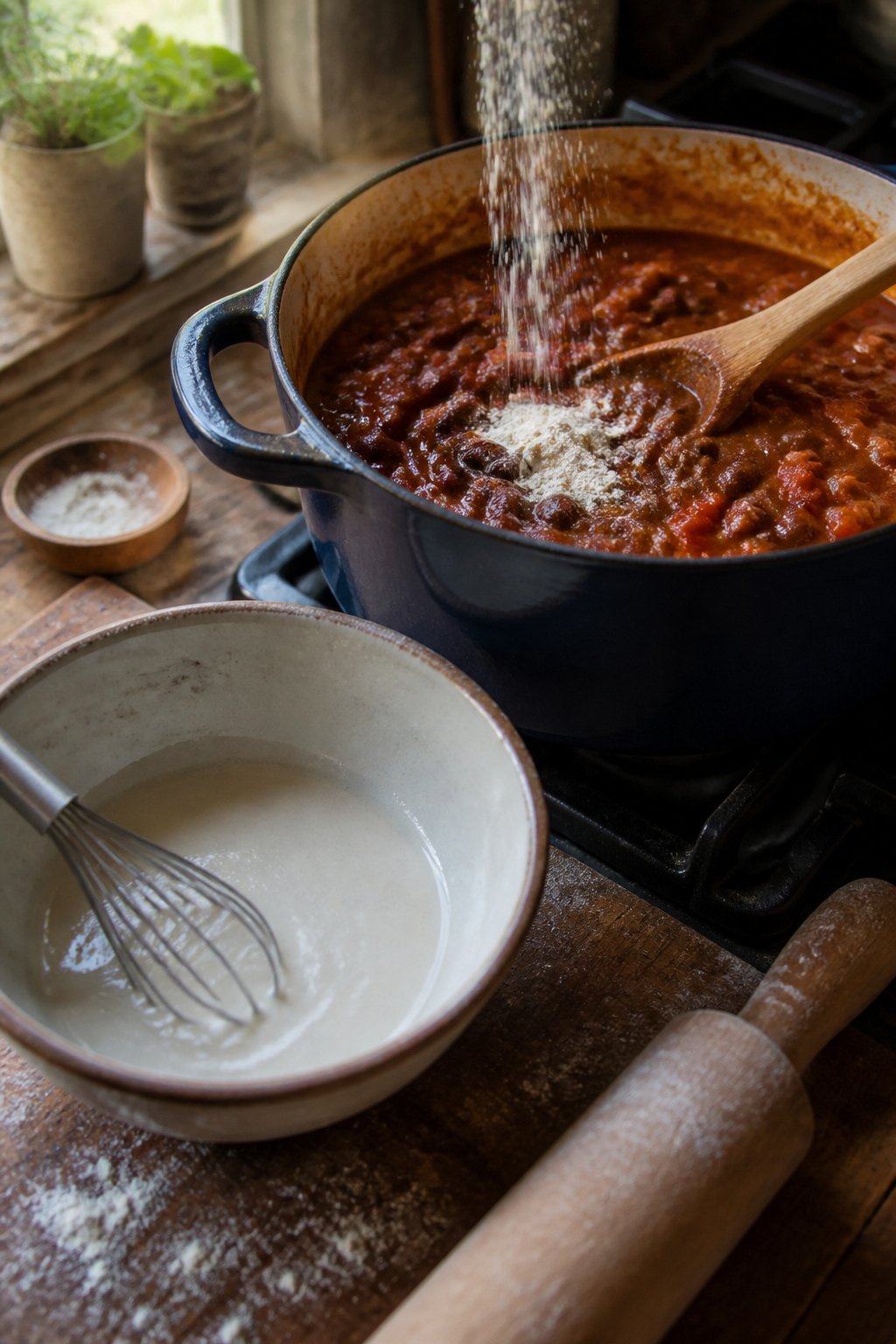
A flour slurry thickens chili faster than cornstarch but needs more water to work. Mix 2 tablespoons of flour with 1/4 cup cold water, then stir it straight into the pot and let everything simmer about 5 minutes.
That shorter simmer is a trade-off: flour can taste raw and chalky if it does not hit the full cook time, so the clock matters here.
You will also notice the chili turns a shade paler, especially in a tomato-heavy batch where the red dulls slightly.
Cornstarch asks for equal parts starch and water and a full 10 minutes to set, while flour takes roughly double the liquid and half the time.
If you are deciding between the two, the flour slurry wins when you are in a hurry and do not mind the lighter color; cornstarch keeps the deeper tone but needs patience.
4. Masa Harina
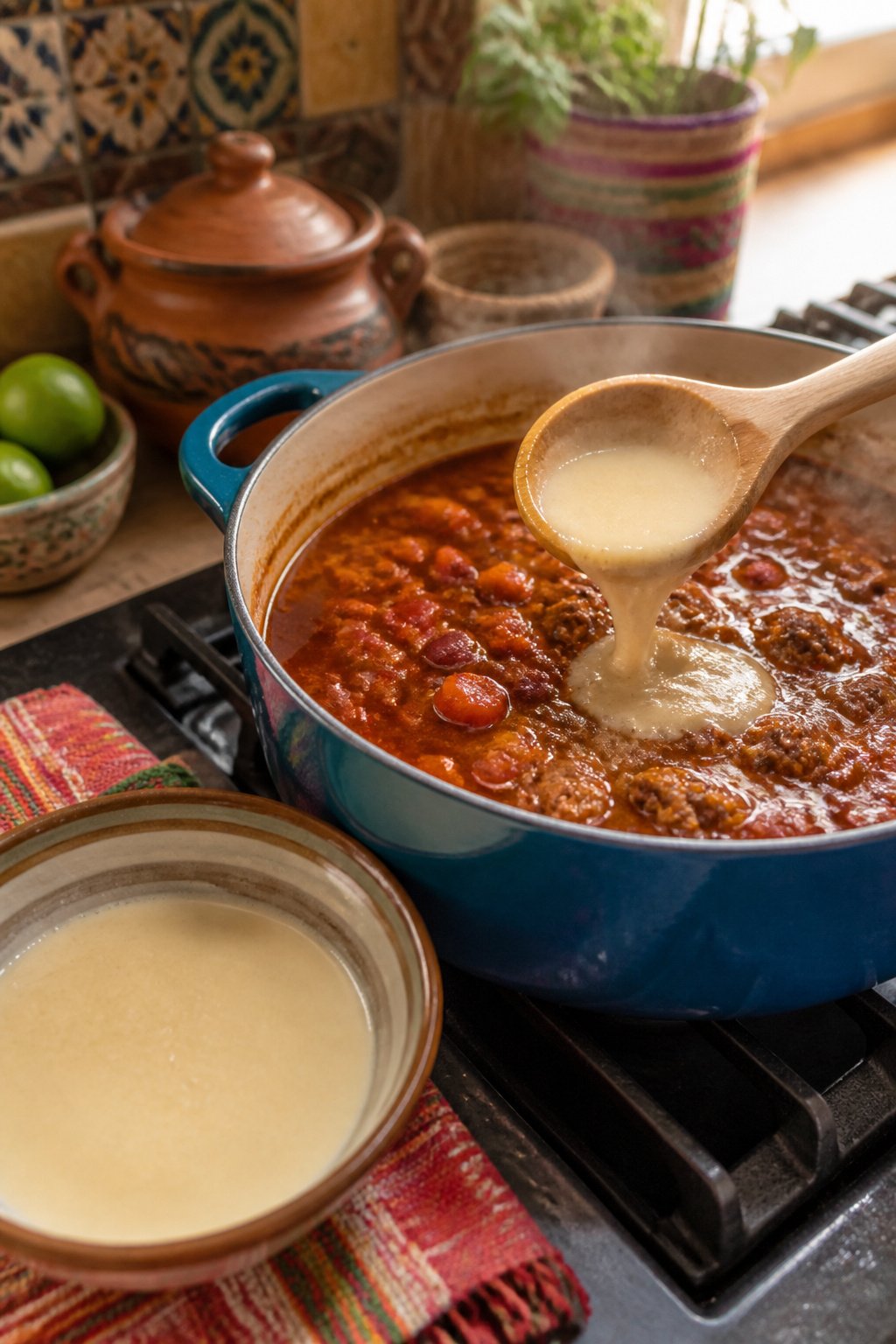
Masa harina is the corn flour used to make fresh tortillas, finer and paler than cornmeal, and it thickens chili with a light hand that other starches don’t manage.
Start with 1 tablespoon stirred into an equal amount of water, then pour the slurry into the pot and let it simmer for five to ten minutes while you stir.
The pale color disappears into the red, and what you get is body without weight, plus a faint corn sweetness that belongs in chili the way lime belongs in a margarita.
Some cooks find the finished pot reads almost cornbread-adjacent; others just notice the deeper, rounder finish. Either way, it works faster than you’d expect, so check early and add more only if the spoon still runs too thin.
5. Mashed Beans
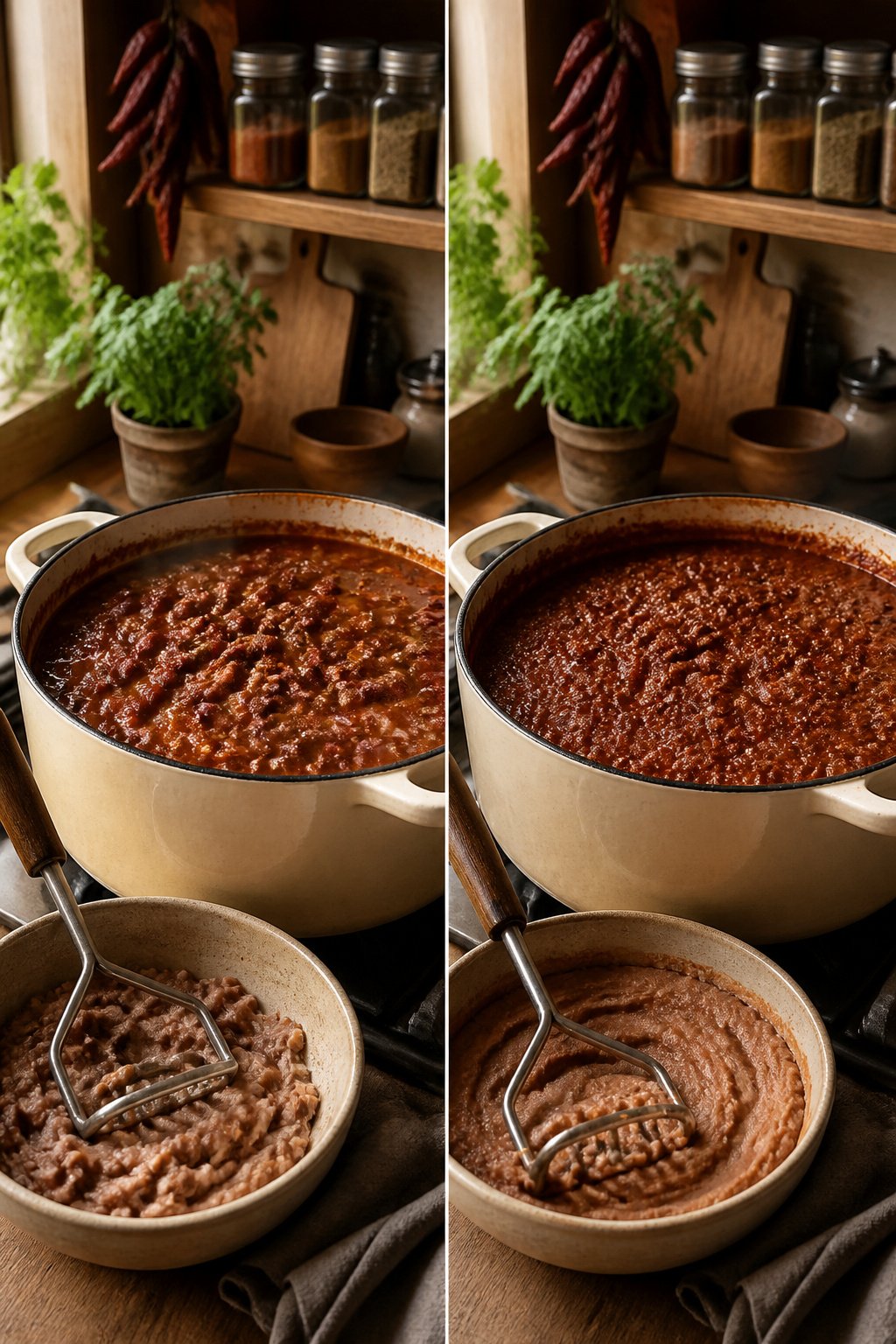
Mashed beans are the thickener already hiding in your pot, so the flavor stays exactly where it started. Scoop out a cup or two, mash them with a potato masher until they break down, then stir the paste back in.
The released starches bind the liquid without adding anything foreign.
This works best when your chili is bean-heavy to begin with. If your recipe has no beans at all, this method is off the table; you will need to pick another thickener from the list.
One practical note: mashing drops the visible bean count, so the texture turns more uniform. Leave some beans whole if you want that contrast.
And because you have effectively concentrated the base, taste the pot afterward. A couple extra pinches of chili powder, cumin, salt, or pepper usually brings the seasoning back into balance.
6. Cornmeal
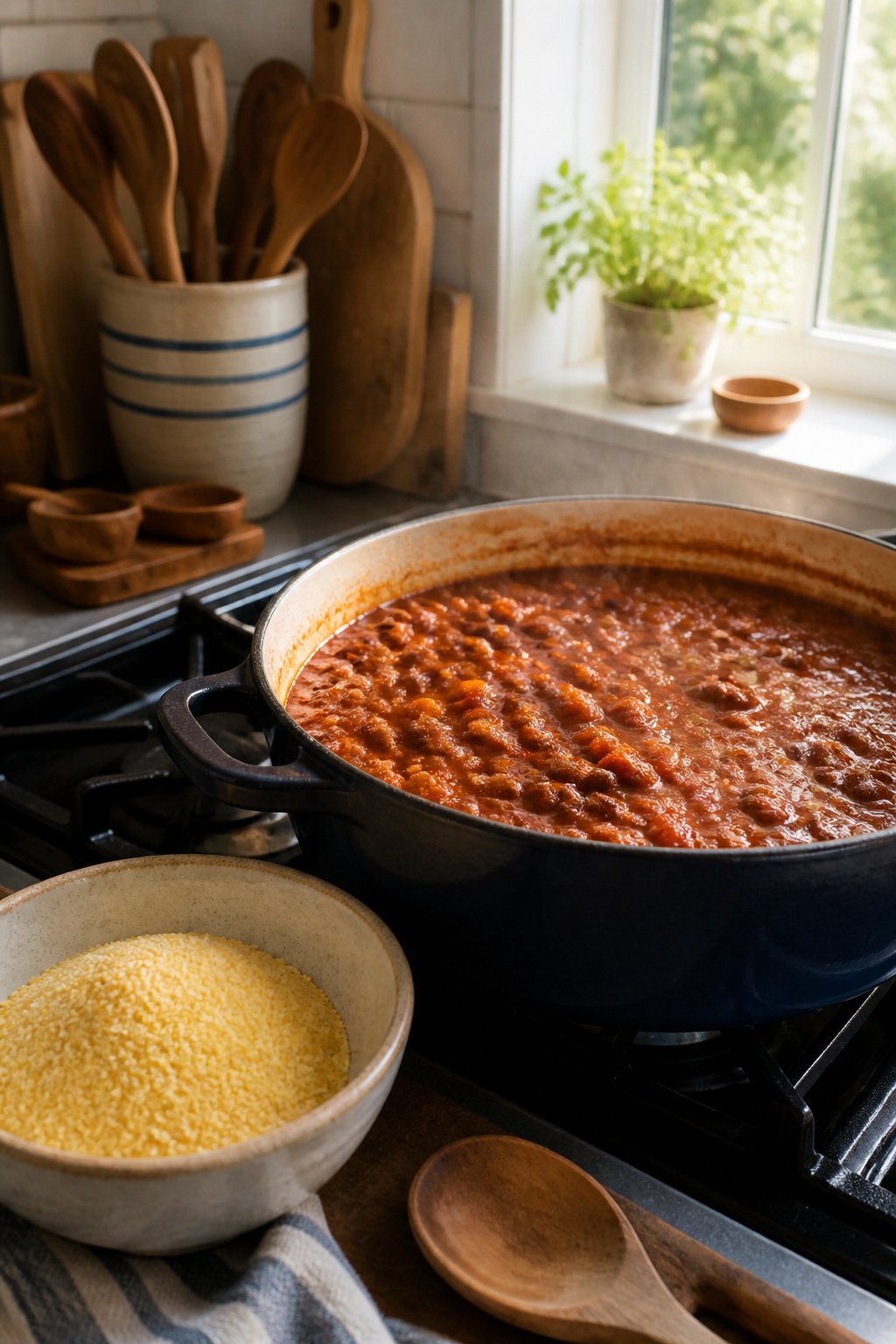
A tablespoon of cornmeal stirred into a thin pot and simmered for about 10 minutes will pull in excess liquid the way a sponge does.
The texture shifts to something slightly gritty, with a faint corn sweetness that reminds me of crumbling cornbread straight into the bowl.
Coarse cornmeal takes longer to soften than fine, so if the spoon still catches on grains after 10 minutes, give it another few.
Polenta or corn grits work too, though they behave more like the coarse meal and need that extra time to lose their edge.
I would not reach for this in a chili already heavy with tomato or chocolate notes; the corn competes rather than complements. But in a straight-ahead beef and bean pot, it adds body without stealing the show.
7. Quick Oats
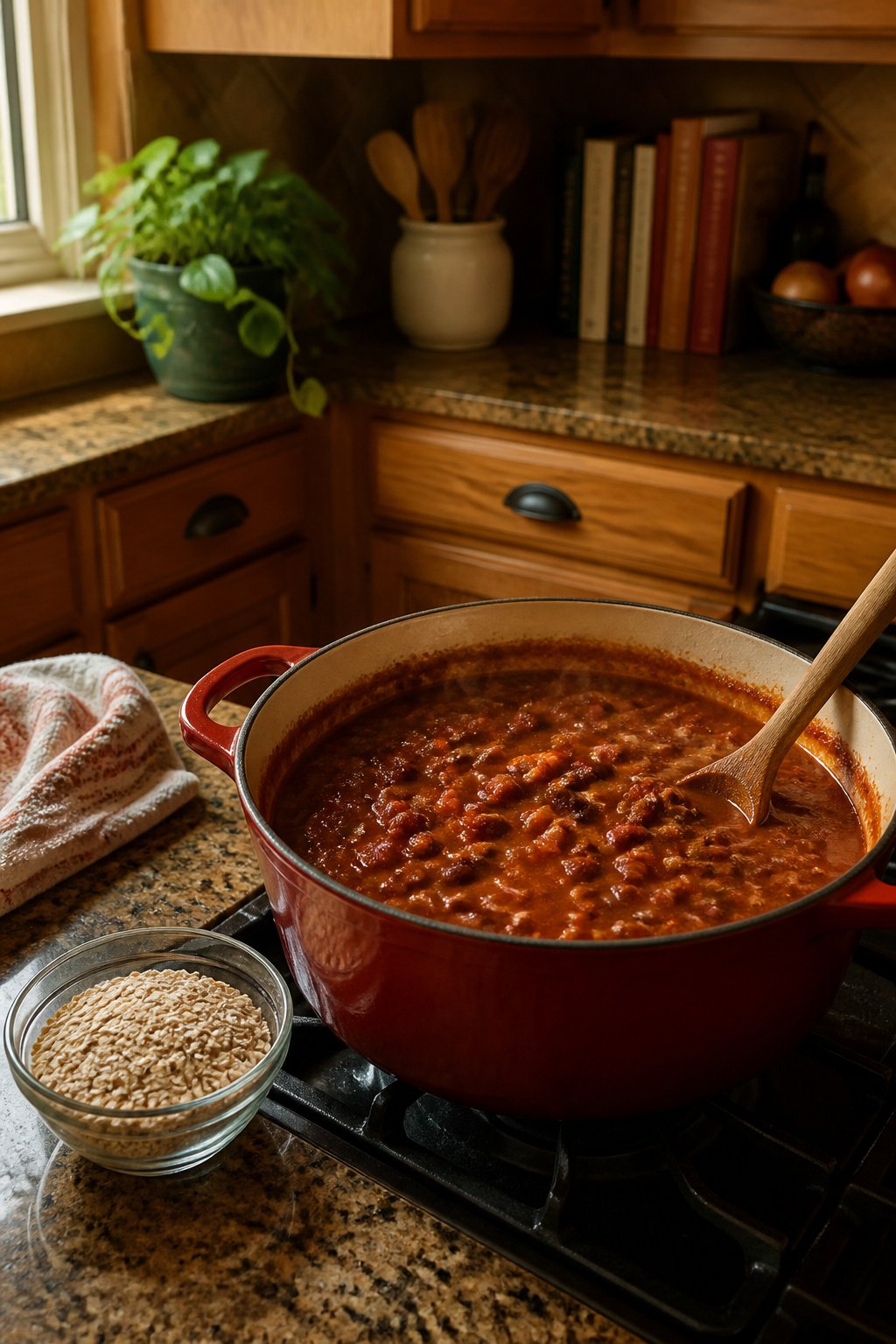
Stir 1 tablespoon of quick oats into the chili and let it cook for 1 to 2 minutes. The oats absorb excess liquid almost immediately, making this the fastest thickening method in the rotation.
Rolled oats take longer to break down and leave more texture behind, so keep the quick variety on hand if speed matters. Flavor-wise, oats fade into the background.
The chili won’t taste like breakfast, but the finished bowl carries a slight creaminess that rounds out the edges without announcing itself.
If the pot still looks thin after the first minute, a second tablespoon and another 2 minutes of simmering will get you there.
8. Tomato Paste
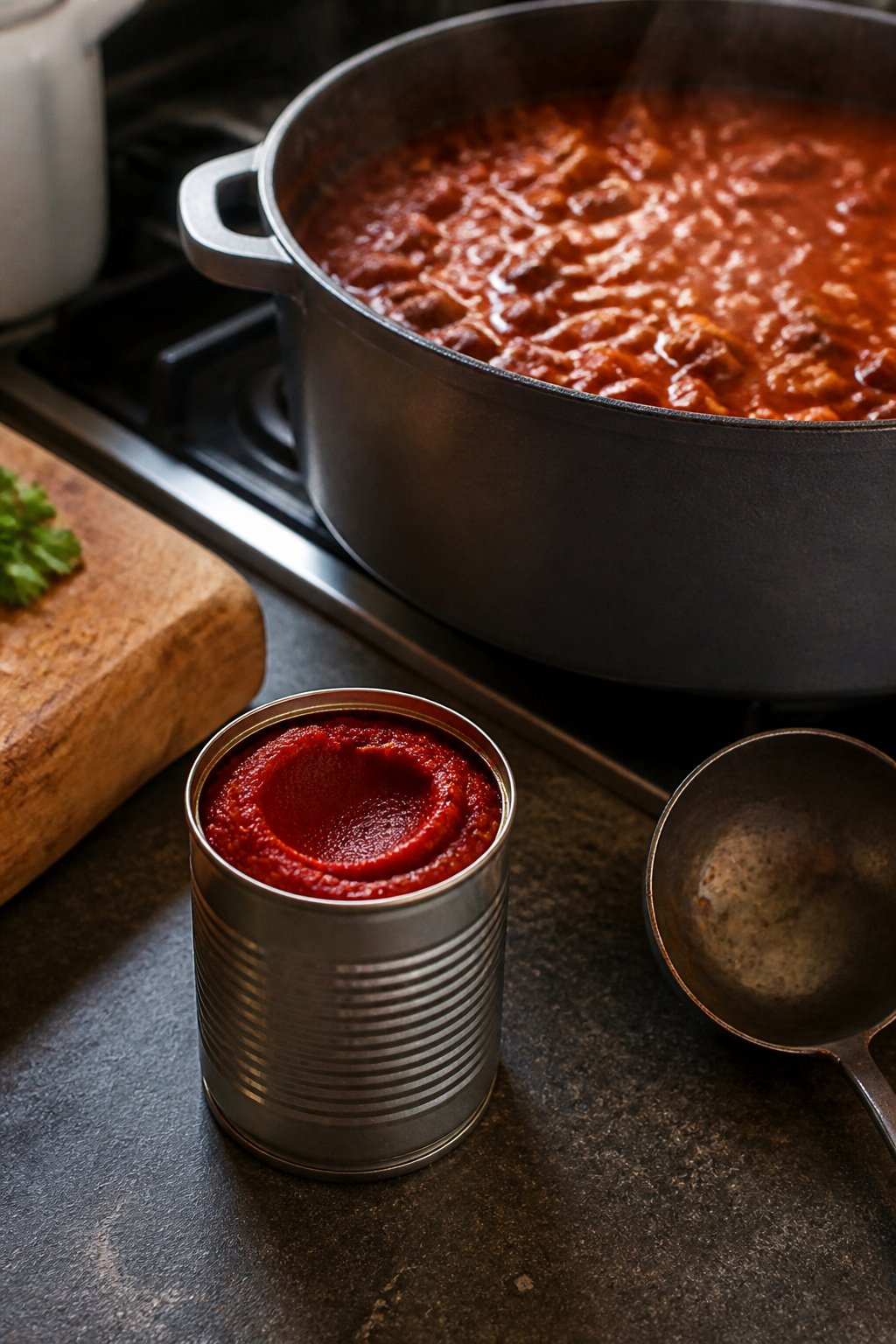
A six-ounce can of tomato paste thickens a full pot while adding depth you cannot get from simmering alone.
The paste carries concentrated solids and natural pectin that bind the liquid, but it also brings acidity and a darker, more intense color. Timing matters with tomato paste.
The paste needs a solid thirty minutes of simmering to lose its raw, metallic edge and melt into the background of the chili.
Stir it in early enough that those thirty minutes happen before you plan to serve, or the brightness of uncooked tomato will sit on top of the other flavors.
Some cooks on Reddit mention adding the full six ounces at once and letting the pot go low and slow; others break it into smaller additions spaced across the last hour.
Either way works, though the single dump saves you from hovering. The color shift is immediate, a deeper brick red that looks like chili that has been cooking all afternoon even when it has not.
If your chili already leans acidic from canned tomatoes, the paste will push it further, so taste before the final simmer and balance with a pinch of sugar only if needed.
9. Shredded Cheese
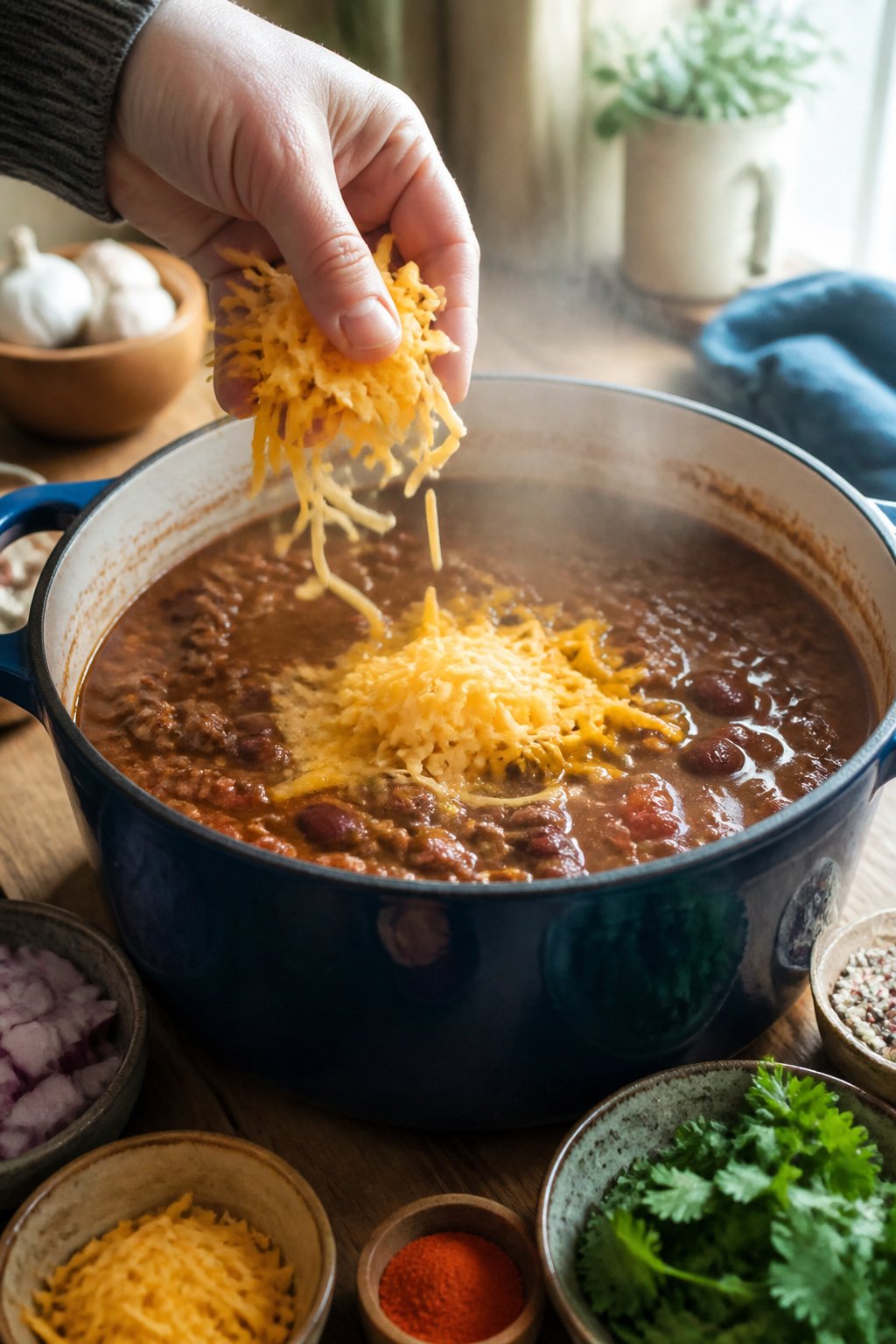
Shredded cheese thickens chili by melting directly into the liquid, and the difference from a starch slurry is immediate on the spoon.
Cheddar, Monterey Jack, or a Mexican blend all work; the cheese carries emulsifiers that bind fat and broth together into something clingy rather than soupy.
I reach for this method when the chili is already where I want it on spice and salt, because the cheese changes the character of the pot more than cornstarch or flour ever will.
It becomes richer, heavier, more like a cheese soup with meat than a bowl of red. That is not a complaint, just a fact to plan around.
If you were hoping for a clean, chili-forward flavor, cheese is not your fix.
If you want comfort-food density and do not mind the dairy overlay, stir in a handful at a time off the heat and let each addition melt before the next.
The pot thickens in front of you, and you stop when the spoon stands up the way you like.
10. Crushed Tortilla Chips
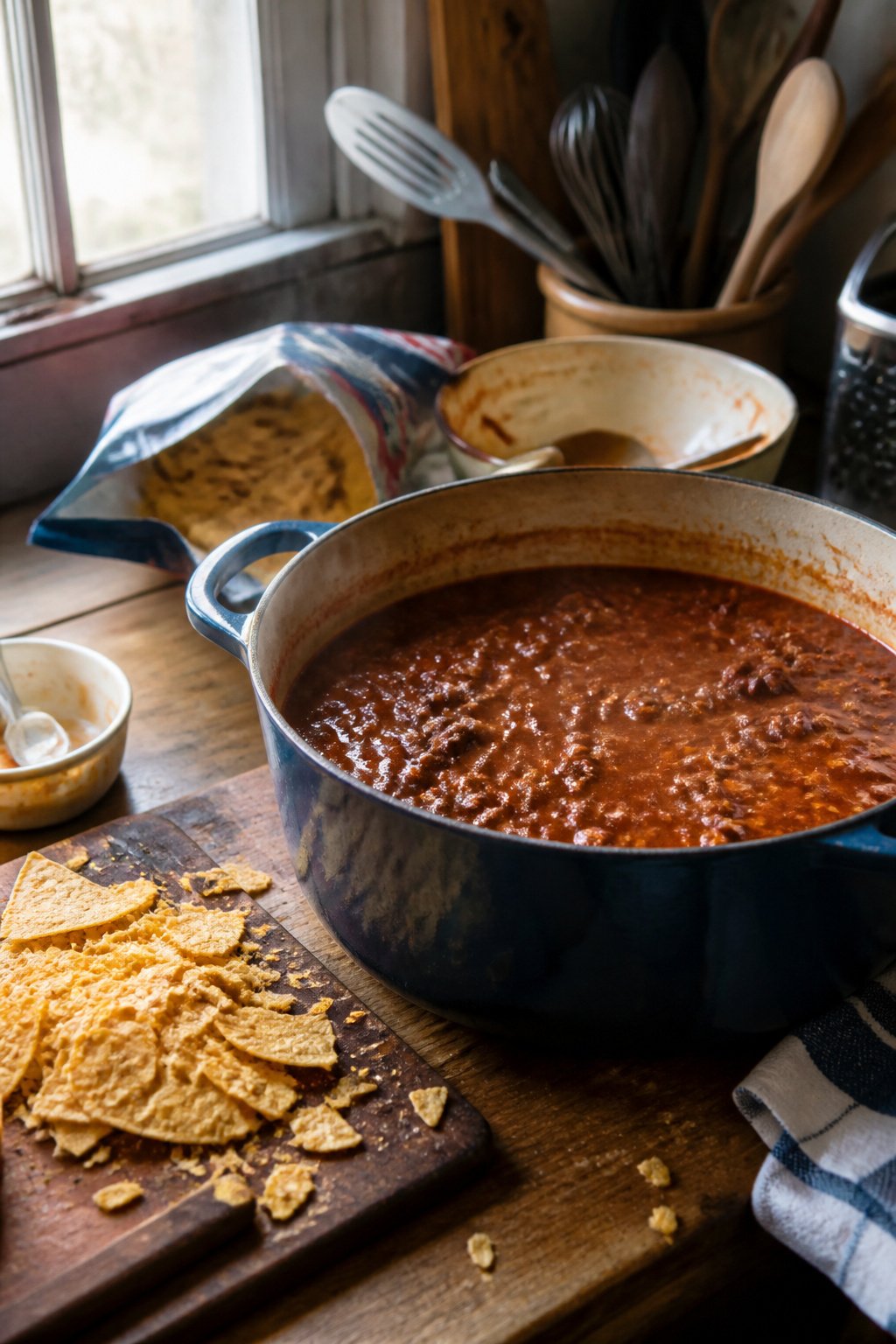
Crushed tortilla chips rescue a thin pot of chili faster than almost anything in the pantry.
The starches in the corn absorb excess liquid while the chips soften into the broth, leaving behind a subtle toasted-corn flavor and a little extra salt.
Stale chips work perfectly here, so that half-empty bag from last weekend’s nachos is fair game.
Stir a handful of crushed chips directly into the simmering pot and give them about five minutes to do their job. The chili will tighten up noticeably as the chips break down.
If you want more body, add more chips, but stop before the pot turns into Frito pie.
This is a last-minute fix, not a foundation, and it shines when the clock is running down and the ladle still runs too loose.
11. Arrowroot Powder
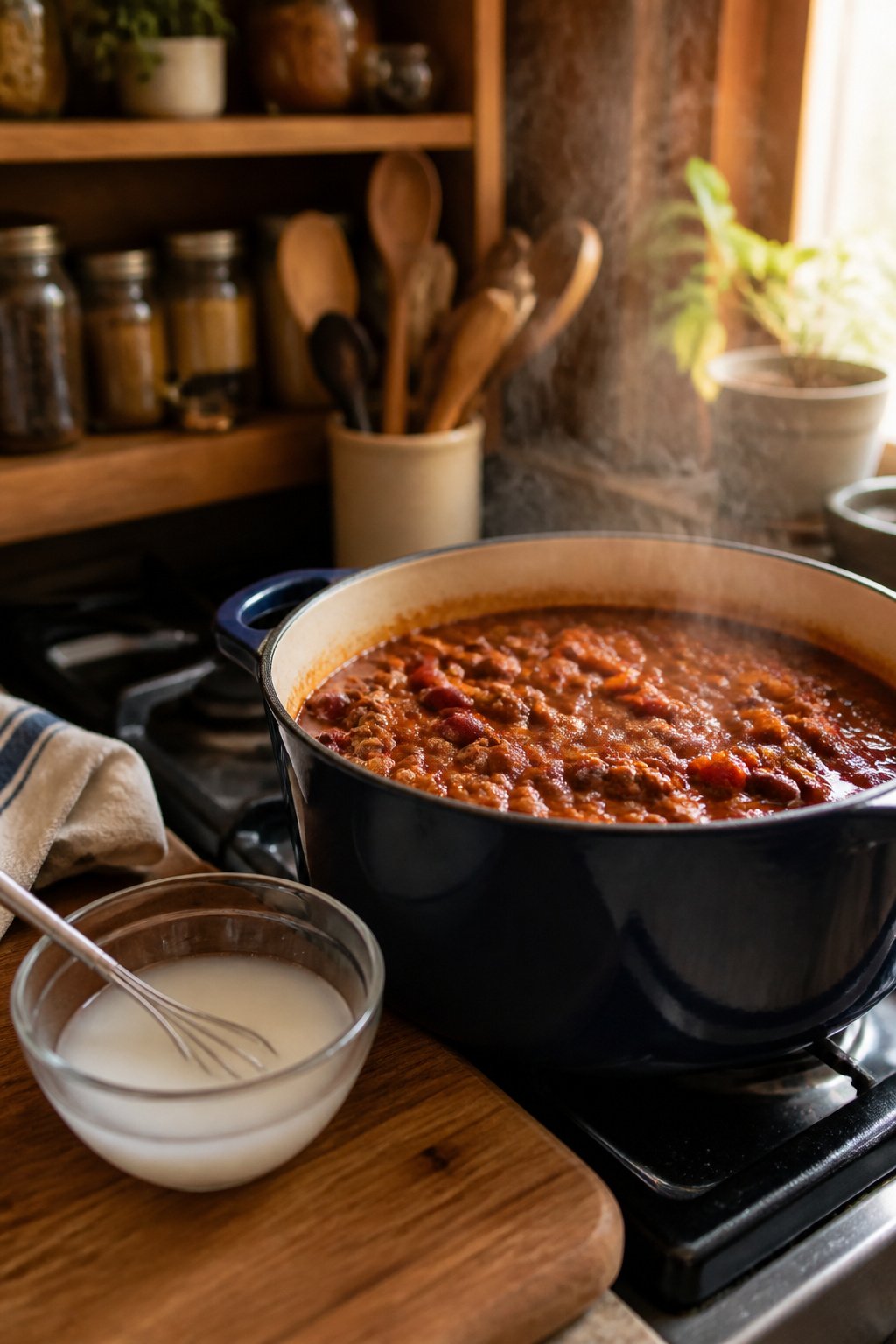
Arrowroot powder works almost exactly like cornstarch, but with a couple of differences worth knowing before you choose it.
Mix one teaspoon of arrowroot with one teaspoon of cold water to make a slurry, then stir it into the chili and let it simmer for five minutes.
The chili comes together quickly, more cohesive without the half-hour wait some other methods need.
The real advantage shows up if you are making a big batch to freeze. Arrowroot holds its thickness through freezing and reheating better than cornstarch does, which can turn spongy or weep after thawing.
It is also grain-free and gluten-free, so it fits diets that cornstarch or flour slurries do not.
The finish is noticeably different, though. Arrowroot gives the chili a clearer, glossier look rather than the matte, opaque coat that starch thickeners leave behind.
That sheen can be beautiful in a fruit pie filling, but in a rustic chili it sometimes looks almost too polished.
I reach for arrowroot when I know the pot is heading to the freezer; for a same-night bowl, cornstarch or flour does the job with a more familiar texture.
12. Xanthan Gum
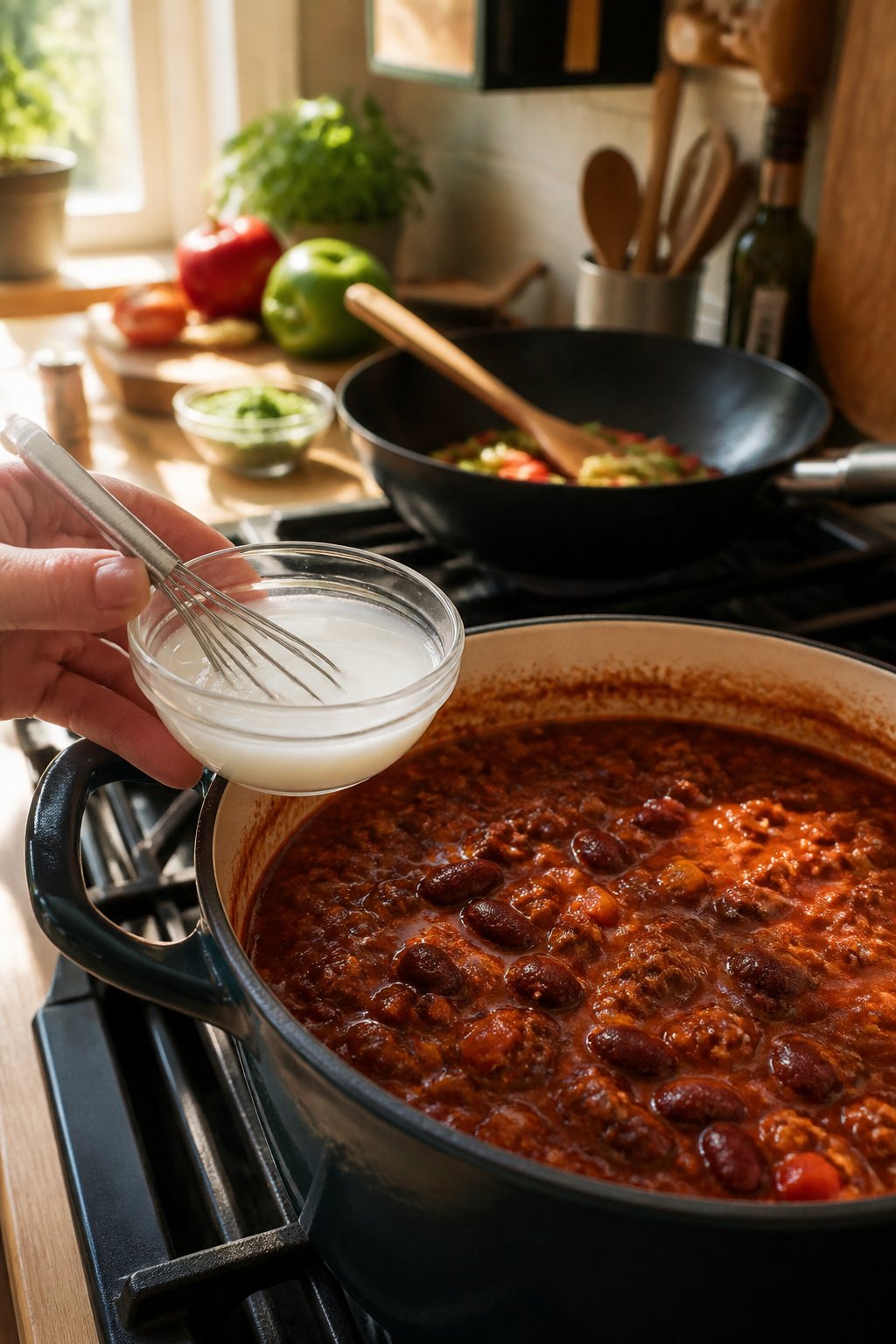
Xanthan gum is the most powerful thickener on this list, which means it is also the easiest to ruin.
Start with 2 tablespoons mixed into 3 tablespoons of cold water in a small bowl, stir that slurry into the chili, and let it simmer for about 10 minutes. The broth will turn viscous and stew-like as the gum binds with the liquid.
This one is useful for gluten-free cooking, but the texture can go wrong fast. Too much, or too vigorous stirring once it is in, and the chili turns slimy rather than hearty.
If you have never used it before, add half the slurry first, wait the full 10 minutes, and judge whether the pot needs the rest. You can always stir in more; you cannot stir it back out.
Why Chili Turns Out Thin
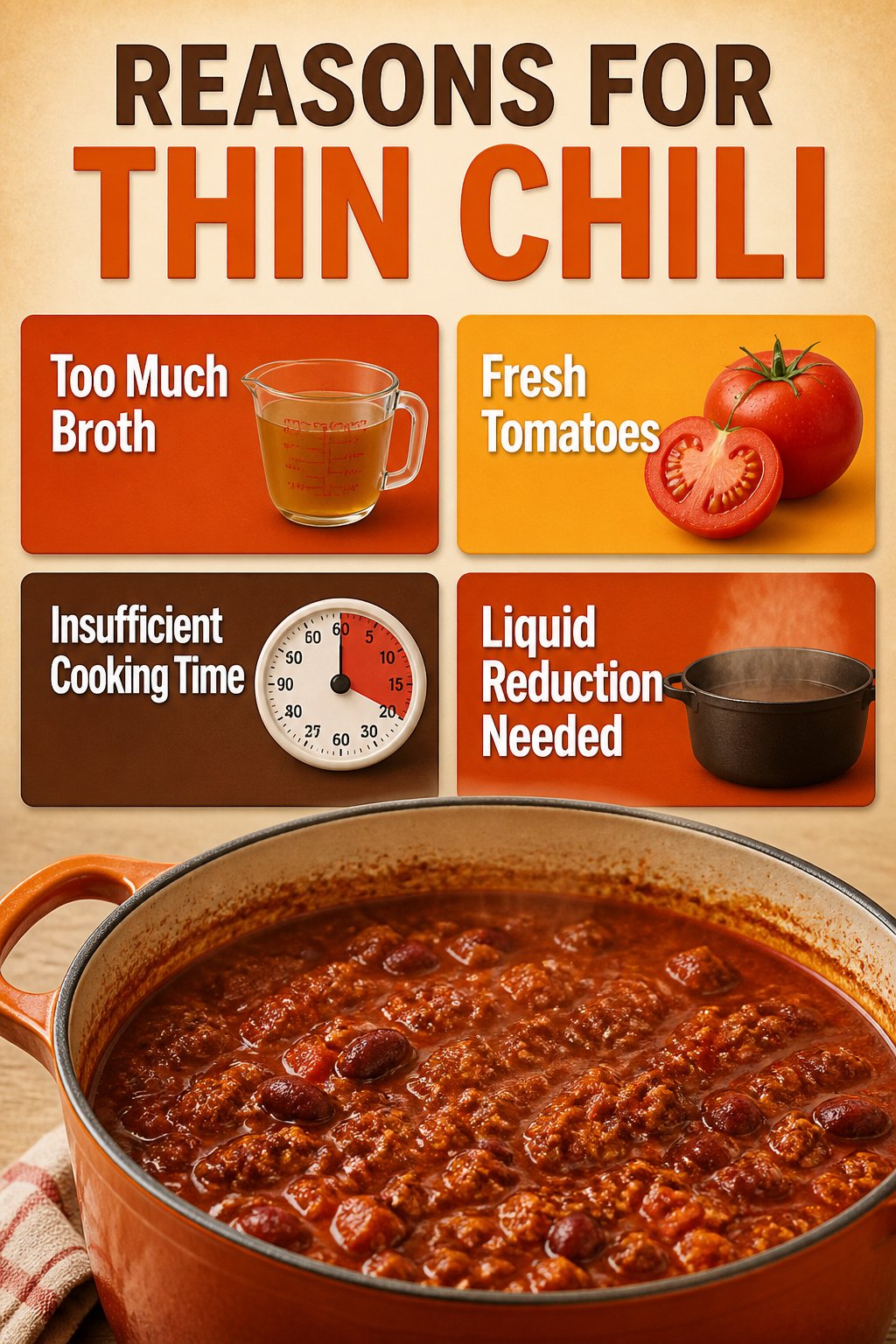
Thin chili usually comes down to one of three things.
Too much broth is the most common culprit; stock adds depth, but even an extra half-cup can tip the pot from stew to soup, especially if the recipe already builds liquid from other ingredients. Fresh tomatoes are another sneaky source.
They release water as they heat, something canned tomatoes have mostly already done, so swapping in two fresh Roma tomatoes for a can of diced can leave you with more liquid than you planned. The third reason is time.
A proper chili needs that low, slow simmer for the liquid to reduce and the flavors to tighten up. Rushing it off the heat after twenty minutes leaves the broth thin and the spices underdeveloped.
Figuring out which one got you is the first step toward picking the right fix. If the chili tastes fully seasoned but pools on the plate, you probably need to reduce.
If it tastes watery and bland, you may have overdone the stock. And if you see tomato seeds swimming in a thin red broth, those fresh tomatoes are the likely suspect.
How Thick Chili Should Be
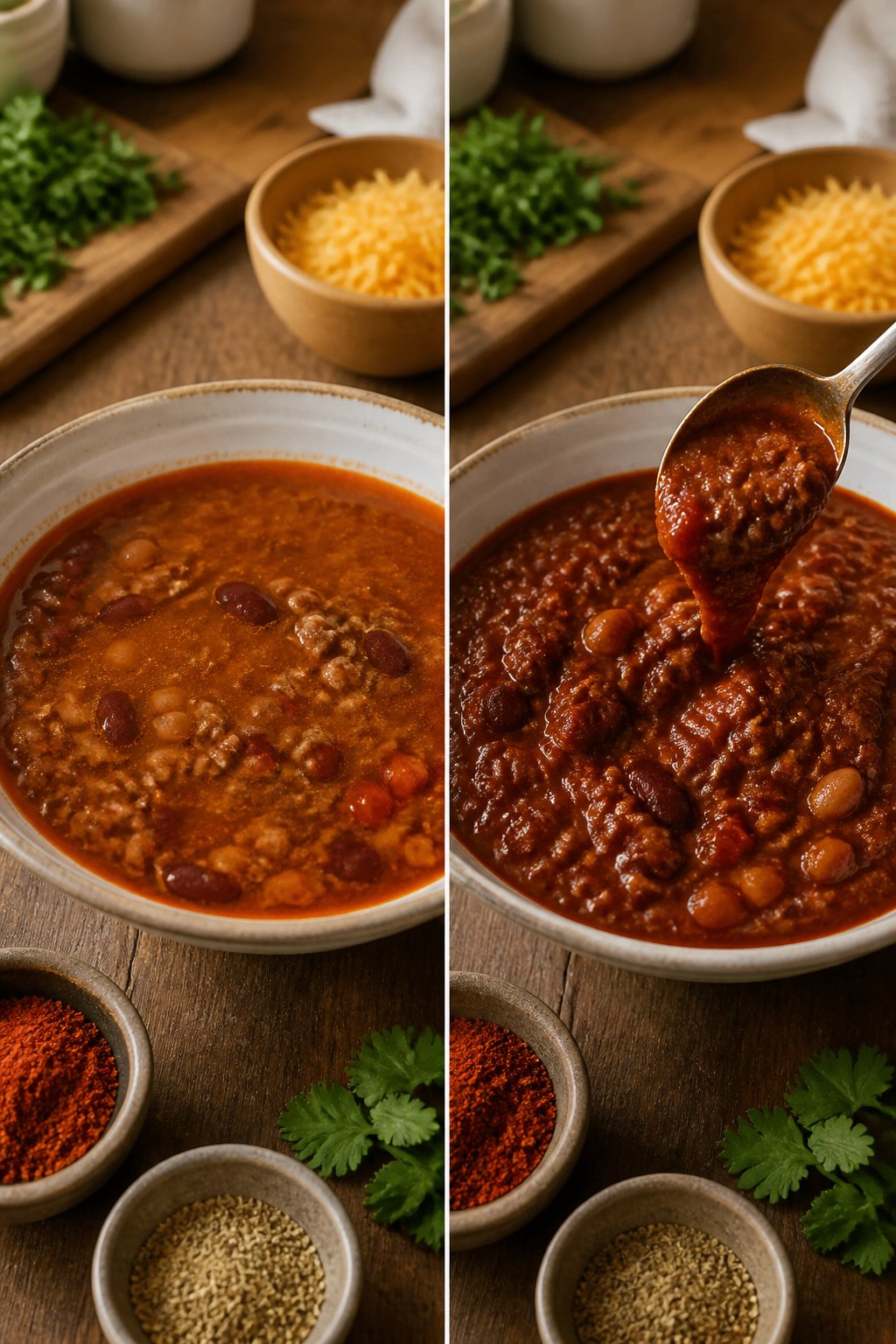
The right thickness for chili is whatever you actually want to eat, though most people land somewhere around a consistency that coats the back of a spoon without sliding off immediately.
That spoon test is the quickest check: dip it in, run your finger through the coating, and see if the line holds. If it does, you’re in hearty territory.
If the chili pools like soup, you’ve got more work to do.
Regional styles split the difference. Texas red tends toward the looser side, more stew than sludge, while Cincinnati-style can run almost sauce-thin over spaghetti.
Some cooks on Reddit mention they prefer theirs "chonky," spoon-standing thick, and others deliberately keep it runnier because cheese and sour cream will bulk up the bowl.
The mistake I see more often, one user noted, is overshooting in the other direction: chili that thickens past the point of no return, where adding liquid back feels like a rescue mission rather than a tweak.
Thin chili is fixable; thick chili that has cooked down to paste is usually dinner for one very patient person.
Fixing the Seasoning After Thickening
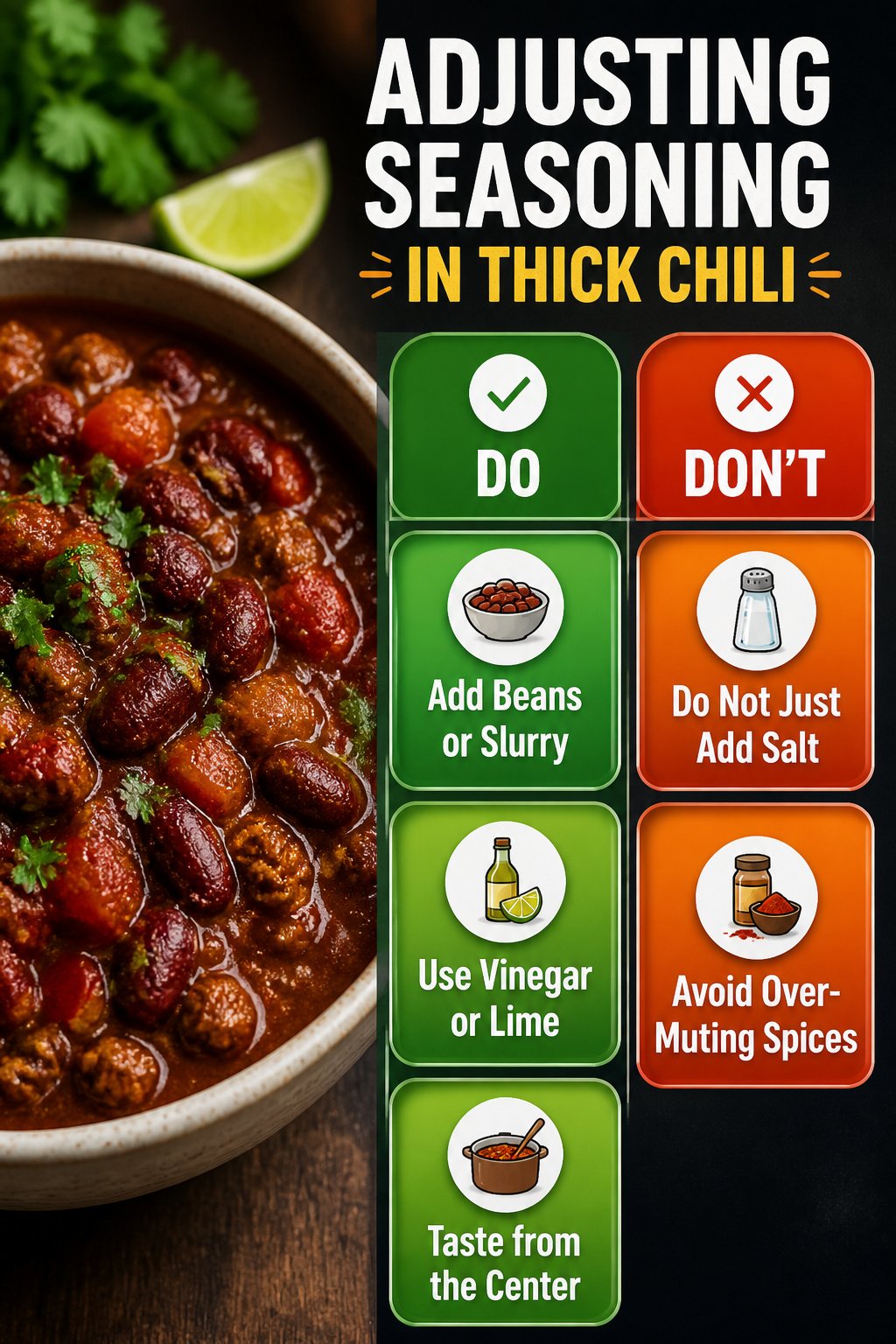
Adding a cup of beans or a slurry of starch does the job, but it also spreads the same amount of spice across more bulk.
The first spoonful after thickening usually tastes flat, and the reason is simple: starch binders mute spices slightly, catching the volatile oils that make cumin and chili powder sing.
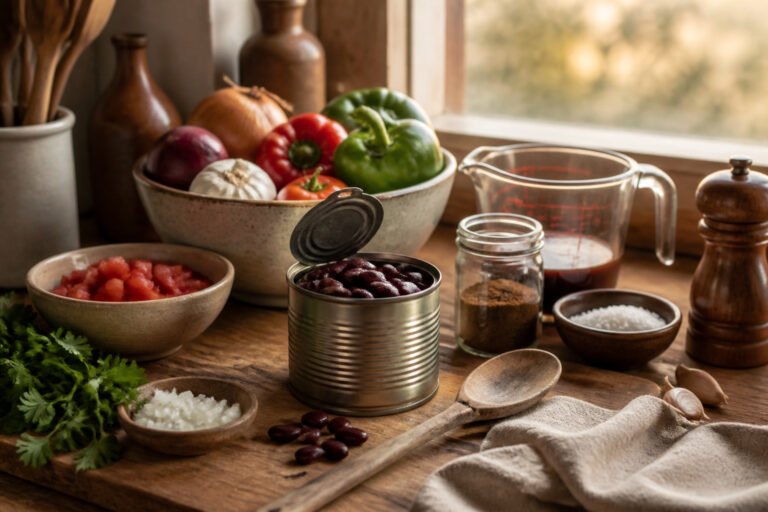
I always set the salt shaker, the cumin jar, and the chili powder on the counter before I start, because once the pot is thicker, the adjustments come fast.
Taste from the center of the pot, not the edge where liquid pools. If the depth is there but the brightness is gone, the fix is rarely more salt alone.
A splash of vinegar or a squeeze of lime at the end pulls the flavors back into focus. Acid works because it cuts through the starch coating your tongue, letting you taste the chile and the garlic underneath again.
I add it by the teaspoon, stir, wait thirty seconds, and taste again. The difference between "almost there" and "done" is usually half a teaspoon more than I thought, added after I have already fixed the salt.
Frequently Asked Questions
What causes thin chili?
u003cpu003eToo much broth is the most common cause, followed by fresh tomatoes releasing water as they cook, and not giving the pot enough time to reduce. Any of those three can leave you with soup instead of stew.u003c/pu003e
How do you thicken chili without changing the flavor?
u003cpu003eA cornstarch slurry adds body and nothing else. Mix equal parts cornstarch and cold water, stir it in, and simmer for about 10 minutes.u003c/pu003e u003cpu003eThe starch binds the liquid without adding any taste of its own.u003c/pu003e
How long should I simmer chili to thicken it?
u003cpu003eTwenty to thirty minutes of uncovered simmering lets enough steam escape for the liquid to reduce on its own. Stir occasionally so nothing scorches on the bottom.u003c/pu003e
Can I add more beans to thicken chili?
u003cpu003eYes, but mash them first. Scoop out a cup or two, mash them into a paste, and stir it back in.u003c/pu003e u003cpu003eThe released starches bind the liquid without introducing any foreign ingredients.u003c/pu003e
How do I thicken chili with tomato paste?
u003cpu003eStir in a six-ounce can and let it simmer for a solid thirty minutes to lose its raw, metallic edge. The paste brings concentrated solids and natural pectin that bind the liquid, plus a deeper brick-red color.u003c/pu003e
How to fix a soupy chili?
u003cpu003eStart with the quickest fix: simmer uncovered for 20 to 30 minutes.u003c/pu003e u003cpu003eIf time is short, stir in a cornstarch or flour slurry, mash some beans already in the pot, or crush a handful of tortilla chips and let them soften for five minutes.u003c/pu003e
What can I add to chili to make it thicker?
u003cpu003eCornstarch, flour, masa harina, mashed beans, cornmeal, quick oats, tomato paste, shredded cheese, crushed tortilla chips, arrowroot powder, or xanthan gum all work.u003c/pu003e u003cpu003eEach changes the pot a little differently, so match the fix to what you have and how you want it to taste.u003c/pu003e
Is it better to thicken chili with flour or cornstarch?
u003cpu003eCornstarch keeps the deeper color and needs 10 minutes to set, but a flour slurry works faster in about 5 minutes and needs more water. Flour can also turn the chili slightly paler, especially in tomato-heavy batches.u003c/pu003e u003cpu003ePick cornstarch when you want the original color intact; pick flour when you are in a hurry.u003c/pu003e
About The Author