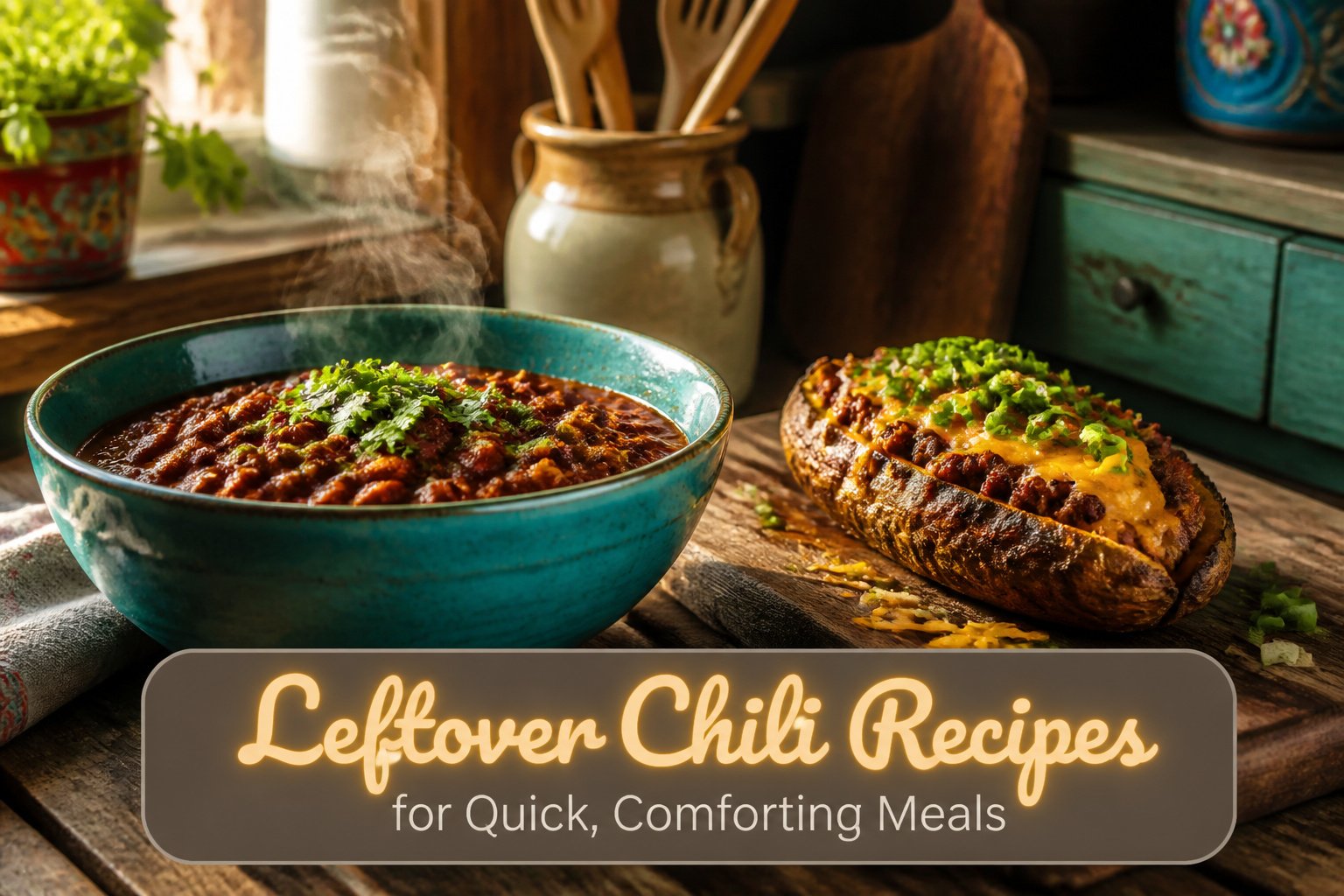
Leftover chili recipes run from a five-minute walking taco to a twice-baked potato wedge that needs the oven twice.
The deciding factor is not time but the state of the chili itself: day-three chili tightened in the fridge needs a splash of broth before it goes into a sweet potato, while loose, just-made chili will turn nacho chips to mush unless you start checking the sheet pan at 12 minutes.
1. Chili Cheese Nachos
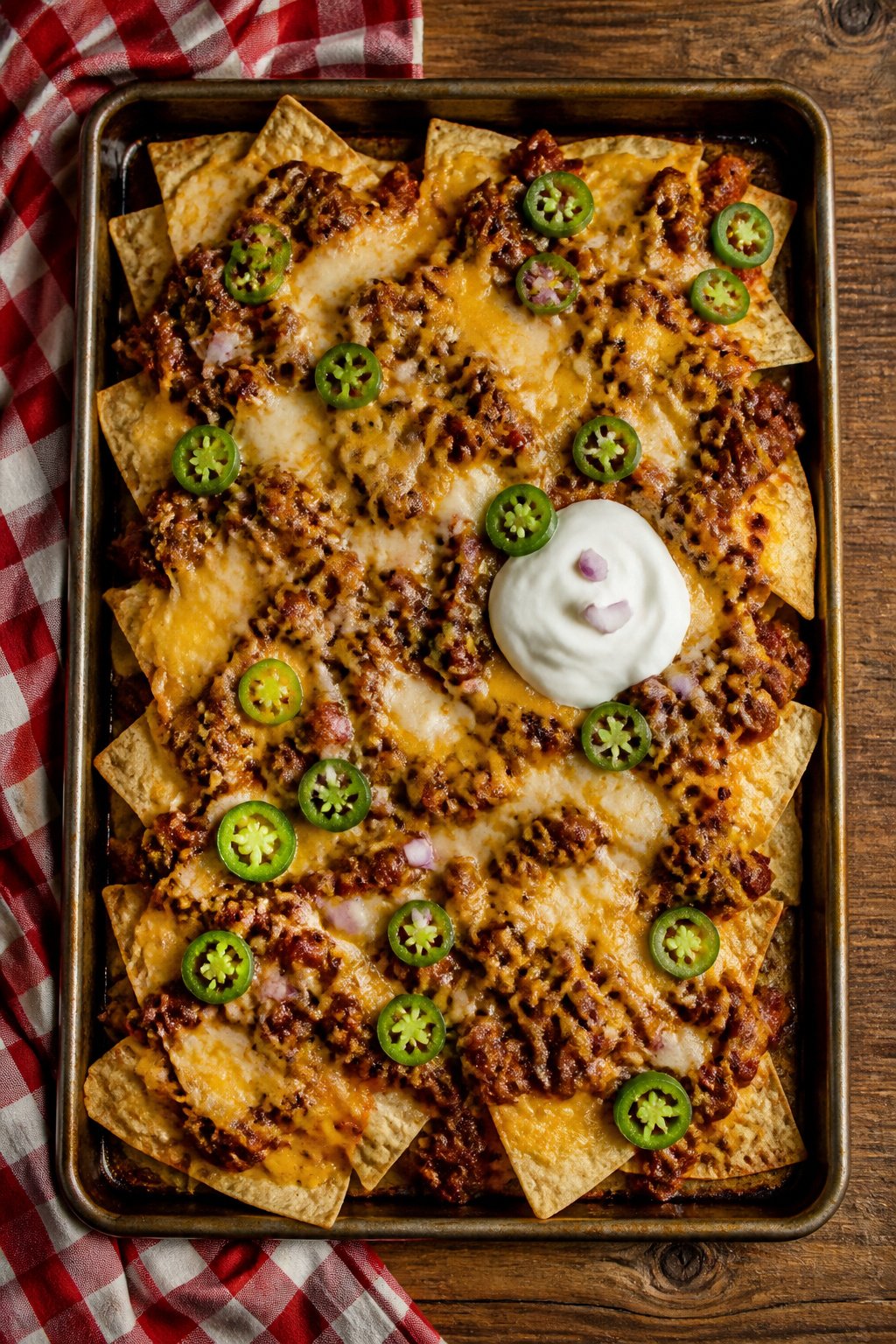
A sheet pan of chili cheese nachos feeds four to six people with two cups of leftover chili and a heavy hand of shredded cheese.
I spread thick tortilla chips across the pan first, spoon the chili evenly, then cover the whole thing with cheese and bake. The chips at the edge burn first, so I start checking at 12 minutes.
Some recipes call for mixing chili with cream cheese in a saucepan before baking, which makes a thicker dip but costs you an extra dish. For straight nachos, the sheet pan alone is enough.
Pull them when the cheese bubbles, top with whatever you have, and serve straight from the pan.
2. Chili Cheese Dog
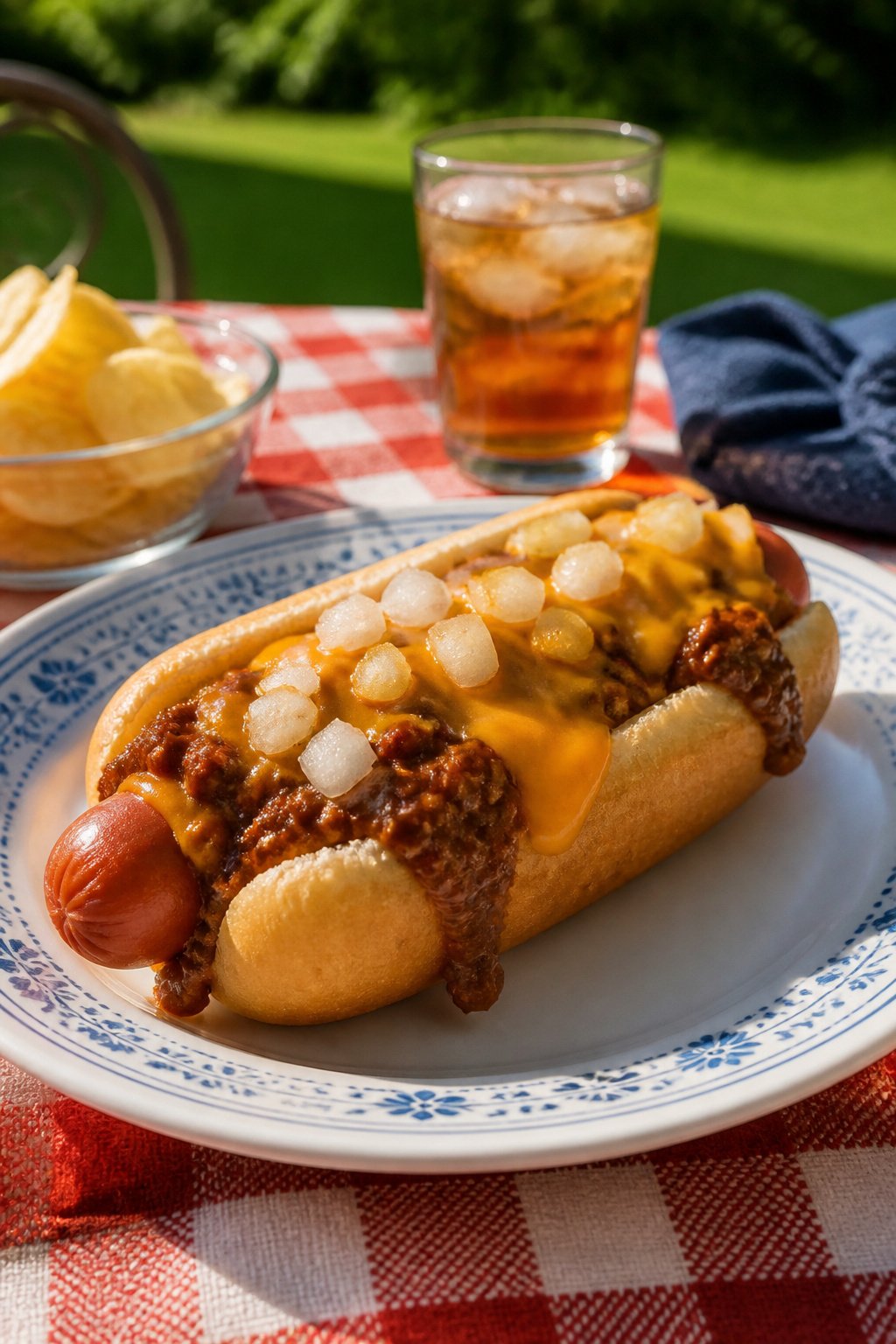
A chili cheese dog lives or dies by the temperature of the chili. Cold chili straight from the refrigerator will steam the bun into a soggy mess before the plate hits the table.
Grill or boil all-beef hot dogs until they snap when bitten, then nestle them into toasted buns that have spent a minute or two cut-side down on a dry skillet.
Ladle the chili hot from the pot, not warm, not reheated.
Grate sharp cheddar over the top while the chili still steams so it melts into the crags, and finish with diced raw onion for the bite that cuts through the richness.
The proportions are personal, but the assembly order is not: hot dog first, then chili, then cheese, then onion. Any other sequence and the cheese slides off or the onion sinks.
Two dogs per person is the standard at most diners, though one is enough if the leftover chili is thick and meaty rather than thin.
3. Chili Stuffed Peppers
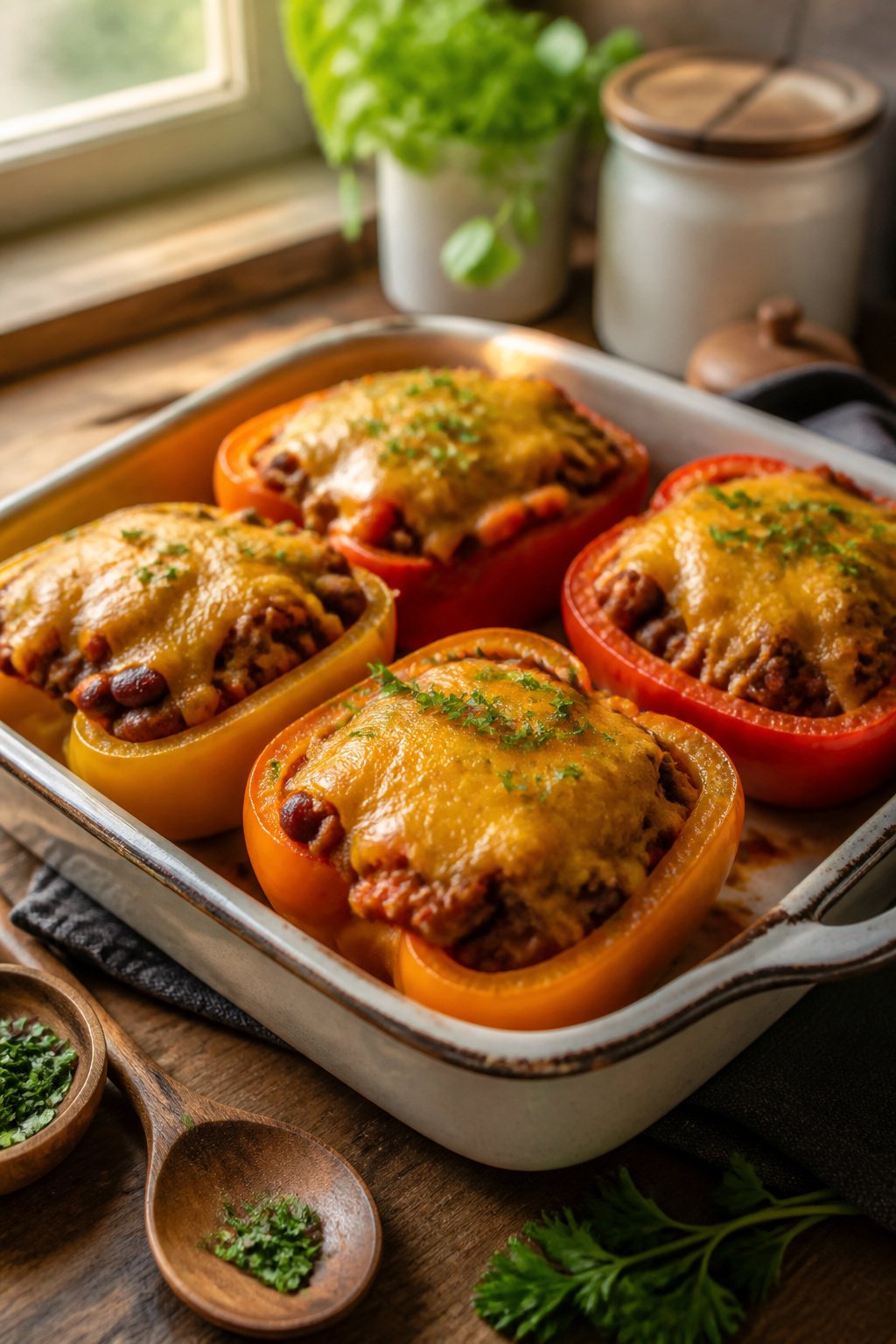
Halve two large bell peppers lengthwise, pull out the seeds and ribs, and set them cut-side up in a 9 by 13-inch pan brushed with oil.
Three-quarters of a cup of leftover chili per half is the fill line that keeps the pepper upright and the plate clean. I once tried to stretch one and a half cups across four halves.
The peppers sat half-empty, then tipped, and dinner looked like a salvage job.
Tuck the cheese under the foil for the first 25 to 30 minutes at 375°F if you want it melted into the chili, or save it for the last 5 minutes uncovered if you want a browned lid.
The peppers need that full half hour to soften without collapsing. Let them rest 10 to 15 minutes out of the oven; the filling sets up enough to eat with a fork instead of a spoon.
4. Chili Mac and Cheese
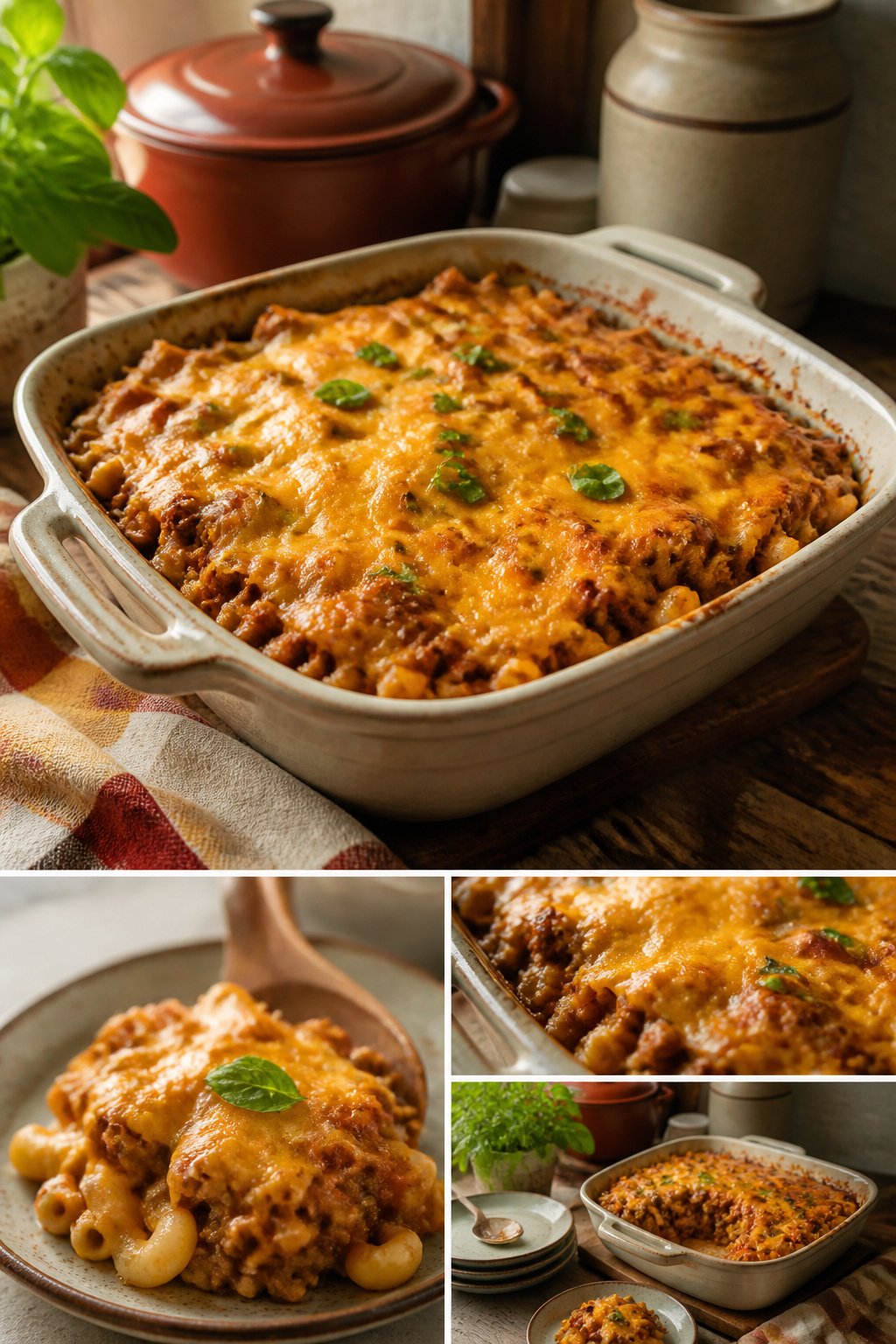
Elbow macaroni and leftover chili share a pot more often than you might think, and the result is honest comfort food when the ratio is right.
4 cups of chili to 8 ounces of cooked pasta is the balance that keeps both ingredients in play; less chili and you are eating noodles with a thin coating, more and the macaroni vanishes into a dense mash.
Cook the pasta in salted water, drain it, and fold it into the warmed chili.
The mixture goes into a casserole dish, gets a blanket of grated sharp cheddar, and slides under the broiler for about 3 minutes until the cheese bubbles and starts to spot.
Some cooks prefer to keep the components separate, ladling the chili over egg noodles instead, but the combined version bakes into something that reheats cleanly for lunch the next day.
If the chili looks thick while you are stirring it together, a splash of pasta water or chicken broth loosens the sauce without diluting the flavor.
5. Chili Cheese Fries
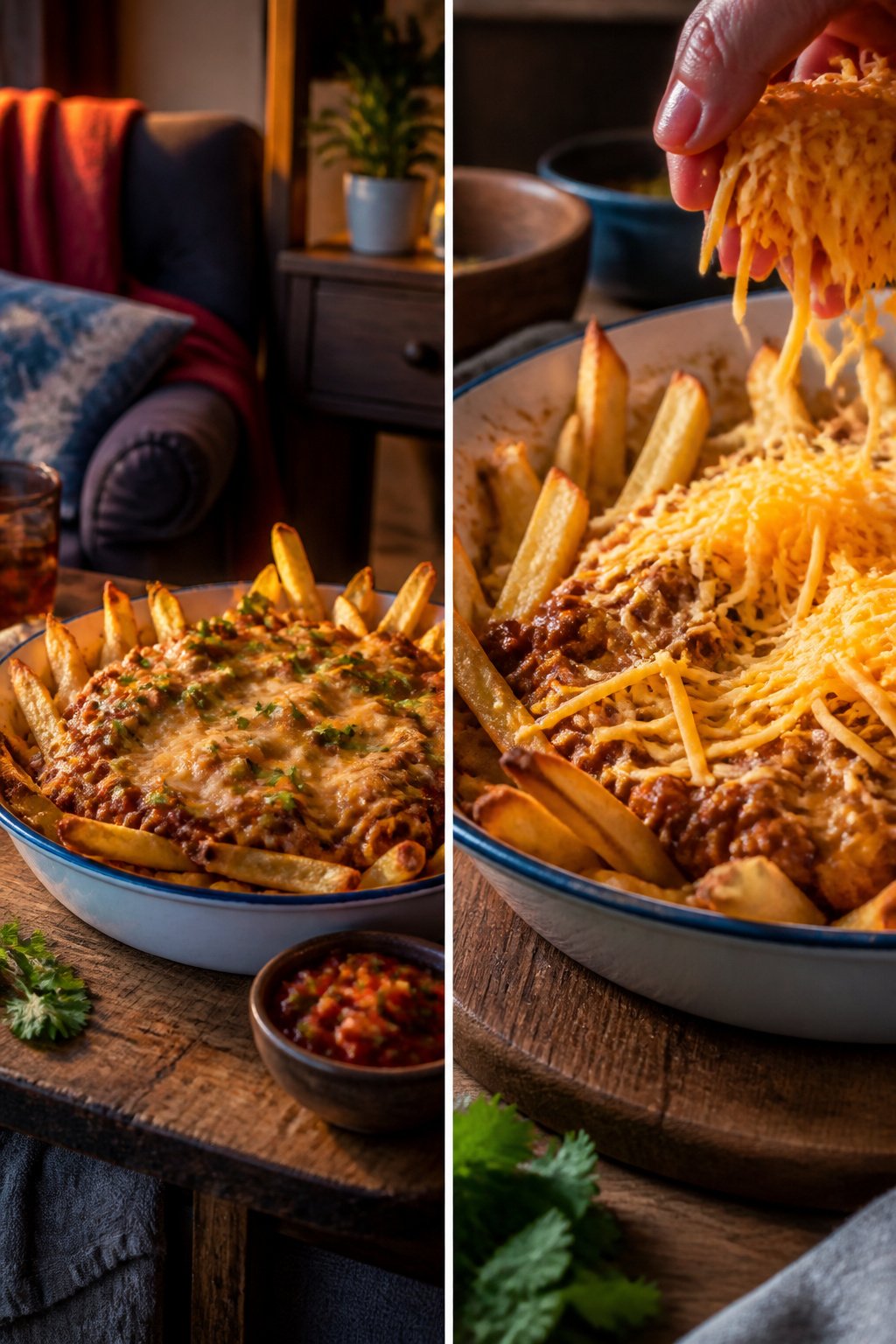
Thick-cut fries survive the weight of chili and melted cheese where thinner ones collapse into a soggy pile within minutes.
Spread frozen steak fries in a single layer on a sheet pan and bake until they crackle when tapped, about 25 minutes at 425°F. While they crisp, warm your leftover chili on the stove so it pours easily.
Pile the fries into a shallow oven-safe dish, ladle the chili across the center, and cover generously with shredded cheddar. Return to the oven just until the cheese bubbles and browns at the edges, 5 to 7 minutes.
Pull the dish in the first five minutes: the fries still hold their crunch against the meat and sauce. Thin fries wilt almost immediately; the thicker cut buys you enough time to eat without rushing.
6. Chili Cornbread Casserole
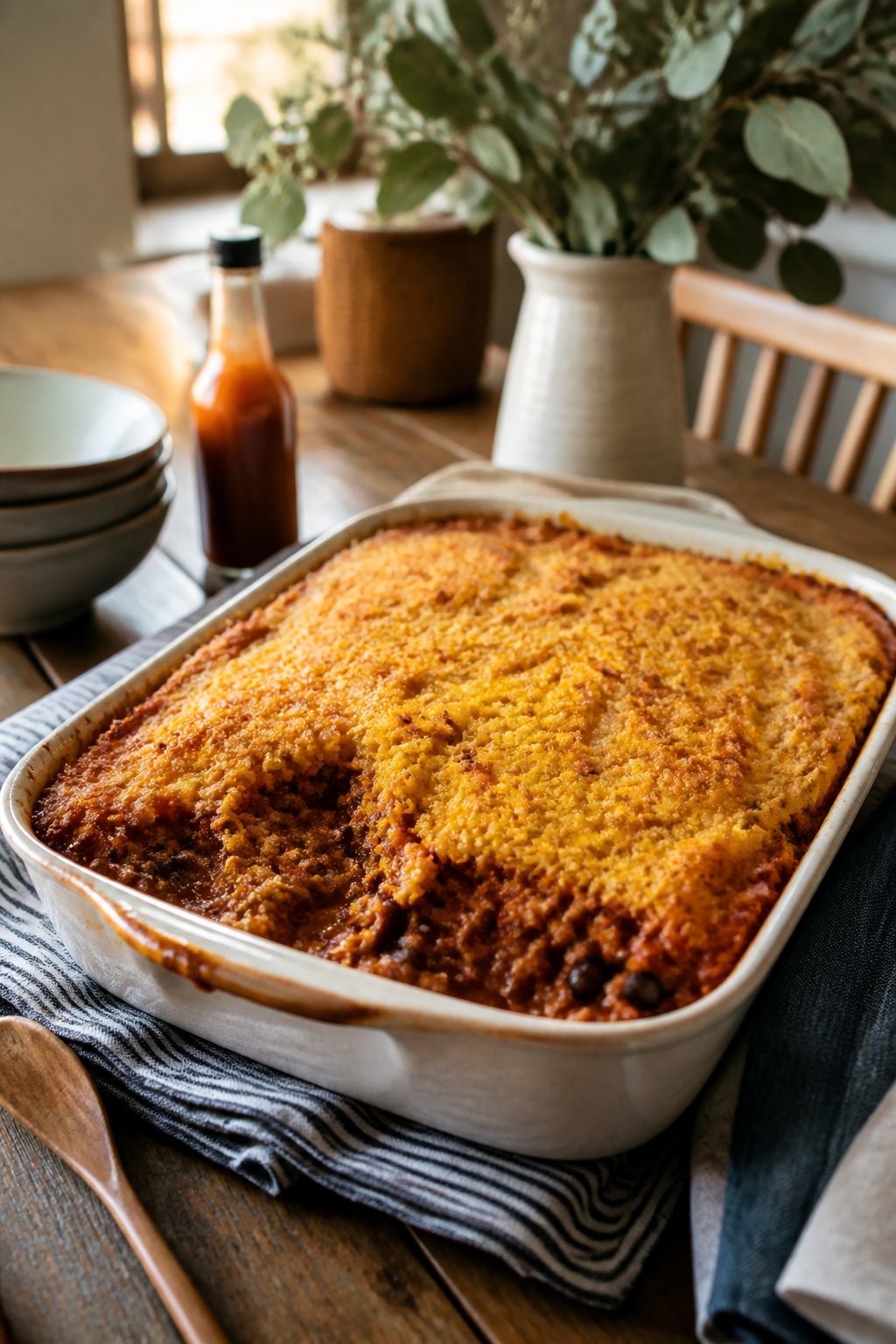
Leftover chili turns into a proper baked dinner with almost no extra work. Pour it straight into a baking dish, spread cornbread batter across the top, and bake until the cornbread goes golden and a toothpick comes out clean.
The chili underneath stays moist and saucy while the cornbread bakes, so you get that sharp contrast between the two layers.
A box mix works fine here, and I have never had anyone at the table ask whether the cornbread was from scratch.
The whole dish takes one pan and feeds the same number of people the chili would have, just with the starch built in. Cleanup means one baking dish instead of a pot plus a skillet.
7. Chili Cheese Dip
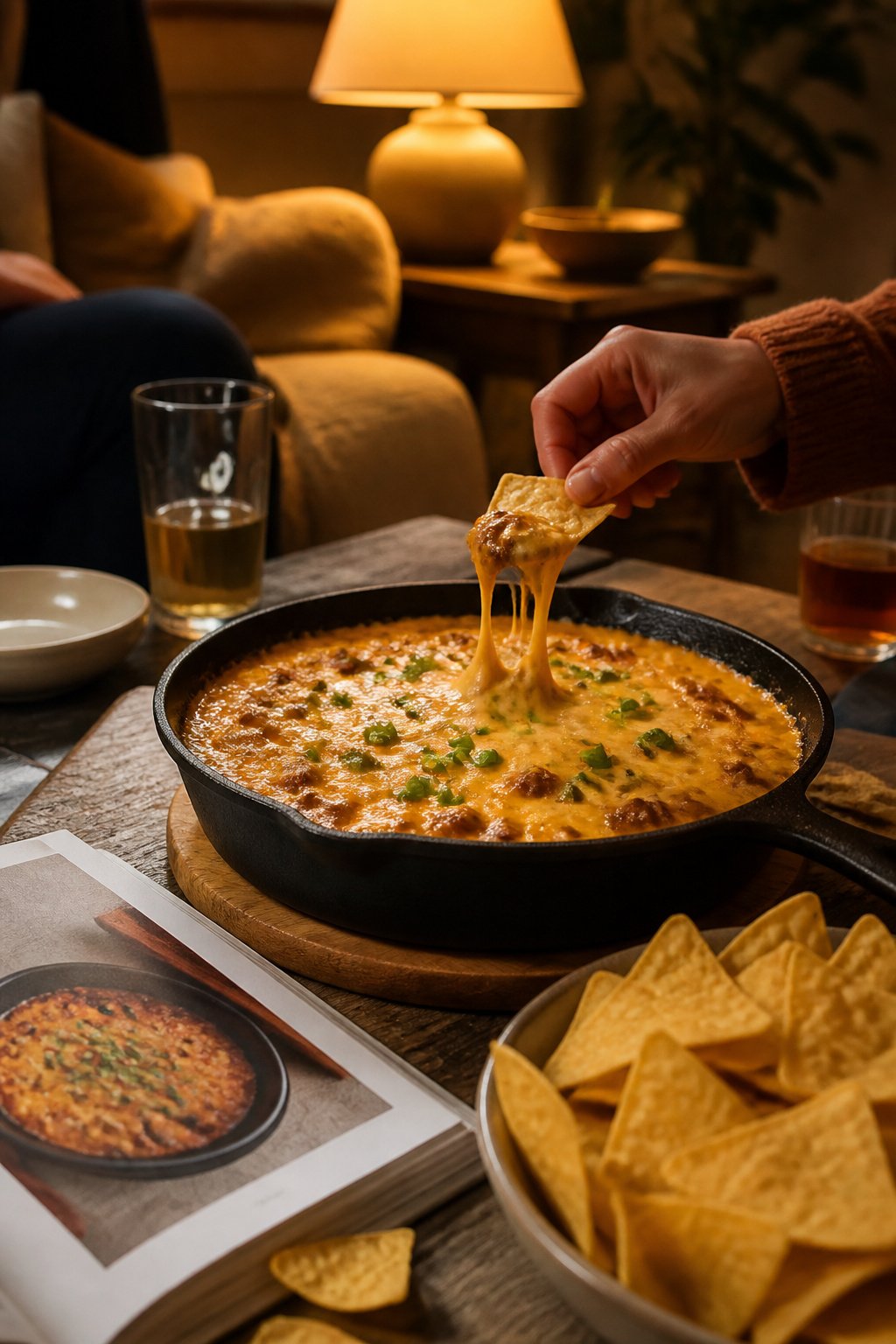
Chili cheese dip is where leftover chili meets its highest calling, and it’s the one recipe where I measure precisely. Two cups of chili, four ounces of cream cheese, and two cups of sharp cheddar.
Too much cream cheese and the dip eats like soup; too little and the cheddar seizes into a rubbery blanket instead of melting into the chili.
Beat the cream cheese into the chili first, right in a saucepan, until no streaks remain.
Spread that mixture across the bottom of an oven-safe skillet, top with the shredded cheddar, and bake at 350°F for 10 to 15 minutes, until the edges bubble and the center is molten.
A diced scallion scattered over the top at the end cuts the richness just enough.
Corn chips or tortilla chips are the obvious move, though a torn piece of crusty bread does the same work with less salt.
The dip goes from oven to table in the same pan, which means one dish to wash and no serving bowl to fish out of the cabinet.
8. Chili Cheese Wedges
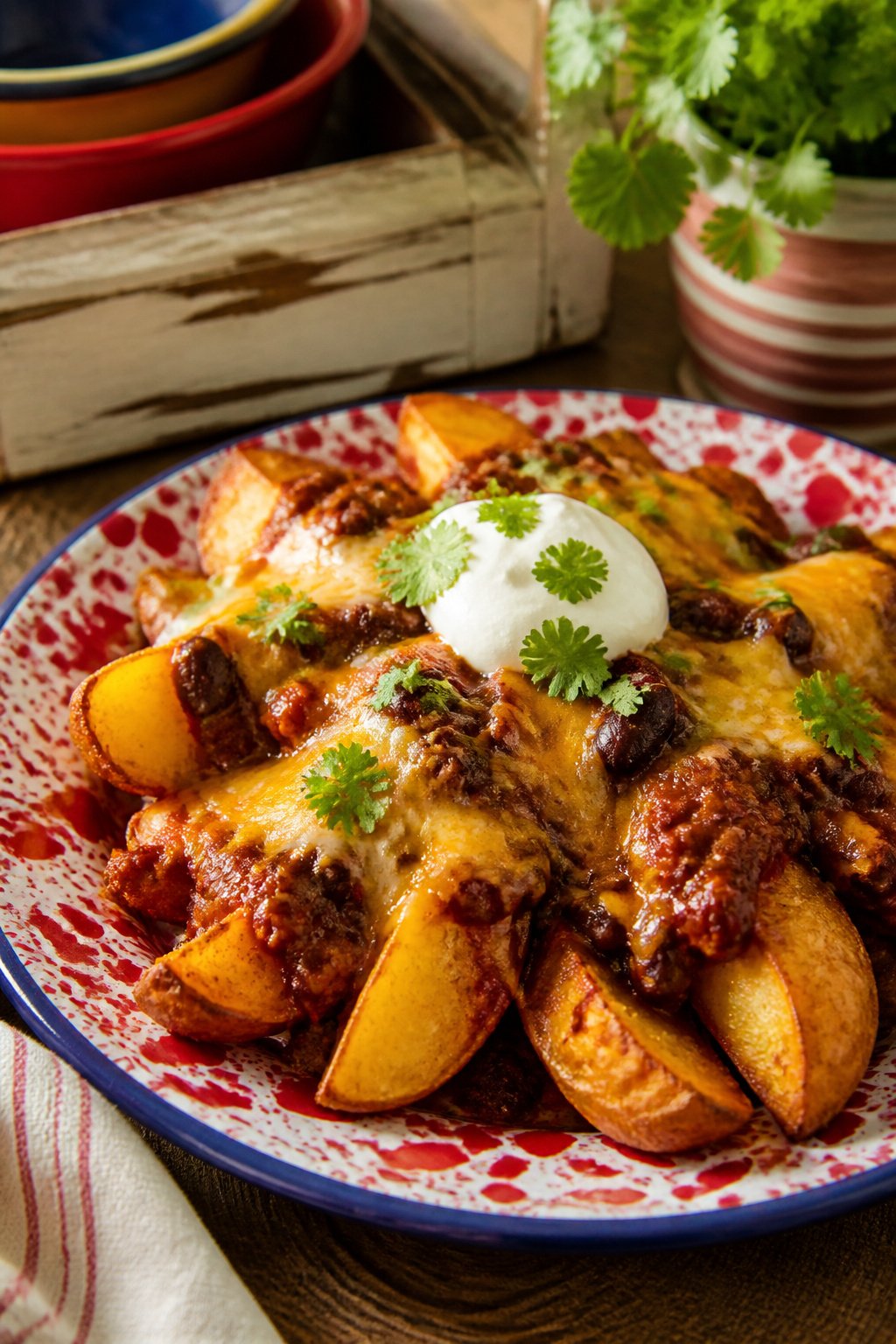
A russet potato cut into thick wedges and baked until the edges turn golden gives you a sturdy base that won’t collapse under the weight of chili.
Load the wedges after they’ve cooled a few minutes, or the moisture from the chili turns the centers into something closer to mashed potatoes than anything you’d want to fork and knife through.
Baking the wedges twice solves it. First pass, plain, until they’re crisp outside and just tender inside.
Split them open, stuff with leftover chili and shredded cheese, then back into the oven until the cheese bubbles and the edges of the potato recrisp. The second bake drives off enough surface moisture that the wedge holds its structure.
A fork and knife are non-negotiable here. The loaded wedge is too heavy to pick up, which is the point: you’re eating a baked potato in a different shape, not a finger food.
Sharp cheddar melts reliably, but pepper jack brings more interest if you have it on hand.
A spoonful of cold sour cream on top after the second bake cools the bite enough that you don’t burn the roof of your mouth rushing in.
9. Chili Taco Salad
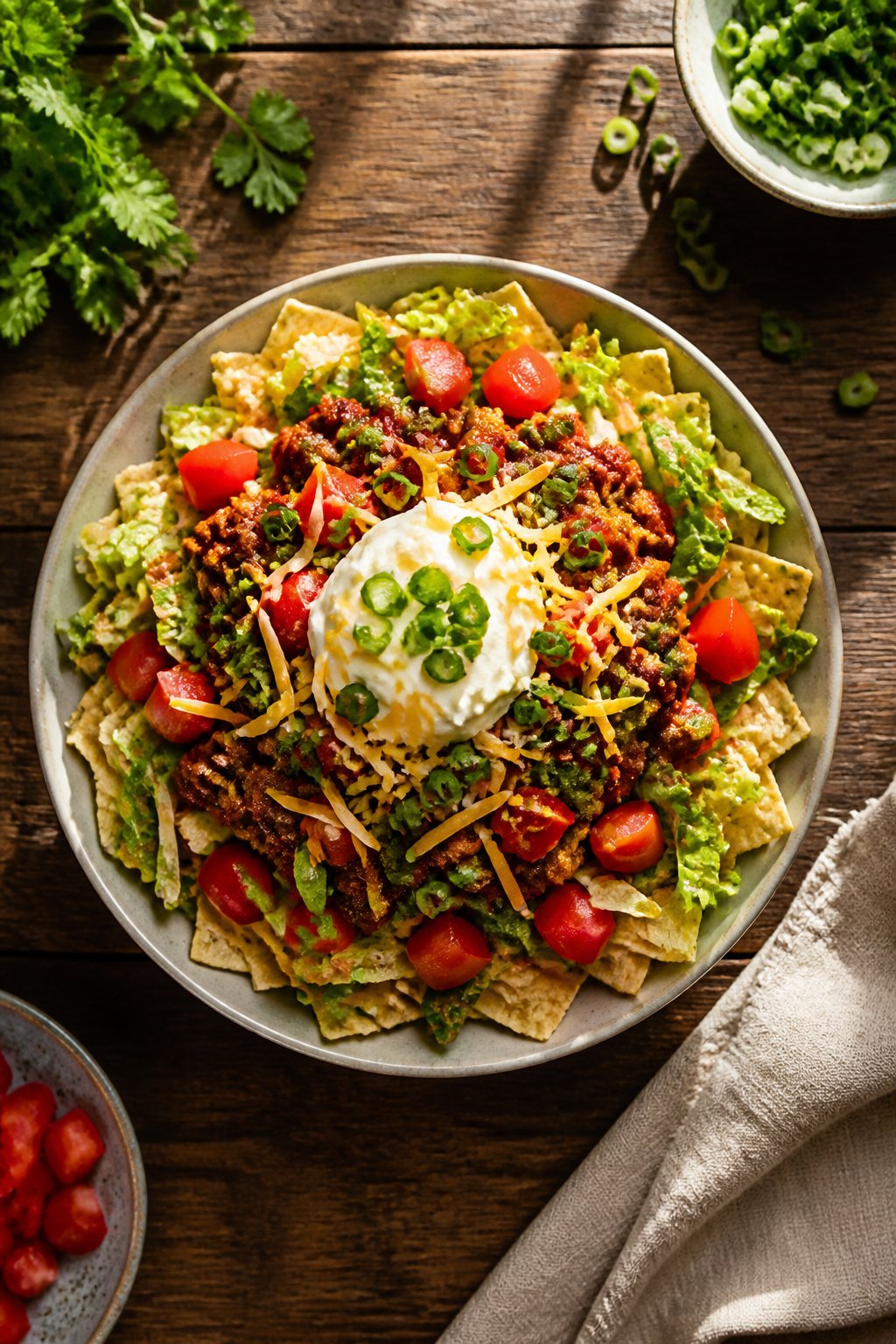
Crushed tortilla chips form the base, then shredded lettuce, diced tomato, and warm chili get layered on top. Sour cream and salsa finish it.
The chips go last if you want crunch, first if you want them to soften into the chili like a Frito pie’s polite cousin.
I have made it both ways and the softened-chip version wins on weeknights when I’m standing at the counter eating straight from the bowl.
The lettuce stays crisp either way if you keep it above the warm chili, not below it. A little extra salsa on top covers the fact that this is last night’s dinner wearing a new outfit.
10. Chili Stuffed Sweet Potatoes
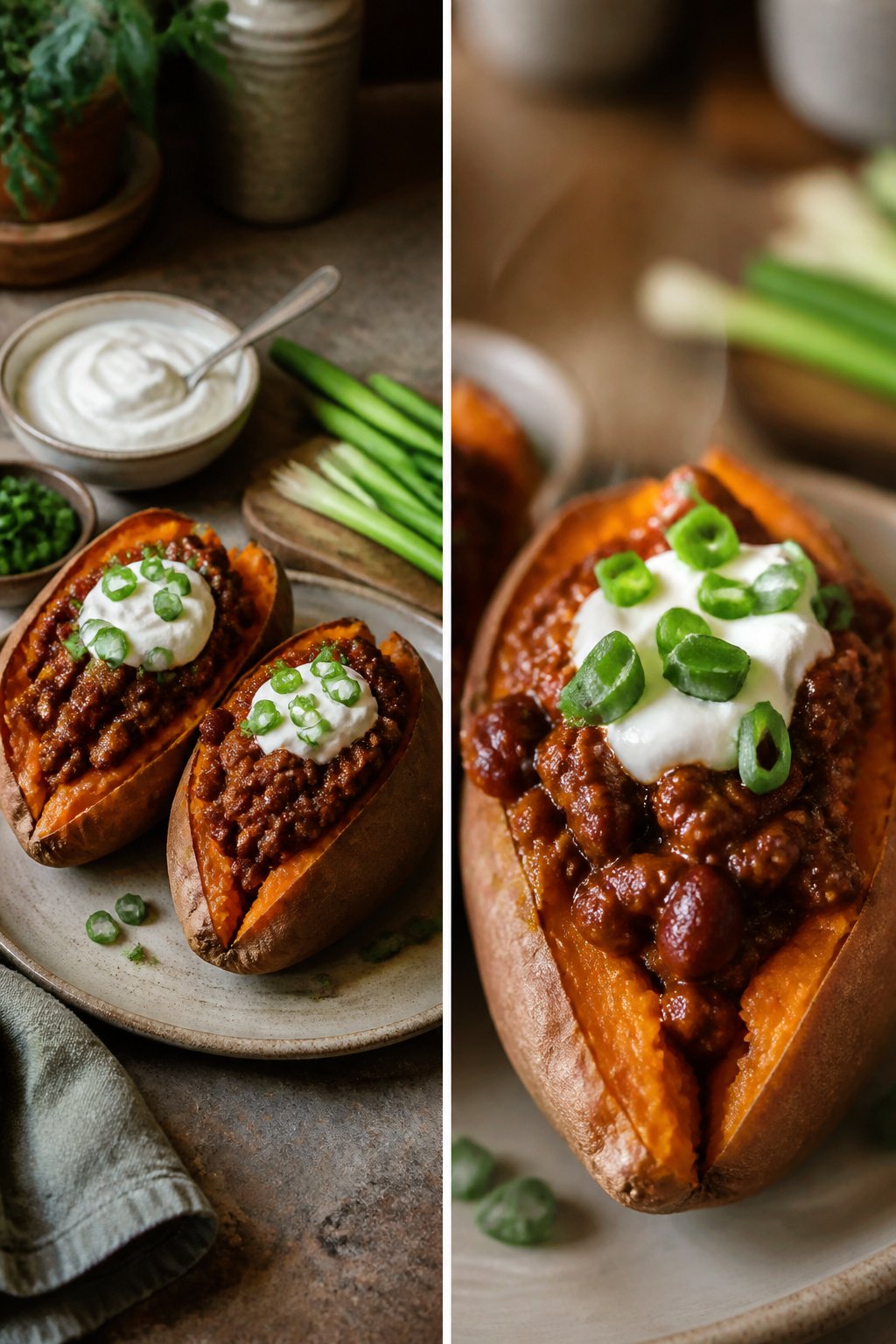
A baked sweet potato splits open like a pocket, and leftover chili settles right in. The natural sugars in the flesh do something a russet never manages: they pick a fight with the cumin and chile, then shake hands.
That contrast belongs in the dish by design, not by accident.
I used to default to regular potatoes here. They work, but the combination stays flat, like chili on toast instead of chili in conversation.
The sweet potato makes it deliberate.
Roast the potatoes until a knife slides through without resistance, then split and fluff the insides with a fork.
Warm the chili separately so it stays loose, spoon it in, and finish with thin-sliced green onions while the steam still rises. The raw crunch against soft potato and thick chili keeps each bite from turning to mush.
One limit: this needs chili that still holds some moisture. Day-three chili that’s tightened up in the fridge loosens back out with a splash of broth or water on the reheat.
Dry chili in a dry potato is just starch on starch, and no amount of sour cream rescues it.
11. Walking Taco
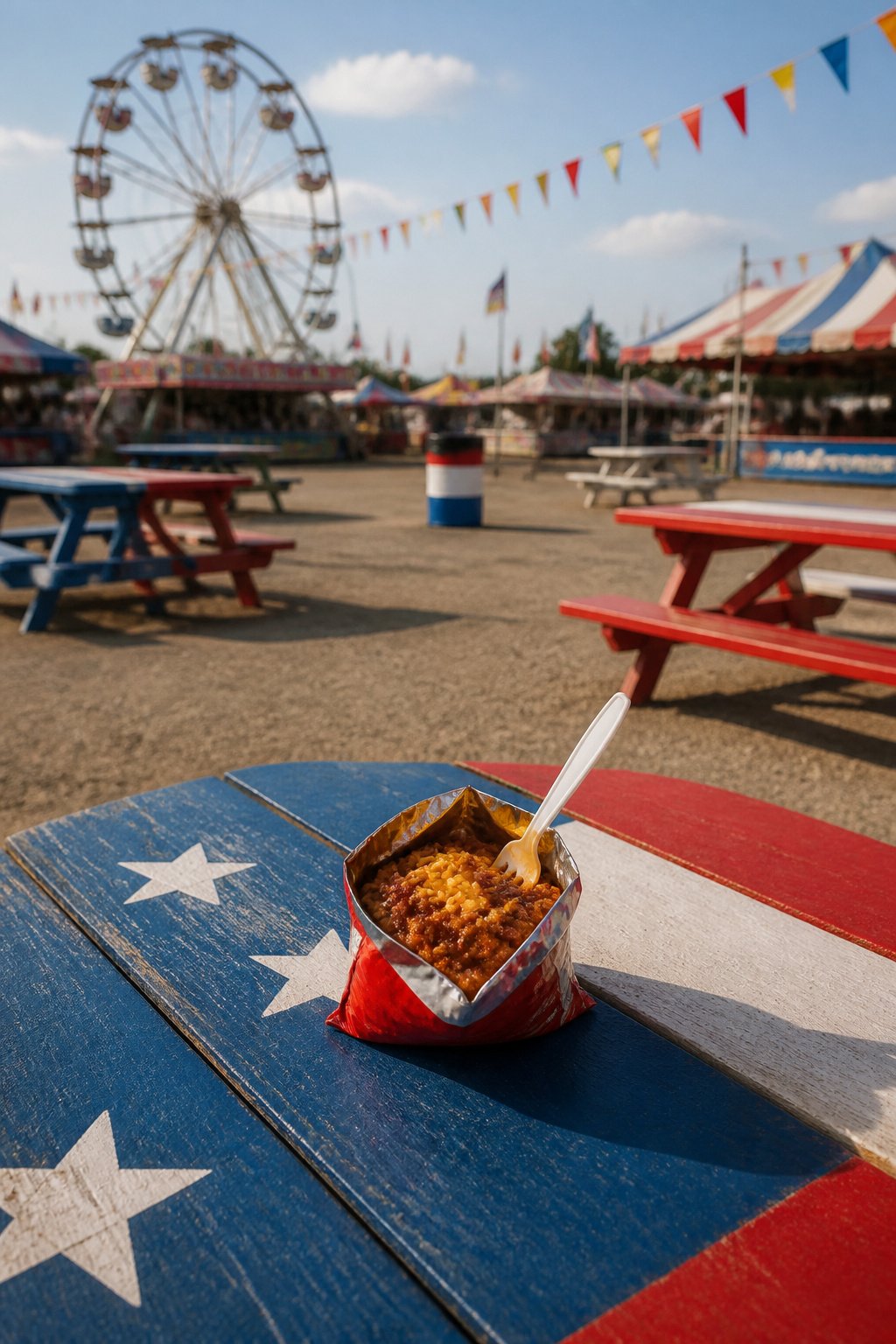
A single-serving bag of Fritos, torn open along the seam, makes the bowl you throw away. Warm the chili first so the corn chips stay crisp long enough to eat.
Cheddar from the deli counter melts faster than pre-shredded, which is coated in cellulose and never quite liquefies. I learned that at a Little League game in Ohio where the concession stand ran out of bowls and nobody cared.
The fork matters. A plastic spork snaps against the bag’s resistance; a real fork, even a disposable one, punches through the chili without collapsing the walls.
Eat it standing up, over the trash can, because the bag will leak where the seam gives. County fairs started this, and the genius is the zero cleanup: the bag, the fork, the napkin, all in the same bin.
Add sour cream or jalapeños if the chili is mild, but the base needs nothing. It is already salt, crunch, and heat in the right proportions.
12. Chili Cheese Empanadas
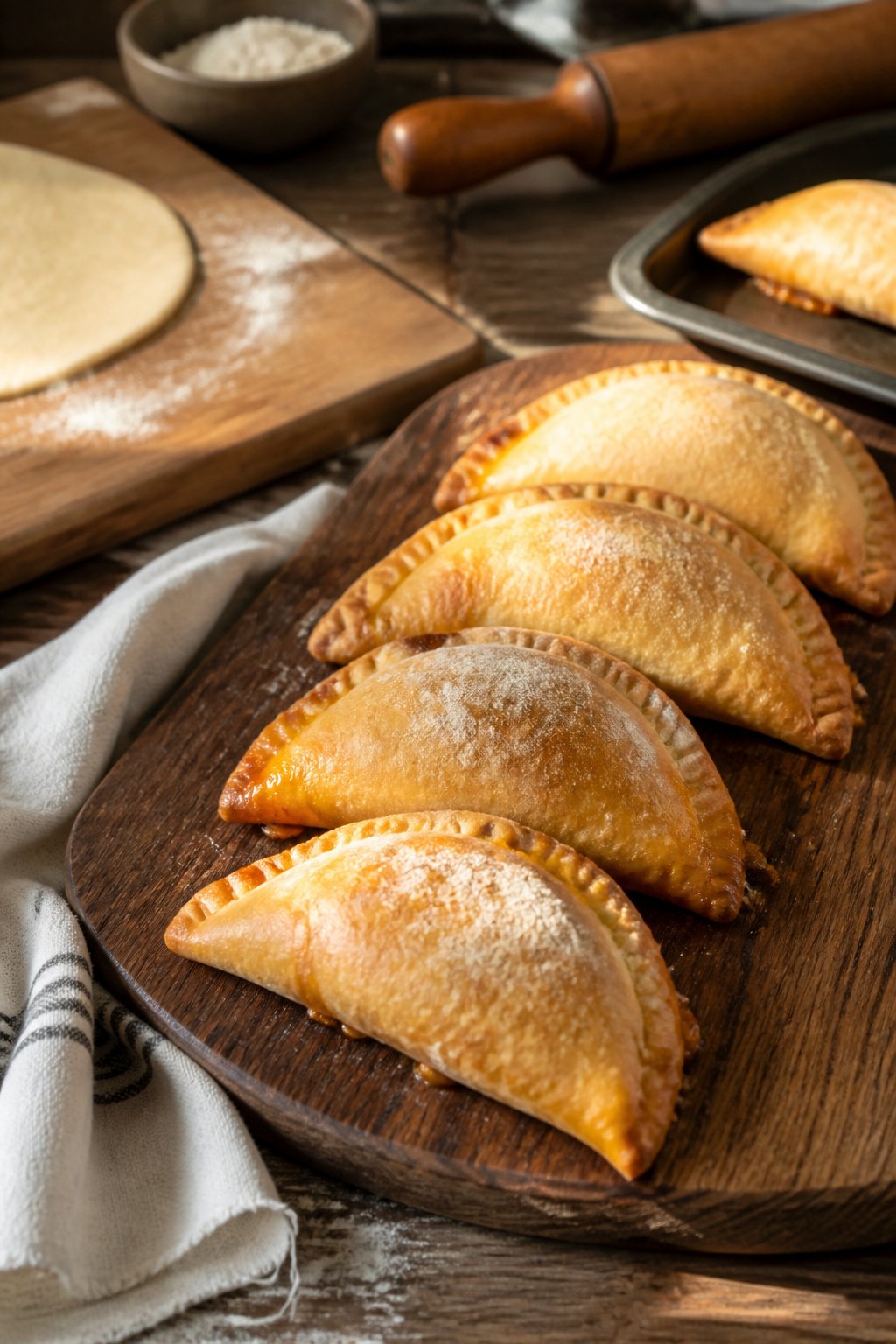
Store-bought pie dough turns leftover chili into empanadas without the usual pastry project. Roll the dough a little thinner on a floured counter, cut circles with a bowl or lid, and spoon cold chili onto one half.
A little shredded cheese on top of the chili helps bind the filling and keeps it from sliding around when you fold the dough over.
The dough has to stay cold while you work.
Warm dough tears along the fold, and chili leaks onto the baking sheet where the sugars and tomato paste scorch into a black crust that ruins the pan and the empanada both.
If the dough starts to feel soft, twenty minutes back in the refrigerator saves the batch. Crimp with a fork, cut a small vent in each top, and bake until the pastry is deep gold and crisp.
13. Chili Cheese Burrito
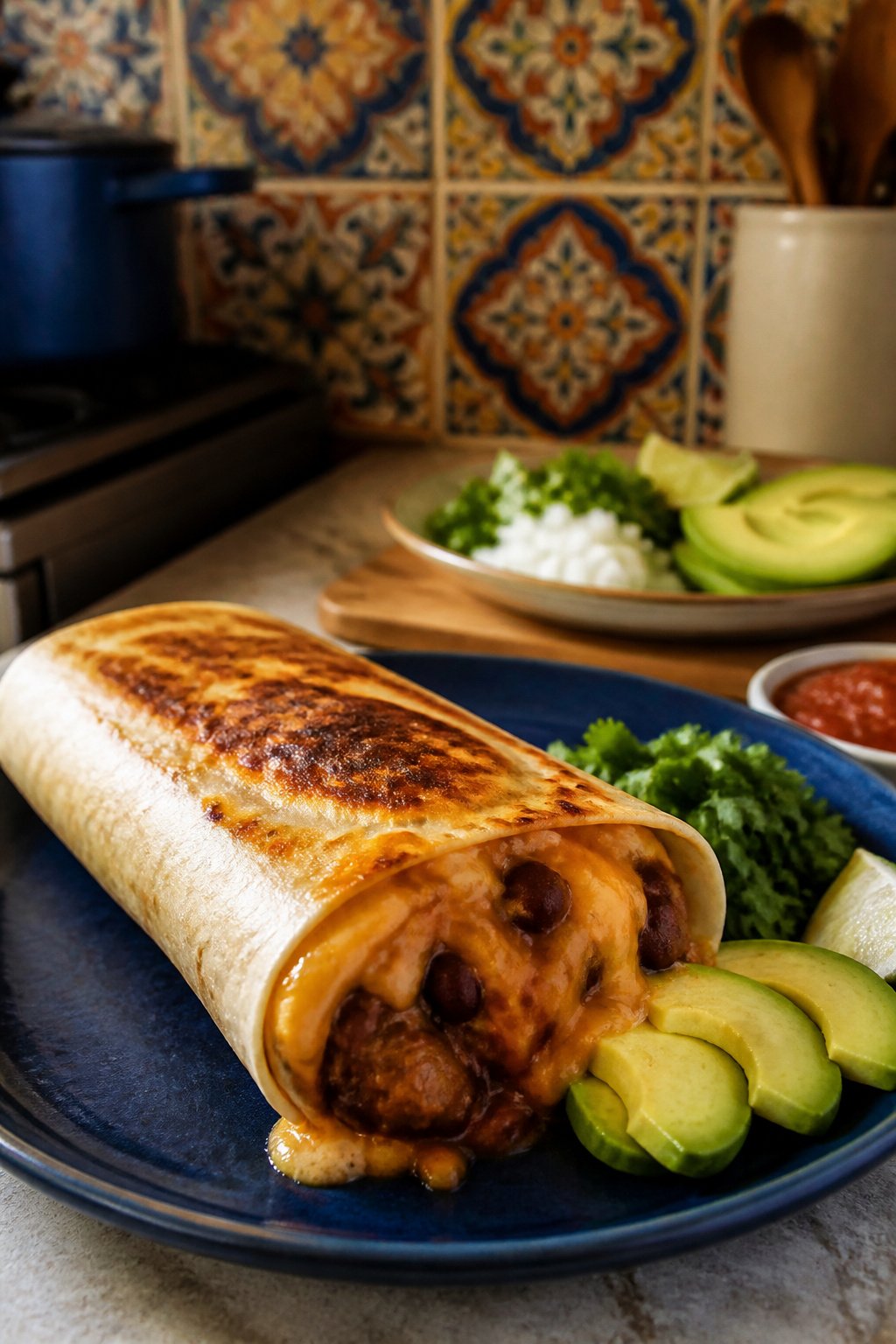
A chili cheese burrito comes together in about twenty minutes, which makes it practical for a weeknight when the fridge already holds the main component.
Spread the leftover chili down the center of a large flour tortilla, add shredded cheese, roll it tightly, and set it seam-side down on a hot griddle or skillet.
The seam seals as the cheese melts, and the outside turns crisp.
I always warm the tortilla first, either in a dry pan for thirty seconds or wrapped in a damp towel in the microwave. A cold tortilla cracks when folded, and the filling escapes onto the pan.
Once the burrito is crisp, I add diced onion, avocado, cilantro, sour cream, and salsa. A spoonful of Tex Mex paste mixed into the chili before rolling adds depth without extra chopping.
14. Chili Cheese Grilled Sandwich
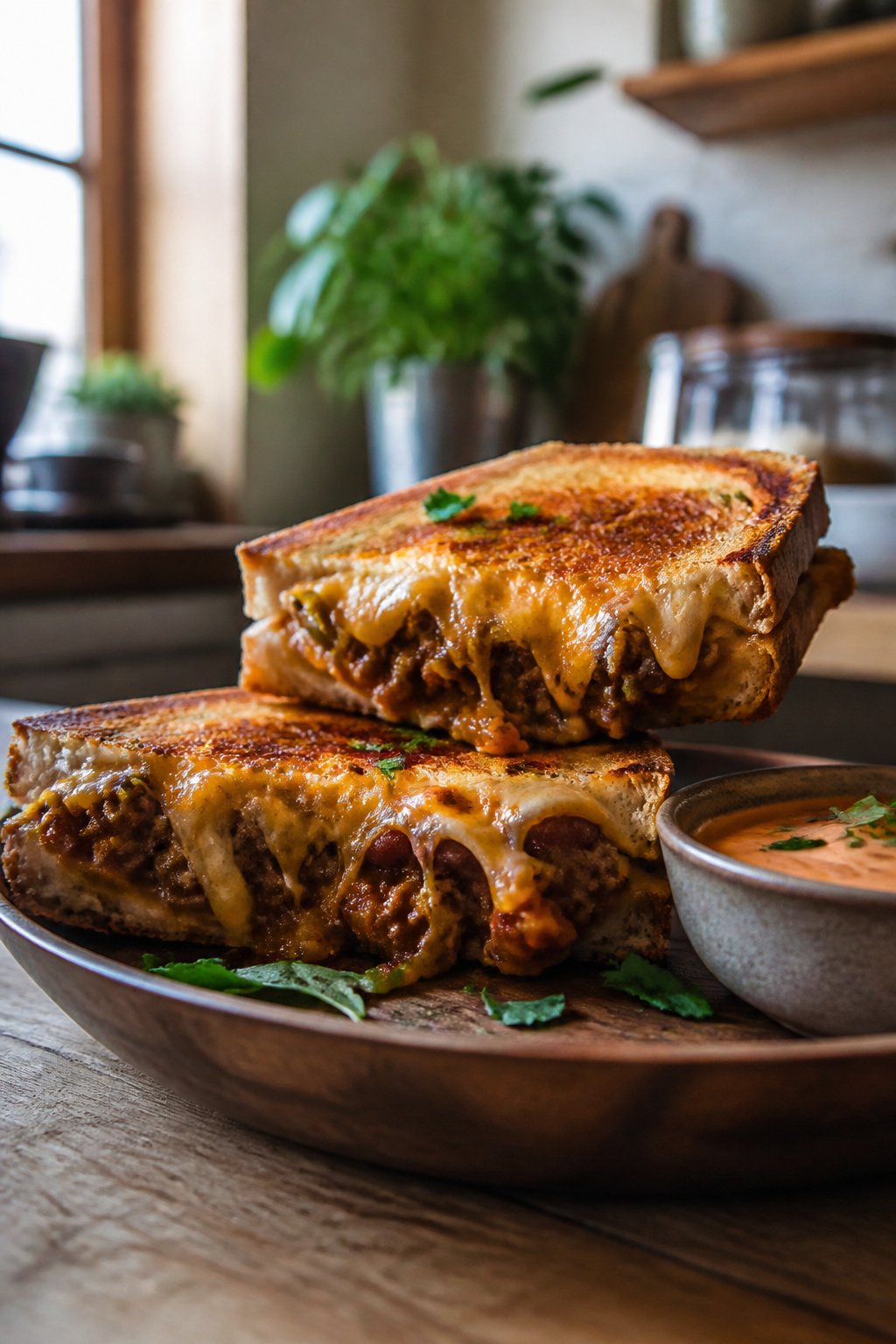
A thick layer of leftover chili and shredded cheese between two buttered slices of bread turns into something worth pulling out the griddle for.
The bread needs enough butter that it fries rather than toasts, and the heat should stay moderate so the cheese has time to melt through the chili before the outside burns.
I press the sandwich flat with a spatula a couple of times during cooking; it helps the filling heat evenly and keeps the bread in contact with the pan.
This is a knife-and-fork sandwich, and that is not a flaw worth fixing. The filling is too thick and too loose to pick up cleanly, and trying will only send chili down your sleeve.
Cut it in half, let it rest for a minute so the cheese sets slightly, and eat it with a fork like an open-faced tart.
The edges of the bread stay crisp even as the center softens into the chili, which is exactly how the sandwich should work.
15. Chili Cheese Stuffed Spaghetti Squash
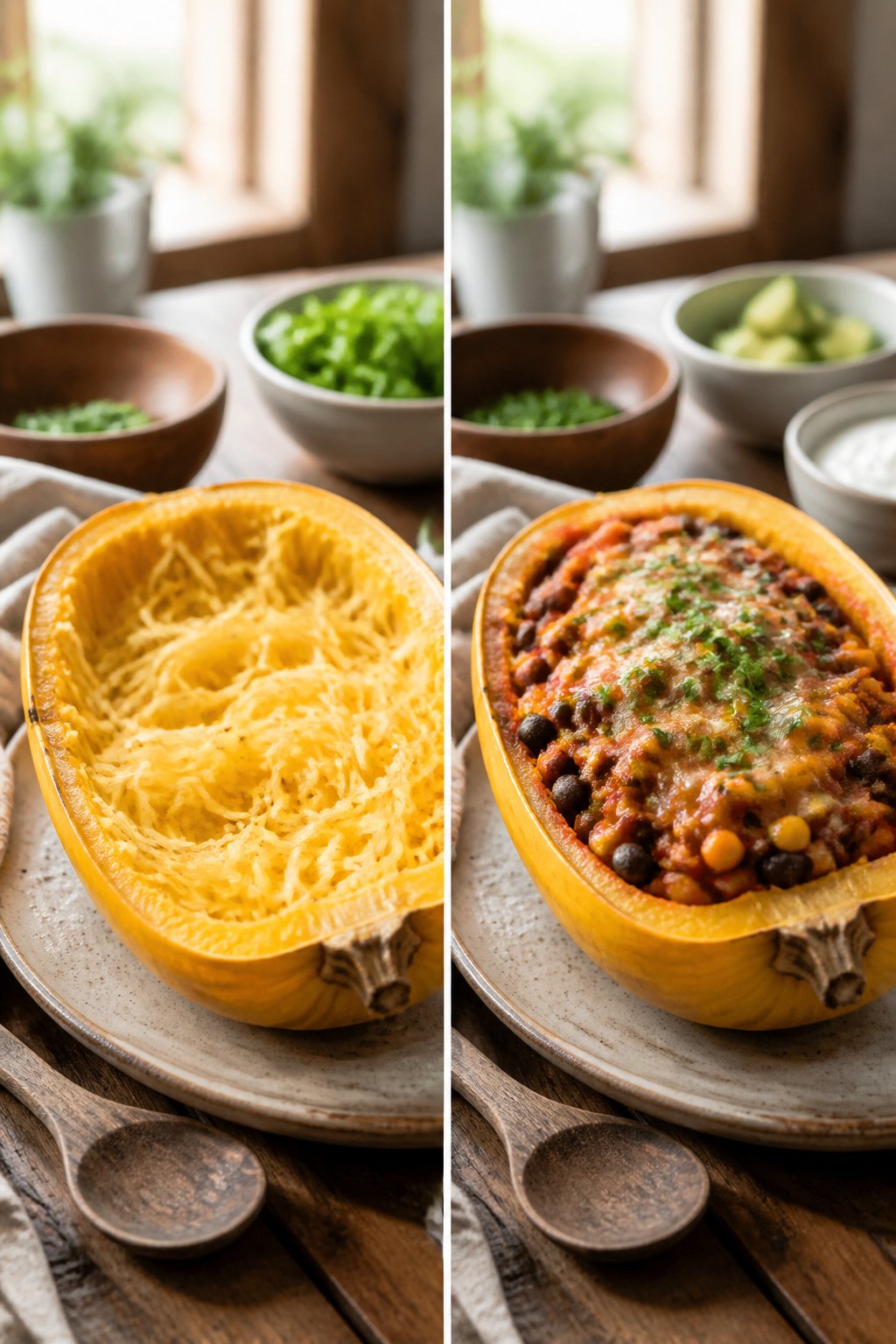
Spaghetti squash works as a noodle substitute because the flesh separates into long strands after roasting. Halve the squash lengthwise, scoop the seeds, and roast cut-side down until the skin gives under gentle pressure.
Let it cool enough to handle, then scrape the strands into a bowl with a fork.
Mix the squash with leftover chili and shredded cheese, something melty like Monterey Jack or a mild cheddar. The ratio is forgiving; enough chili to coat the strands without drowning them.
Pile everything back into the empty squash shells, top with more cheese, and bake until the top browns and the filling bubbles at the edges.
The squash itself tastes mild, almost bland, which is exactly the point. It carries the chili and stretches a smaller amount of leftover into a full dinner.
Cleanup is the baking sheet and the bowl, maybe a spoon. The shells look dramatic on the plate, but this is still weeknight food, not a project.
Frequently Asked Questions
How long does leftover chili last?
u003cpu003eLeftover chili keeps for 3 to 4 days in the refrigerator. If you freeze it, it stays good for up to 2 to 3 months, or as long as 6 months according to some guidelines.u003c/pu003e u003cpu003eEither way, get it chilled within 2 hours of cooking.u003c/pu003e
What can you eat with leftover chili?
u003cpu003eYou can pile it on nachos, stuff it into peppers or baked potatoes, fold it into mac and cheese, layer it under cornbread batter, or spoon it over fries.u003c/pu003e
How do you store leftover chili?
u003cpu003eLet it cool to room temperature first, then transfer it to an airtight container. Leave some headspace if you are freezing, since chili expands.u003c/pu003e u003cpu003eLabel the container with the date, and keep it in the main body of the refrigerator rather than the door, where the temperature swings more. For longer storage, freeze it in portions you will actually use.u003c/pu003e
About The Author