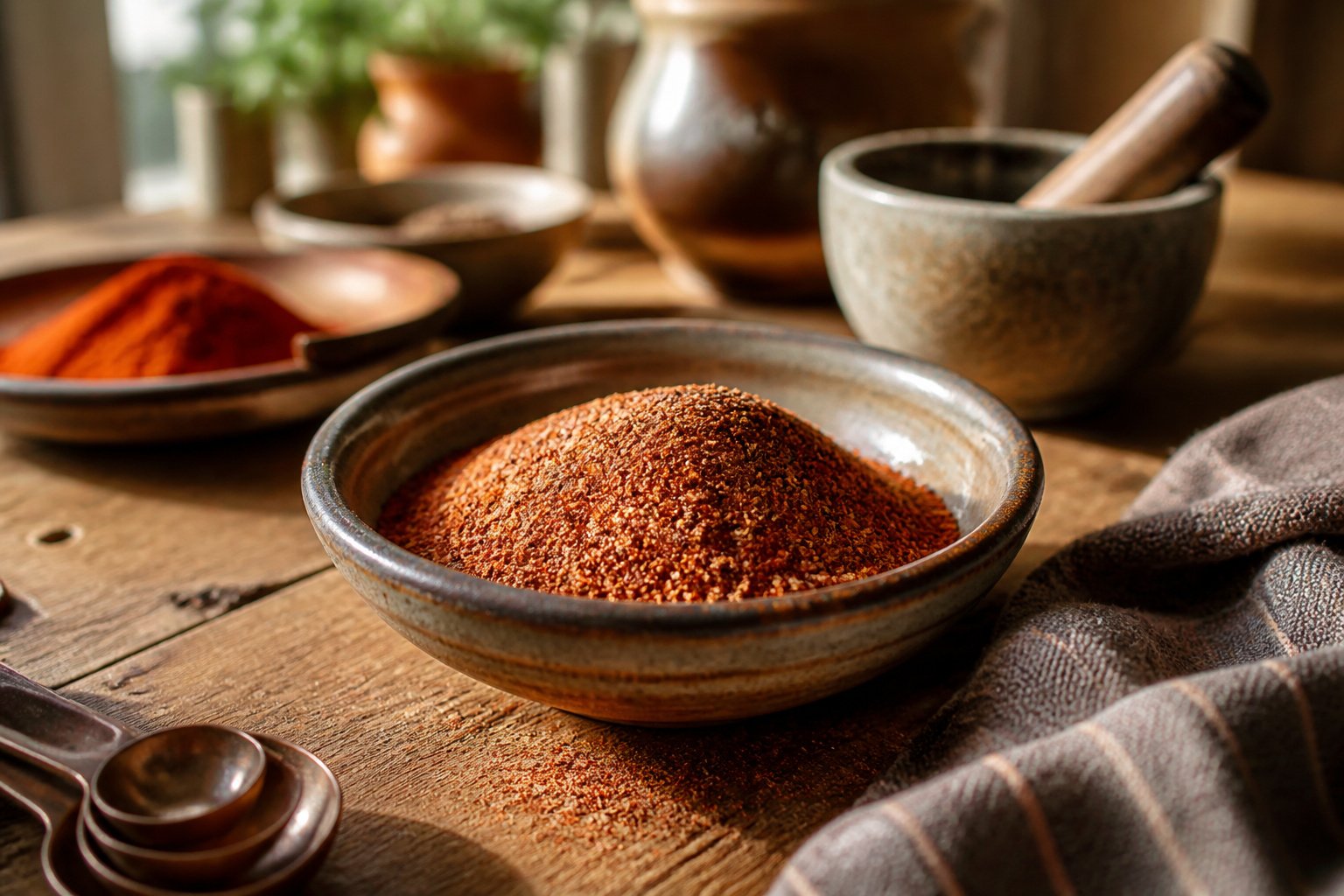
This blend hits with layered heat and a faint, smoky depth that builds instead of burning out.
What sets it apart from the jars at the store is the ratio: five tablespoons of kosher salt, measured against smoked paprika and cayenne that you can scale to taste rather than trust someone else’s idea of spicy.
The whole thing mixes in under five minutes and yields about three-quarters of a cup, enough to crush a normal weeknight rotation.
Ingredients
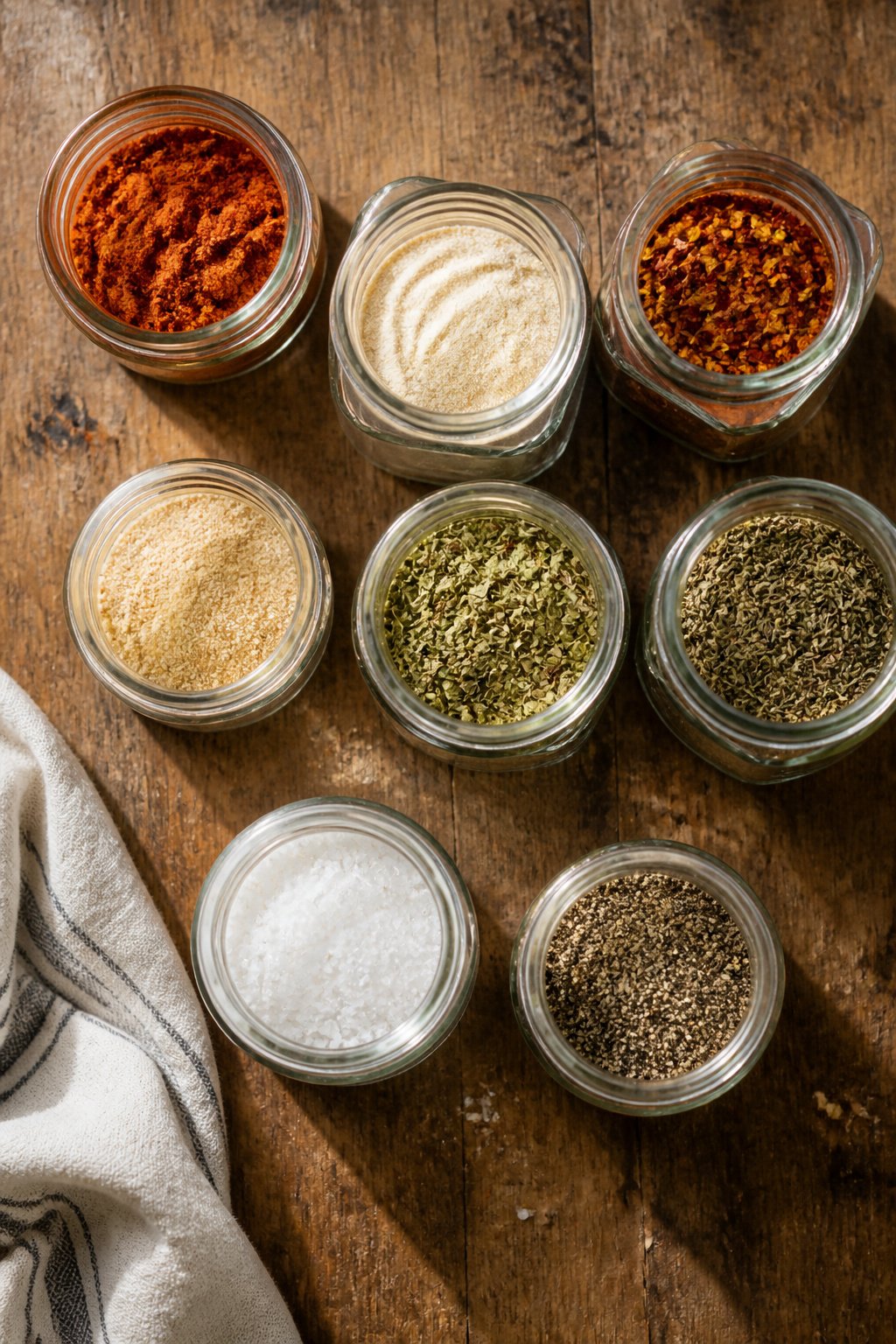
A batch this size needs a full pantry of dried spices, but nothing you won’t find at a standard grocery store.
I keep these in 4-ounce jars from the baking aisle, which keeps the cost reasonable and the turnover fast enough that the oregano still smells like something.
- 3 tablespoons paprika, smoked or regular. Smoked paprika deepens the color to a brick red and adds a faint campfire note that works well on chicken and pork. Regular paprika keeps the blend milder and more versatile for fish or vegetables.
- 2 tablespoons garlic powder
- 1 tablespoon onion powder
- 1 tablespoon cayenne pepper
- 2 tablespoons dried oregano
- 2 tablespoons dried thyme
- 5 tablespoons kosher salt. Table salt packs tighter, so if that’s what you have, scale back to about 4 tablespoons or the blend finishes harsh.
- 1 tablespoon black pepper
Optional, but worth including if you already keep them around: 1 teaspoon mustard powder for a subtle heat that builds slowly, and 1 teaspoon celery salt, which nudges the blend closer to the old Louisiana blends I grew up seeing in my grandmother’s cabinet.
How to Mix It
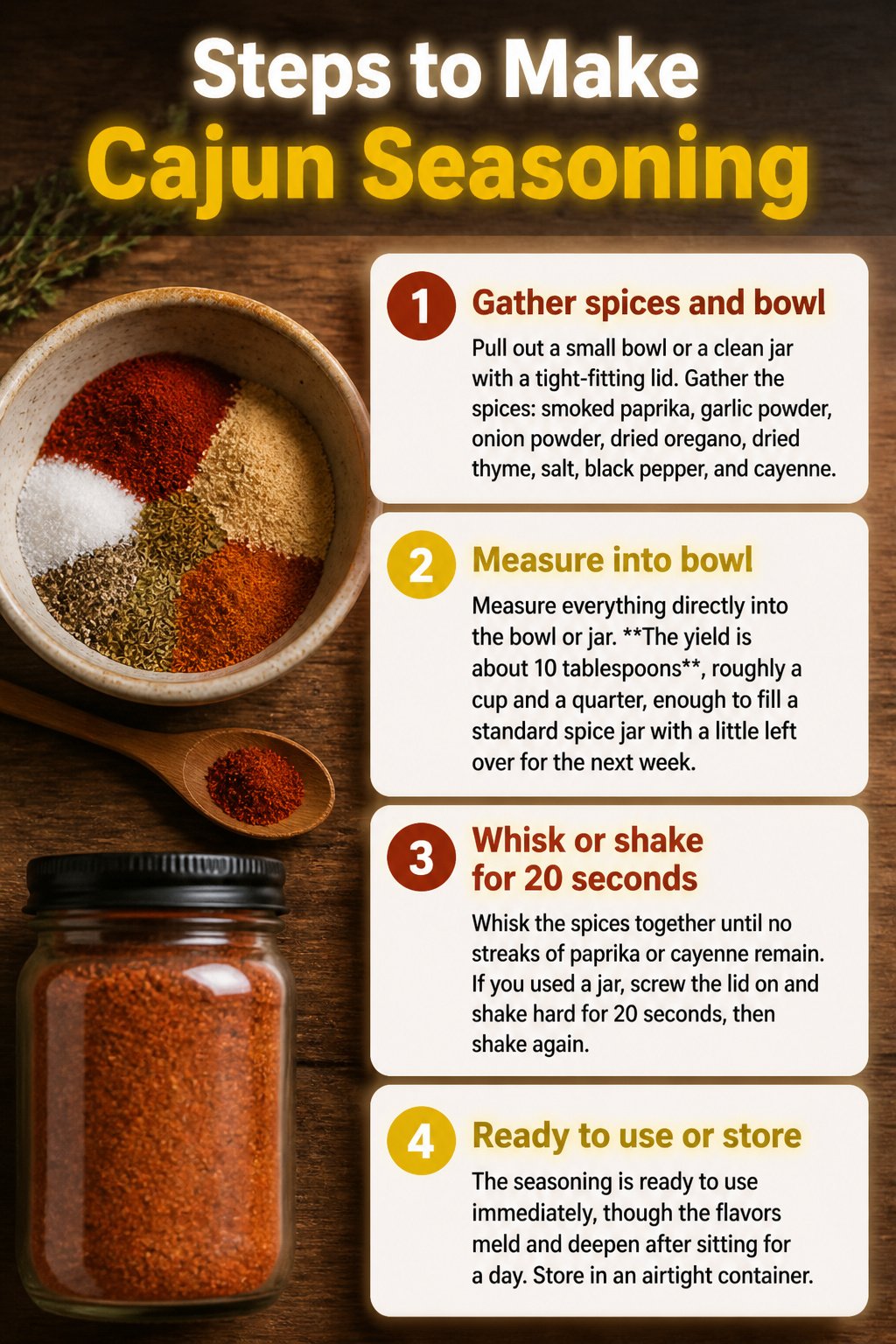
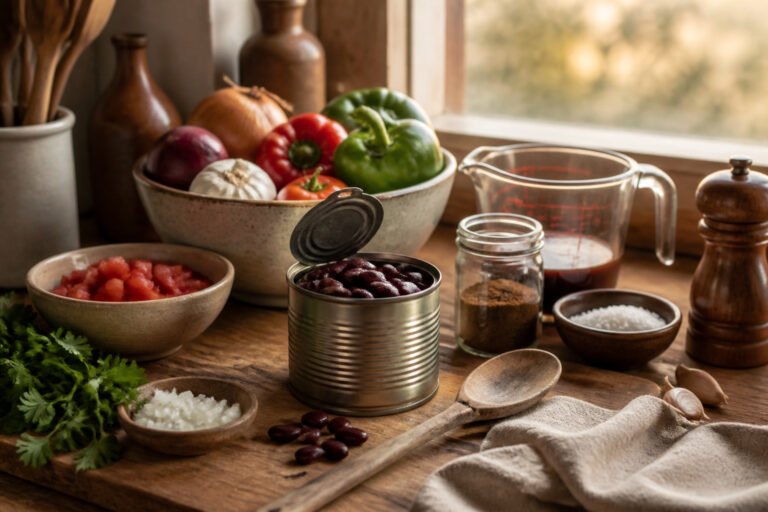
- Pull out a small bowl or a clean jar with a tight-fitting lid. Gather the spices: smoked paprika, garlic powder, onion powder, dried oregano, dried thyme, salt, black pepper, and cayenne.
- Measure everything directly into the bowl or jar. The yield is about 10 tablespoons, roughly a cup and a quarter, enough to fill a standard spice jar with a little left over for the next week.
- Whisk the spices together until no streaks of paprika or cayenne remain. If you used a jar, screw the lid on and shake hard for 20 seconds, then shake again.
- The seasoning is ready to use immediately, though the flavors meld and deepen after sitting for a day. Store in an airtight container.
Yield and Storage
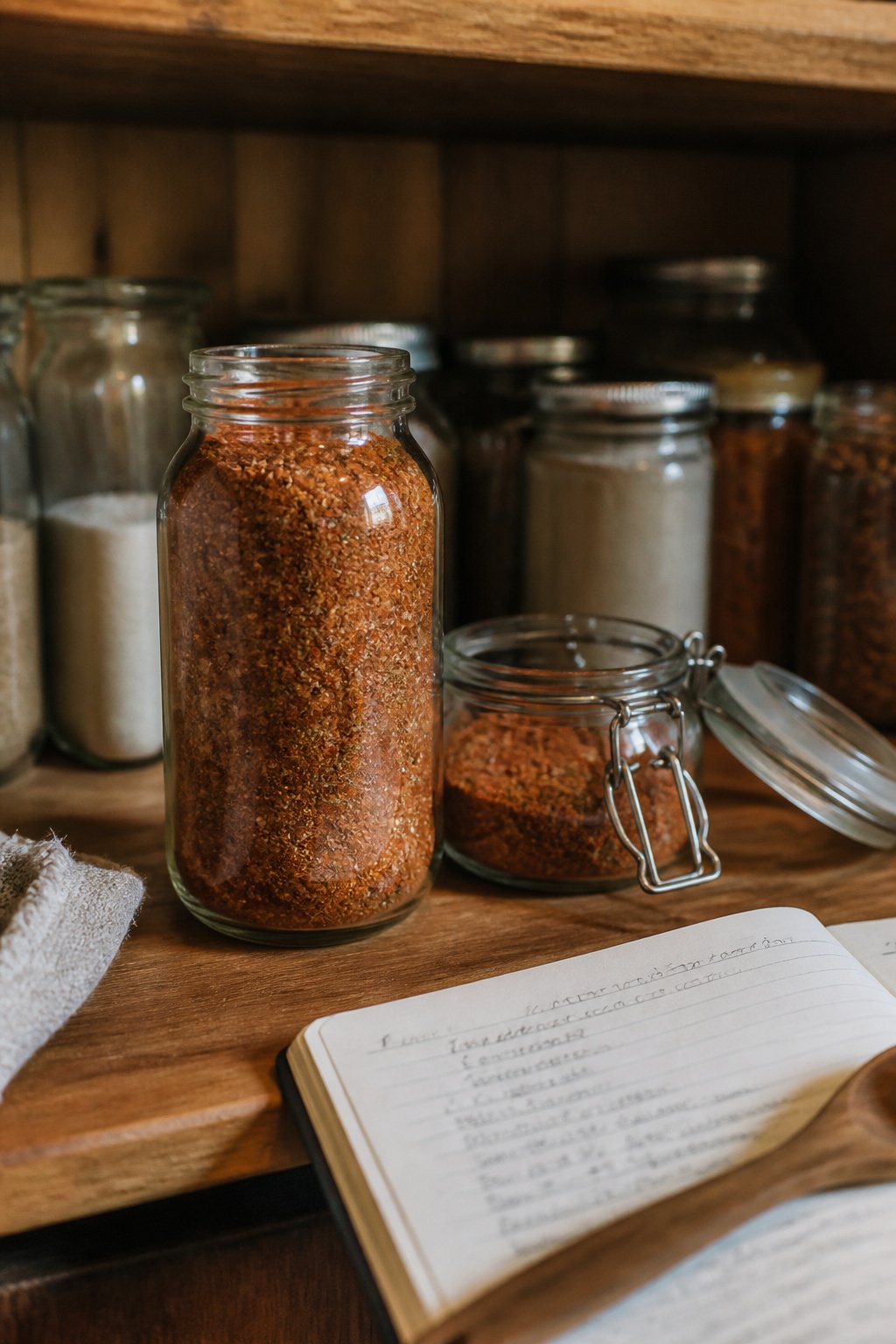
A full batch of this homemade Cajun seasoning recipe yields about 3/4 to 1 cup, enough to fill a standard spice jar with a little left over for the next refill.
I store mine in a small airtight container tucked in the back of the pantry, where it stays cool, dry, and away from the stove’s heat and steam.
The blend keeps for up to 6 months, though potency fades over time rather than turning suddenly bad.
You’ll know it’s time for a fresh batch when the color dulls from that vivid brick-red to something more dusty brown, or when a pinch rubbed between your fingers smells faint instead of hitting you with pepper and paprika upfront.
Ground spices generally hold for 2 to 3 years and dried herbs for 1 to 3 years, so this blend’s shelf life is really capped by whichever of your base spices was already aging on the rack.
Heat Level
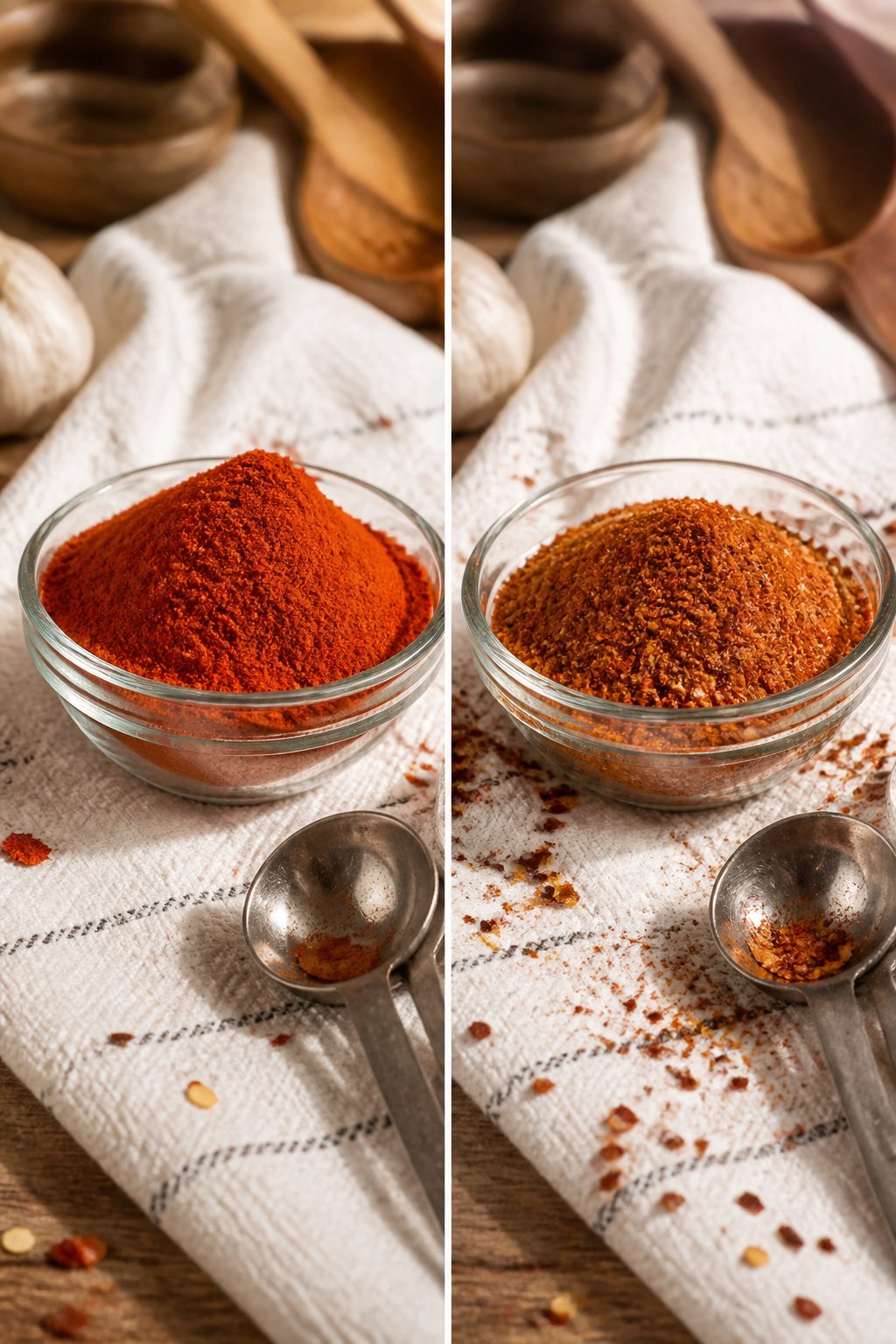
Cayenne pepper is the lever that moves the heat in this blend. The base recipe lands at moderately spicy, enough to wake up a piece of fish without punishing it.
If you want a gentler hand on the table, cut the cayenne back to half a teaspoon and build from there. You can always add more, but you cannot take it out once it is in the jar.
Some cooks reach for red pepper flakes instead of cayenne, or use both. Flakes bring a rougher, less predictable heat; cayenne is more uniform and easier to scale.
Either way, this is the point where personal preference matters most. The paprika, garlic, and herbs will still be there no matter which direction you take the fire.
Cajun vs. Creole Seasoning
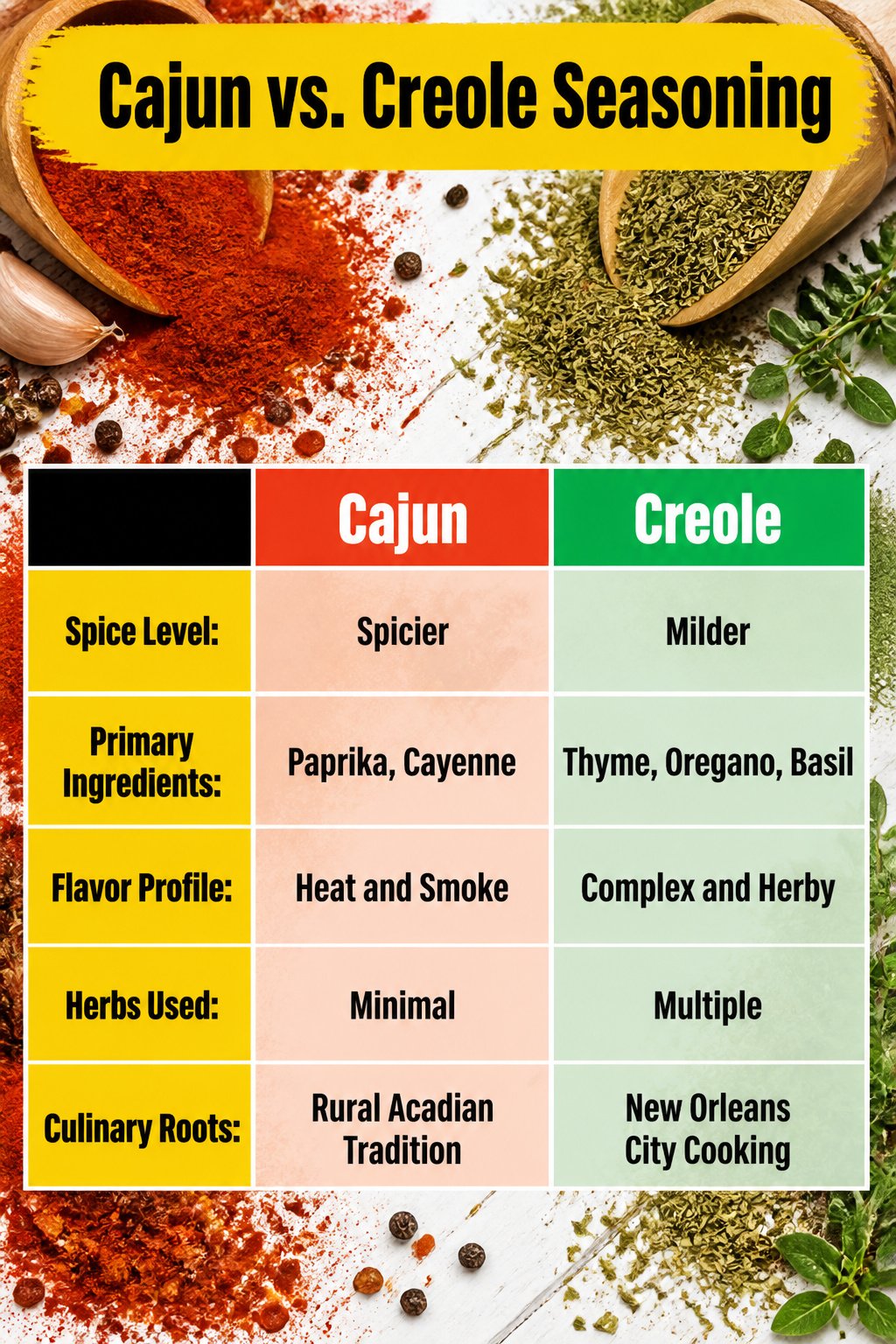
Most recipes labeled "Cajun" are actually Creole in disguise, and the difference matters once you taste them side by side.
Cajun seasoning is the spicier, simpler one: paprika, cayenne, garlic powder, sometimes onion powder, built around heat and smoke rather than garden herbs.
Creole seasoning, by contrast, is milder and more complex, with thyme, oregano, basil, bay leaf, sometimes celery salt or mustard powder, reflecting city cooking in New Orleans rather than the rural Acadian tradition.
This recipe stays Cajun in the stricter sense. No basil, no rosemary, no dried tomato, no bay leaf.
Creole seasoning usually drifts toward a rounded, herby blend that appeals to more palates, but that is not what you want if you typed "homemade cajun seasoning recipe." The cayenne-forward heat and paprika depth are the point.
What to Use It On
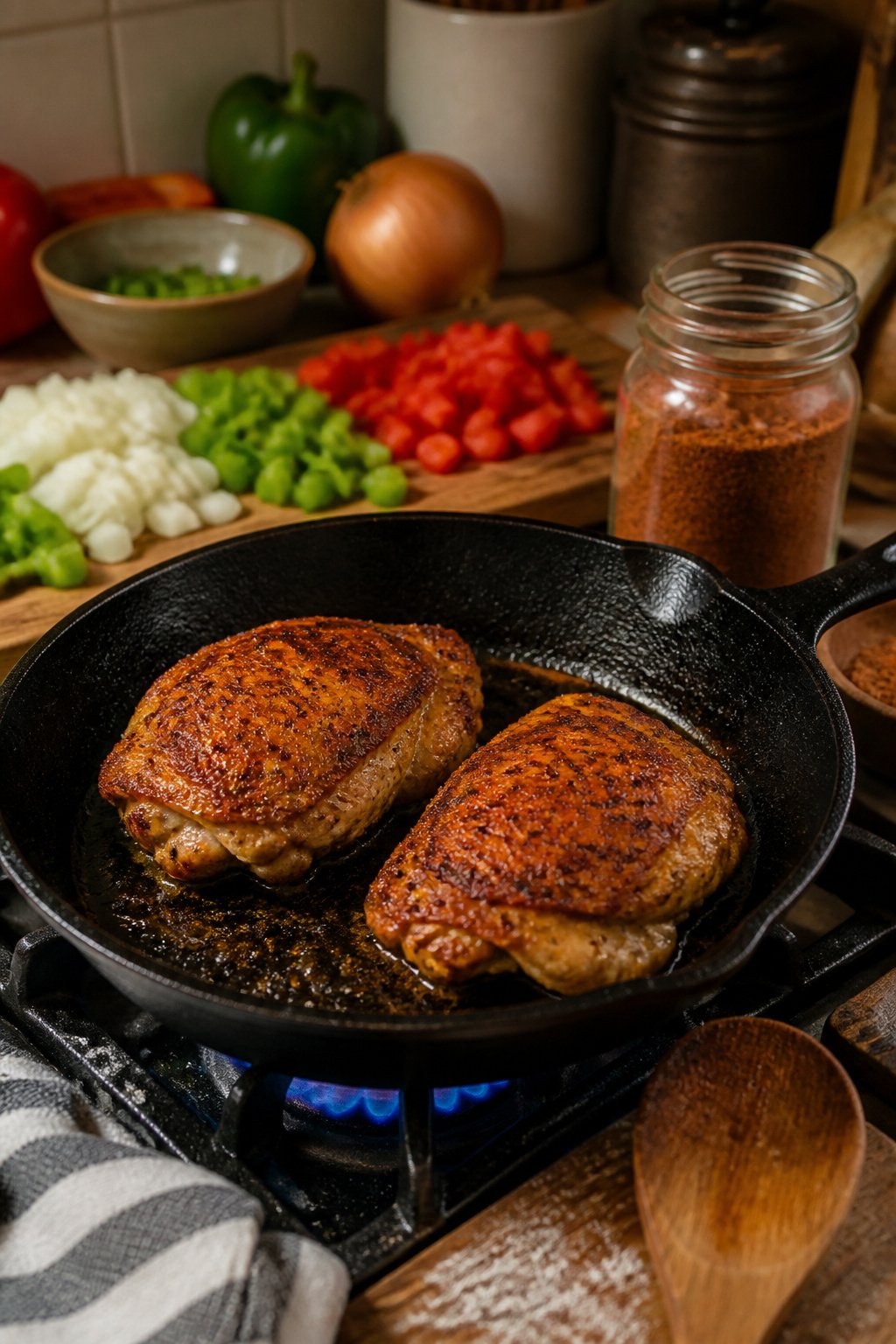
A jar of this blend sits on my counter because it gets pulled out four, sometimes five nights a week.
Two teaspoons rubbed into chicken thighs before roasting gives the skin a dark, peppery crust that my kids actually fight over.
The same amount works on salmon fillets or shrimp, and I have stirred it into oil as a quick marinade for pork chops when I forgot to plan ahead.
Vegetables take it just as readily. Roasted potatoes are the obvious move, but a dusting over Brussels sprouts or green beans before they hit the pan adds enough heat that I skip the hot sauce at the table.
Last Tuesday I tossed it with bell peppers and onions for a sheet-pan dinner, and the whole thing disappeared.
The blend also disappears into dips and sauces. A spoonful stirred into hummus or queso buys you something that tastes intentional instead of desperate.
I keep meaning to try it in jambalaya or gumbo, but weeknights rarely stretch that far.
When they do, the seasoning goes in at the same point I would add any spice mix: early enough to bloom in fat, late enough that the garlic and paprika do not scorch.
Salt-Free Variation
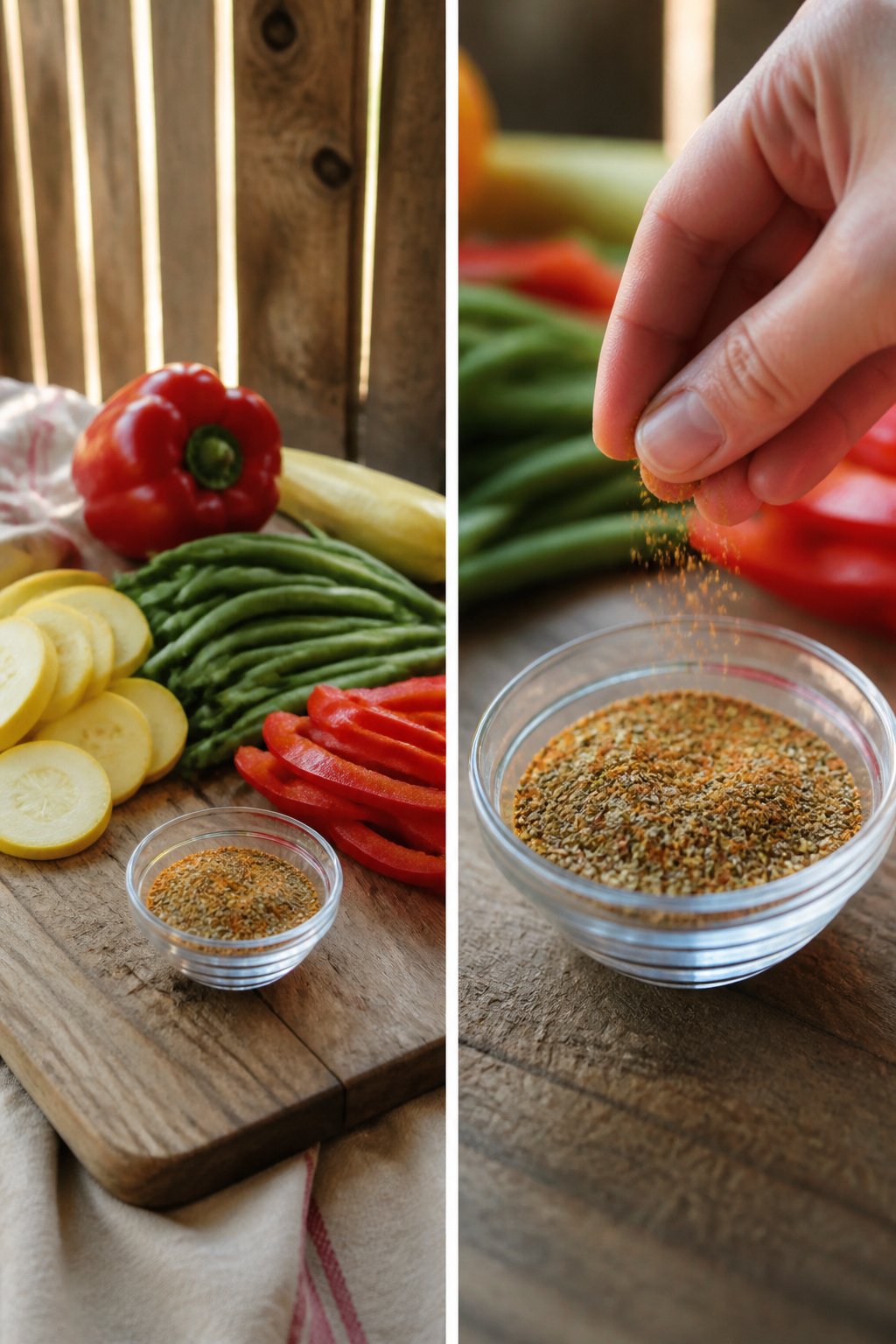
A salt-free Cajun seasoning works if sodium is the concern, though the trade is real. Omit the 5 tablespoons of kosher salt and the blend still carries the paprika, garlic, onion, pepper, cayenne, oregano, and thyme.
Salt has to land at the stove instead, added by feel as the food cooks, because the spices alone read flat against meat or vegetables without it.
The yield drops too. A full batch with salt makes about ¾ cup or roughly 10 tablespoons; pull the salt out and you are left with closer to 4 tablespoons of actual seasoning.
That is fine for a single meal or two, but if you are mixing a jar to keep on the shelf, you are doing more frequent prep.
I would rather make the standard batch and salt at the end, controlling it per plate rather than per teaspoon of blend.
For someone on a strict restriction, though, the salt-free base is the safer move; just label the jar so you remember nothing in there is doing the salting for you.
Frequently Asked Questions
What spices are in Cajun seasoning?
u003cpu003ePaprika, garlic powder, onion powder, cayenne pepper, dried oregano, dried thyme, kosher salt, and black pepper form the base. Mustard powder and celery salt are optional additions that nudge the blend closer to old Louisiana styles.u003c/pu003e
Is Cajun seasoning very spicy?
u003cpu003eIt is moderately spicy as written, with cayenne pepper doing the work. You can cut the cayenne to half a teaspoon for a gentler blend, or add more if you want real heat.u003c/pu003e u003cpu003eThe paprika, garlic, and herbs stay constant either way.u003c/pu003e
How long does homemade Cajun seasoning last?
u003cpu003eUp to 6 months in an airtight container kept cool, dry, and away from stove heat. Potency fades gradually; replace the batch when the color dulls from brick red to dusty brown or a pinch between your fingers smells faint.u003c/pu003e
What is a creative secret ingredient for Cajun seasoning?
u003cpu003eCelery salt and mustard powder, if you already keep them around. Celery salt pushes the blend toward the old Louisiana mixes found in grandmother’s cabinets, while mustard powder adds a slow-building subtle heat.u003c/pu003e
What else can I use if I don’t have Cajun seasoning?
u003cpu003eA simple mix of paprika, cayenne, garlic powder, and black pepper gets you most of the way there. Add dried thyme and oregano if you have them.u003c/pu003e u003cpu003eCreole seasoning works in a pinch but runs milder and more herby.u003c/pu003e
How do you make Cajun seasoning from scratch?
u003cpu003eMeasure paprika, garlic powder, onion powder, cayenne, oregano, thyme, salt, and pepper into a bowl or jar. Whisk or shake until no streaks of paprika or cayenne remain.u003c/pu003e u003cpu003eThe blend is ready immediately but deepens after a day of sitting.u003c/pu003e
About The Author