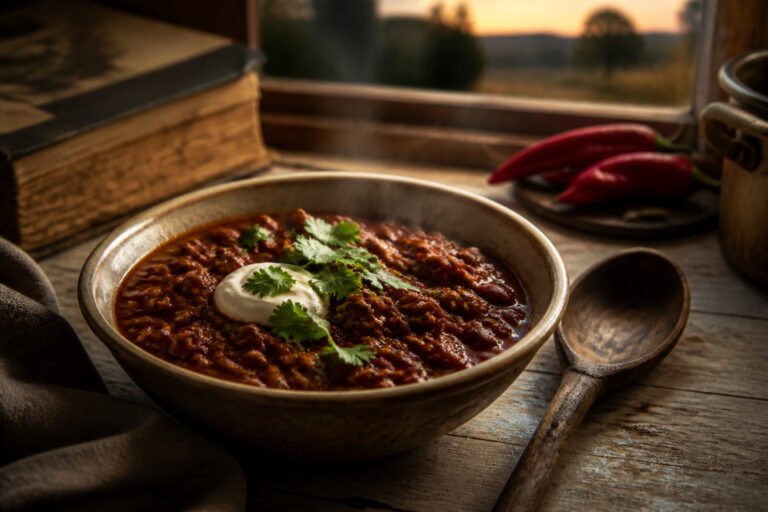
Sausage gravy tastes like black pepper and rendered pork fat turned into something you can spoon.
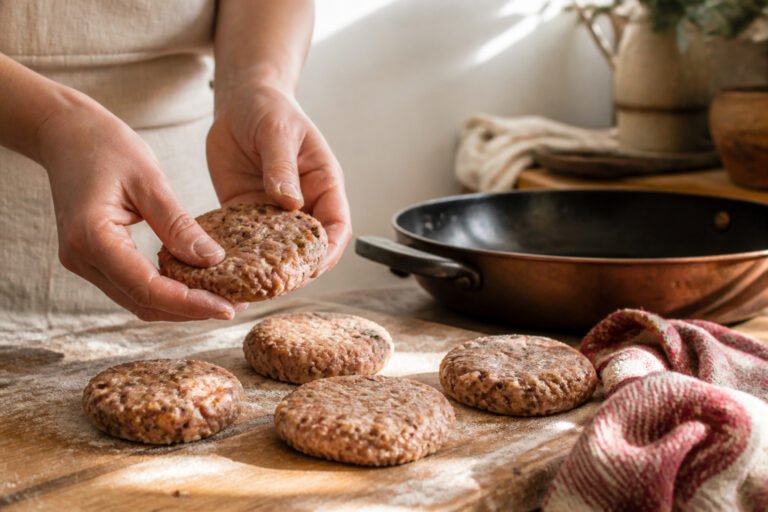
What sets this version apart is the browning: the meat sits undisturbed for three to four minutes first, so it crusts instead of steaming in its own juices. That one change builds the mahogany fond the whole gravy hangs on.
Twenty-five to fifty minutes from raw sausage to finished plates, depending on how slowly you work the roux.
Sausage Gravy
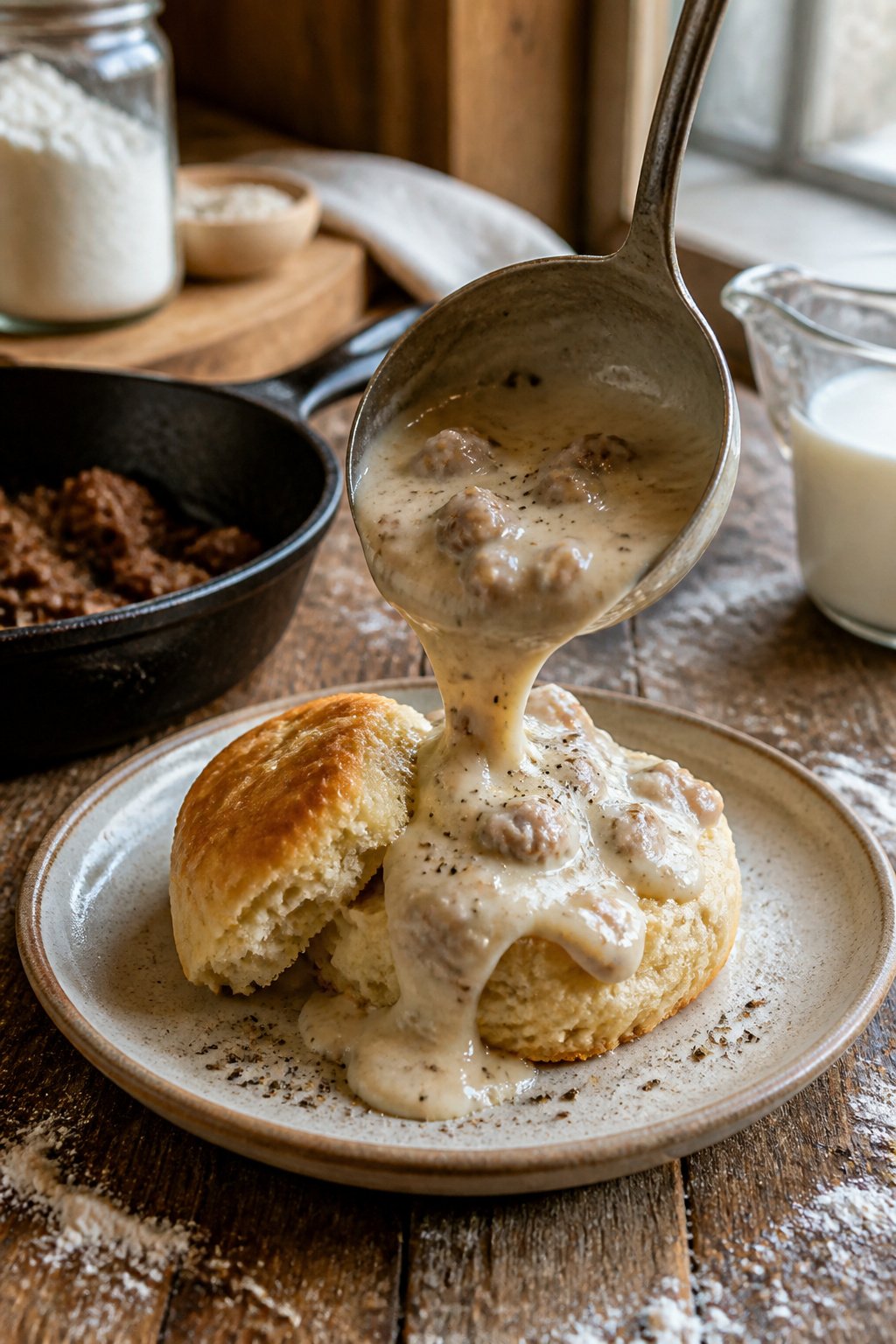
Sausage gravy is a creamy white sauce built from crumbled breakfast sausage, flour, and milk, ladled hot over split biscuits.
The dish carries a few names depending on where you eat it: country gravy, sawmill gravy, or simply white gravy, all pointing to the same 1800s Southern roots of stretching fat, grain, and milk into something hearty enough to feed a table.
I make this when the refrigerator holds nothing special and dinner still needs to happen. Breakfast sausage, butter, flour, and milk are the full list, which means no grocery run and no specialty equipment beyond a skillet.
The whole thing takes 25 to 50 minutes from pulling the sausage to spooning it up: roughly 10–20 minutes of prep and 15–30 minutes at the stove, depending on how slowly you build the roux and how thick you want the final gravy.
What to expect is a rich, pepper-flecked sauce that clings to biscuits rather than pooling underneath. The proportions matter more than the ingredient count.
Too little fat and the flour turns pasty; too much milk too fast and the gravy never reaches that spoon-coating consistency that makes the dish worth making.
Get the balance right, though, and it feeds everyone without complaint, breakfast or dinner, with one pan to wash after.
Ingredients
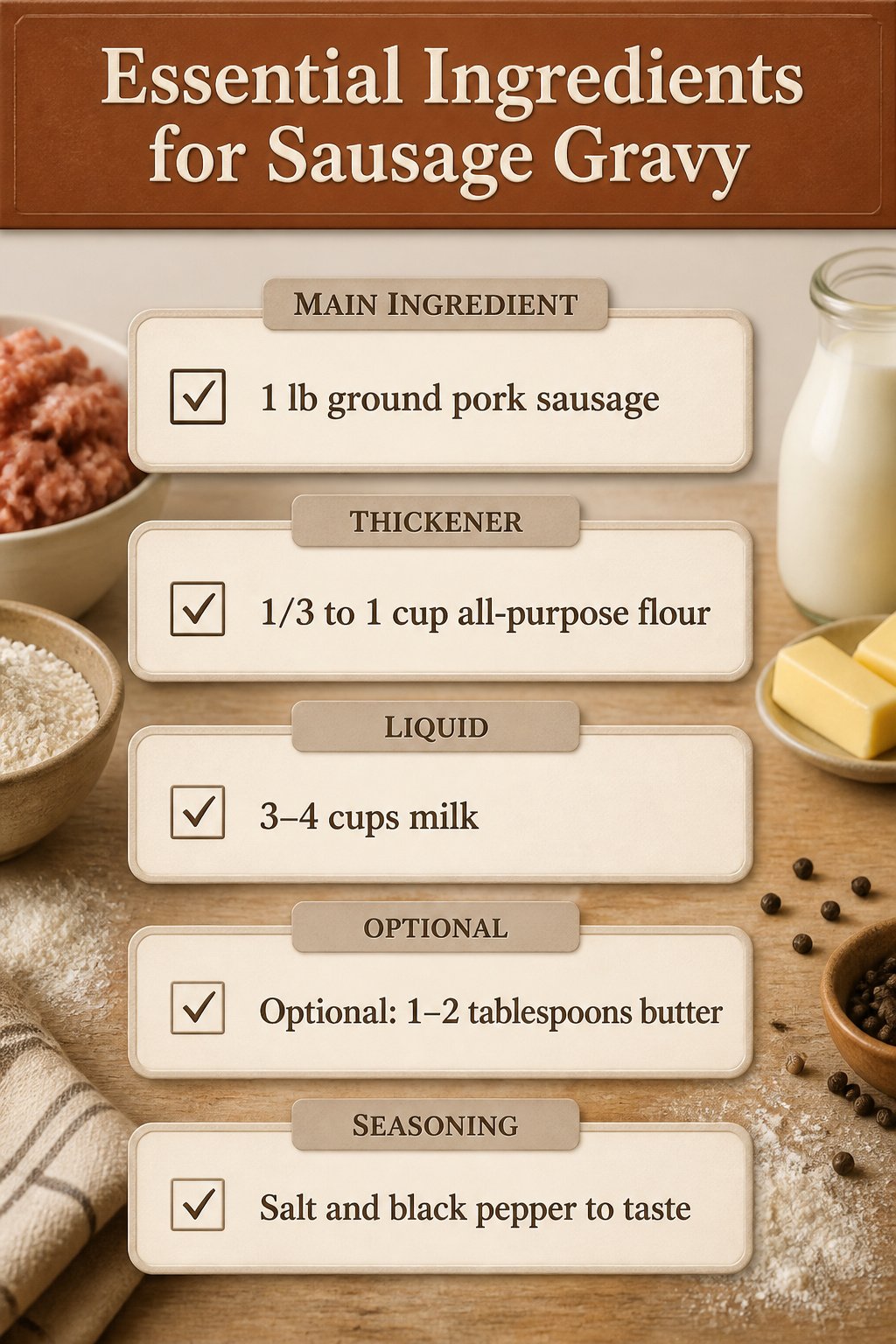
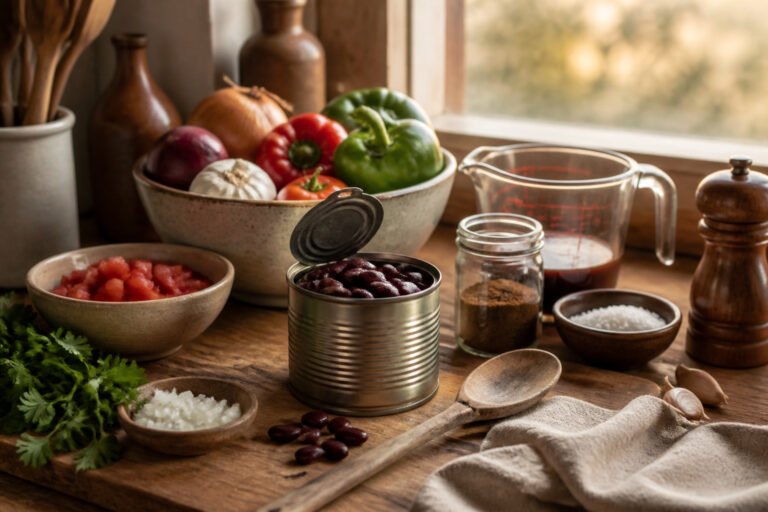
The ingredient list for sausage gravy is short, which is part of why weeknight cooks keep it in rotation.
1 lb ground pork sausage forms the base; use seasoned breakfast sausage or plain ground pork with your own pinch of sage and black pepper.
Once the meat is browned, you’ll need 1/3 to 1 cup all-purpose flour depending on how much fat renders out. You want roughly equal parts fat and flour, so start with less and add until the grease is absorbed.
For the liquid, 3–4 cups milk gives you control over thickness. Whole milk produces the creamiest gravy, though low-fat works if that’s what the refrigerator holds.
In a pinch, evaporated milk cut with water has carried this recipe when the regular gallon ran empty.
- 1 lb ground pork sausage
- 1/3 to 1 cup all-purpose flour
- 3–4 cups milk
- Optional: 1–2 tablespoons butter for extra richness
- Salt and black pepper to taste
A pat of butter stirred in at the end adds silkiness without demanding a separate trip to the store. Salt and pepper come last; taste before serving, since sausage varies widely in saltiness.
Method
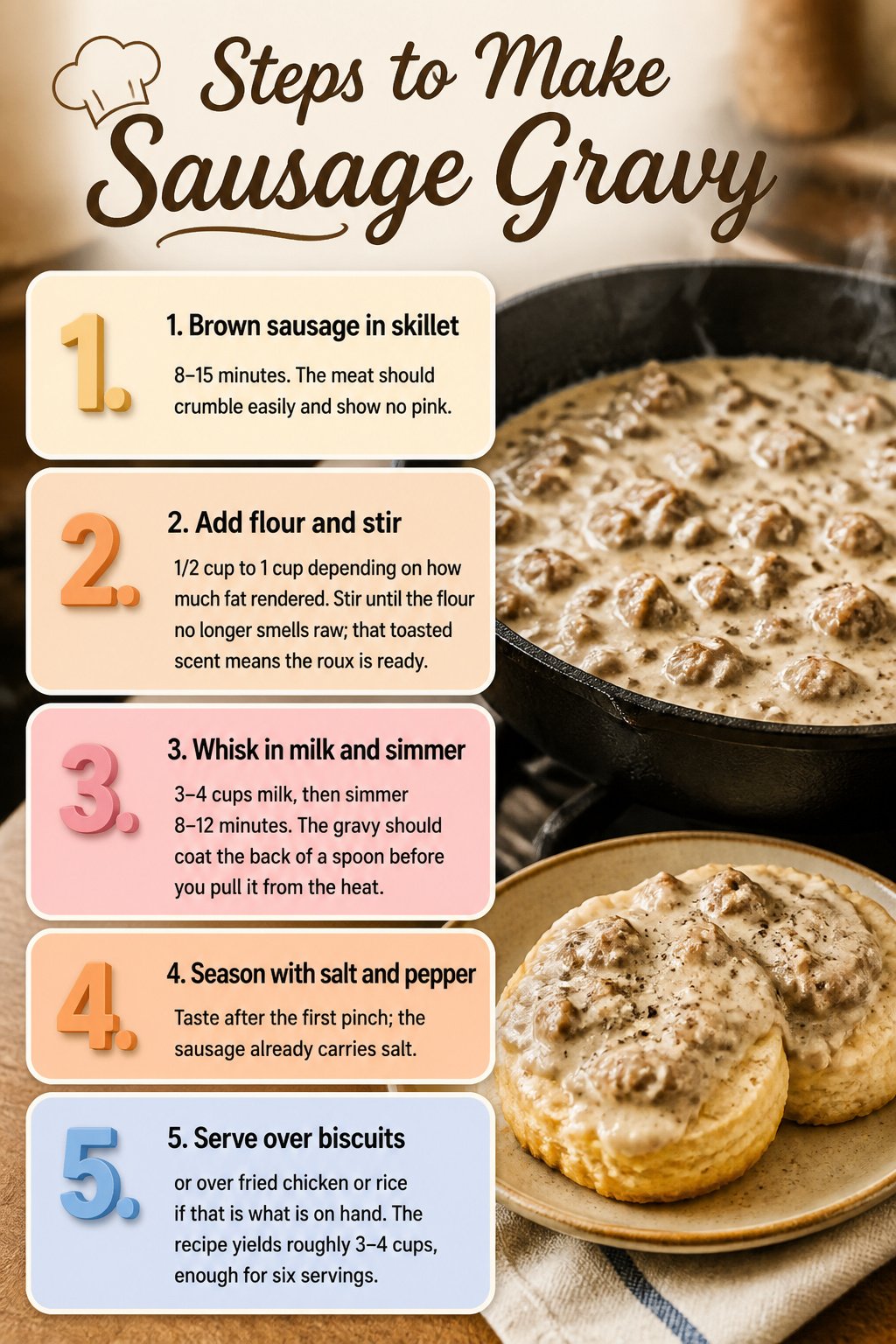
- Brown 1 lb sausage in a skillet over medium-high heat until cooked through, 8–15 minutes. The meat should crumble easily and show no pink.
- Add flour to coat the sausage, using 1/2 cup to 1 cup depending on how much fat rendered. Stir until the flour no longer smells raw; that toasted scent means the roux is ready.
- Gradually whisk in 3–4 cups milk, then simmer 8–12 minutes. The gravy should coat the back of a spoon before you pull it from the heat.
- Season with salt and pepper. Taste after the first pinch; the sausage already carries salt.
- Serve over biscuits, or over fried chicken or rice if that is what is on hand. The recipe yields roughly 3–4 cups, enough for six servings.
Browning the Sausage
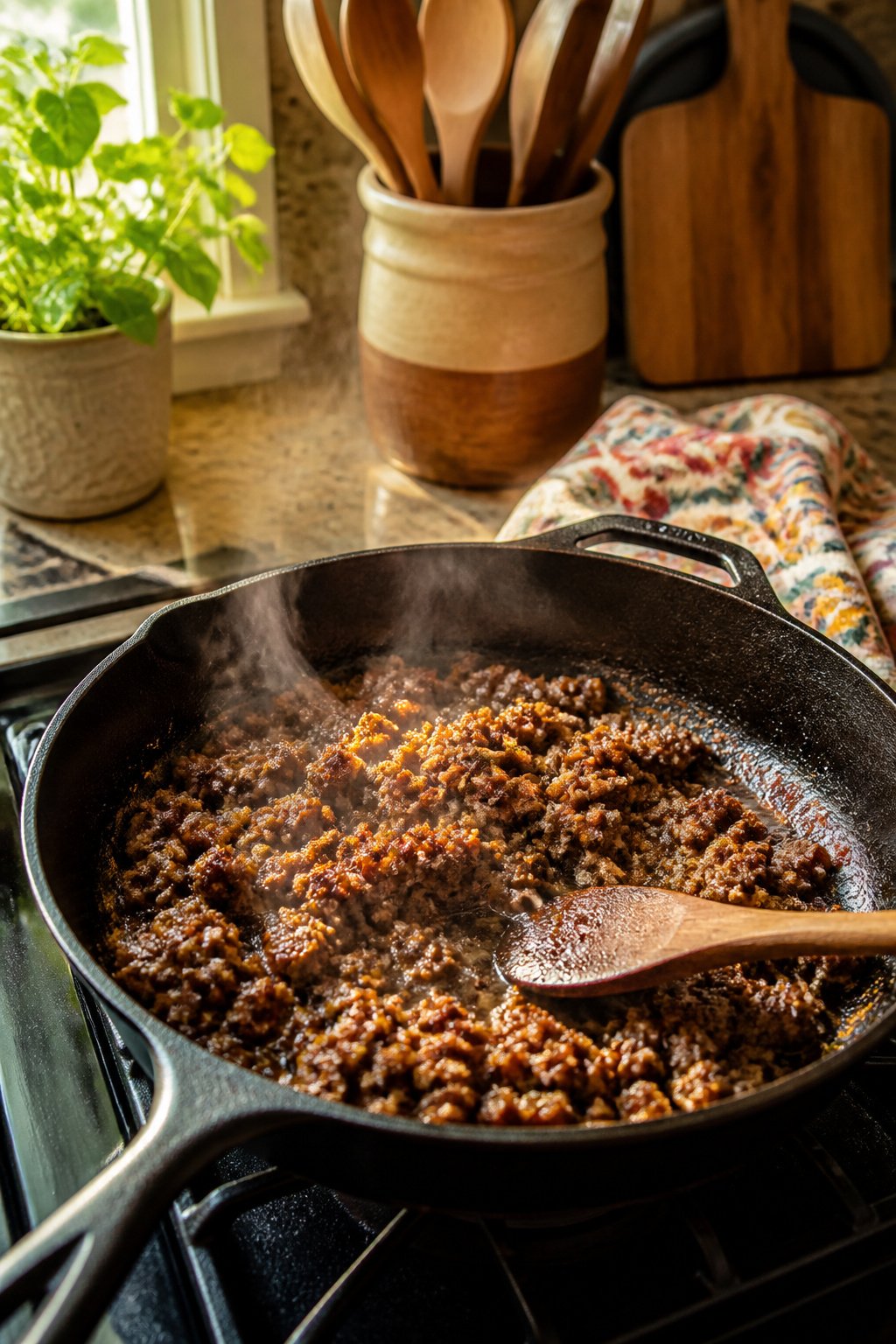
Browning the sausage is where the whole gravy gets its backbone. Pale, gray meat gives you a pale, thin sauce; deep brown bits stuck to the pan are the foundation you build on.
The color you want is mahogany at the edges, with a fond so dark it almost looks burnt but smells like toasted nuts and pork fat.
I used to break the meat apart the second it hit the skillet, stirring and chopping with the back of my spoon like I was in a rush to get dinner on the table.
The sausage released its water all at once, and instead of searing it steamed in its own juices, half-cooked and crumbly.
Now I spread the meat in an even layer and leave it alone for the first three to four minutes.
The timing shifts based on how much sausage you crowd in and how wet the grind is; eight minutes in a wide cast-iron skillet, closer to fifteen if the meat is packed tight or pumped with added water.
The crust forms where the meat meets the metal. That is when I flip and break it, not before.
Ingredient Variations
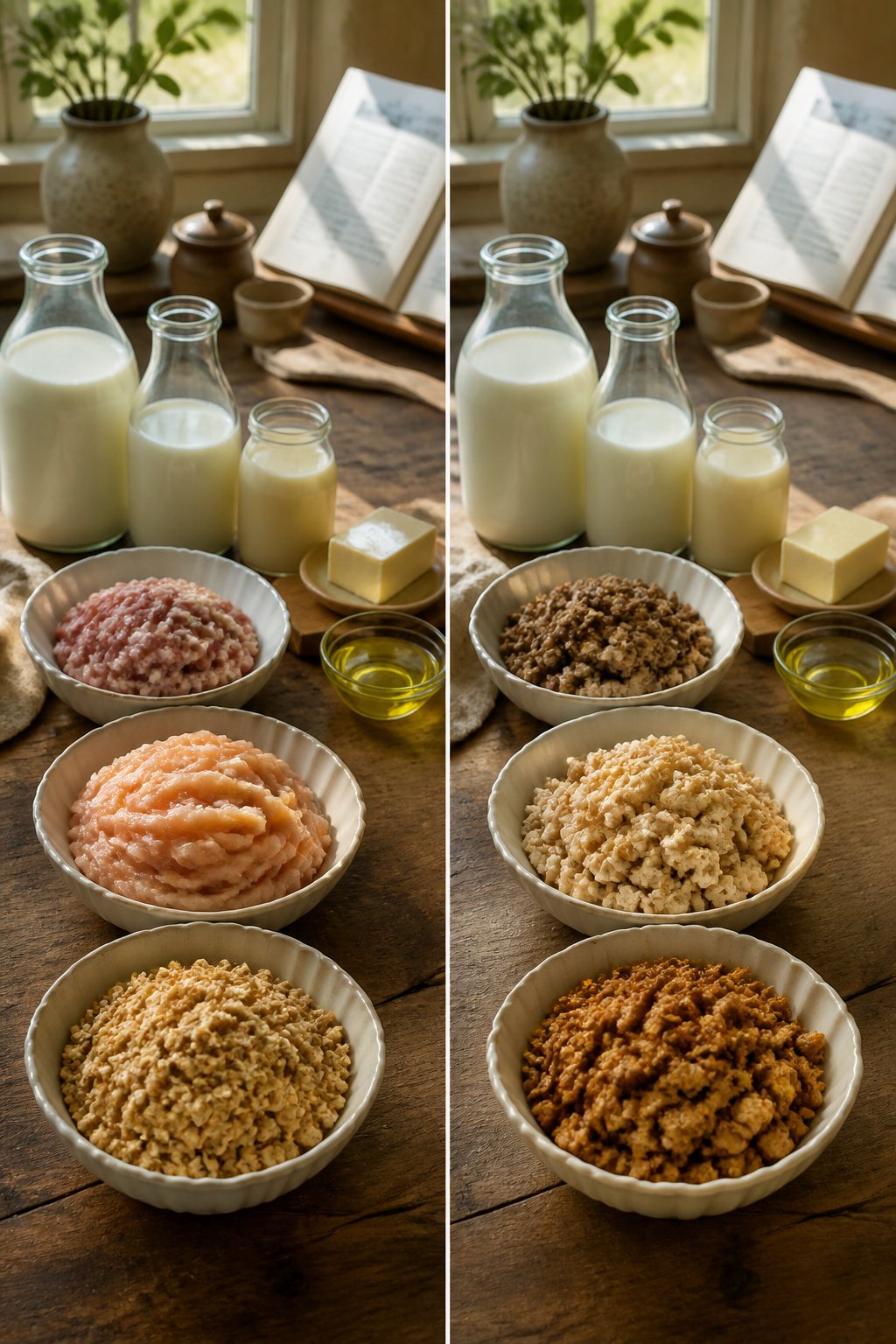
Pork sausage is the standard, and it carries enough fat to build a roux without help. Turkey sausage is leaner, and the first batch I tried came out thin and pale even after the full cup of flour.
A tablespoon of butter fixed it, though the gravy never quite matched the silkiness of pork. Vegetarian crumbles work if you add oil first, but they brown differently and can turn gummy if you crowd the pan.
Whole milk gives the richest result. Low-fat works if you simmer it down a little longer.
Canned milk mixed with water was a trick I picked up for camping, and it holds up better than you’d expect, though the flavor is flatter. Rice milk separated on me once, and I haven’t risked it since.
For turkey sausage, plan on extra fat or accept a thinner gravy.
Serving Suggestions
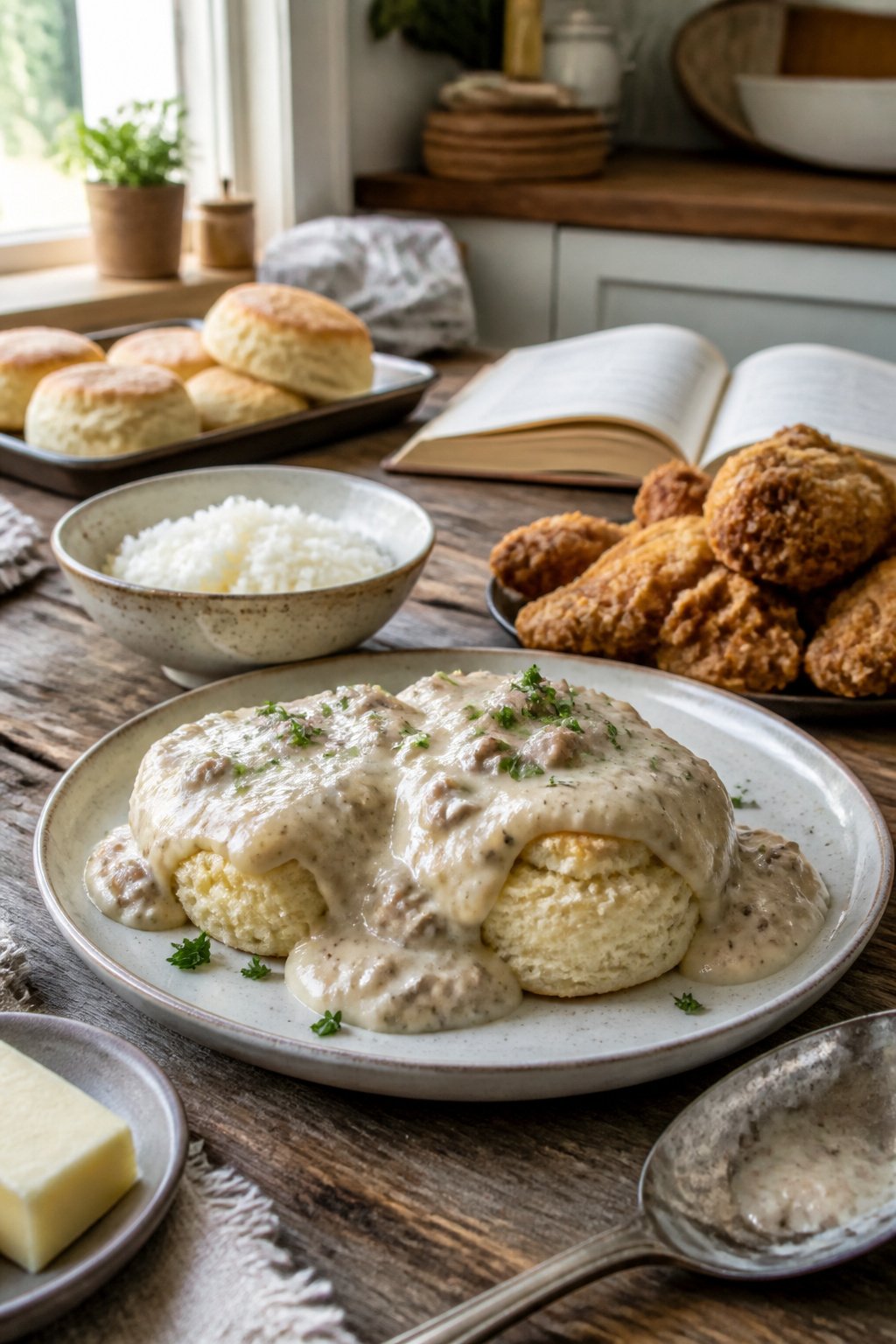
Biscuits are the standard move and what I put this gravy on ninety percent of the time. A warm split biscuit with the gravy pooling into the layers is hard to improve on.
When I have run out, toasted sandwich bread works in a pinch, though it goes soft faster than a proper biscuit.
Fried chicken is the classic pairing if you are building a plate rather than a bowl.
Rice holds the gravy well and turns this into something closer to a local Hawaiian plate lunch, which fits the way I grew up eating.
I have spooned leftovers over roasted potatoes when I needed to stretch a batch for more people, and the crispy edges catch the gravy nicely.
A potluck neighbor brings a casserole where canned biscuits and gravy bake together in one dish. I have not tried making it myself, but the concept is sound if you need to feed a crowd without standing at the stove.
Storage and Reheating
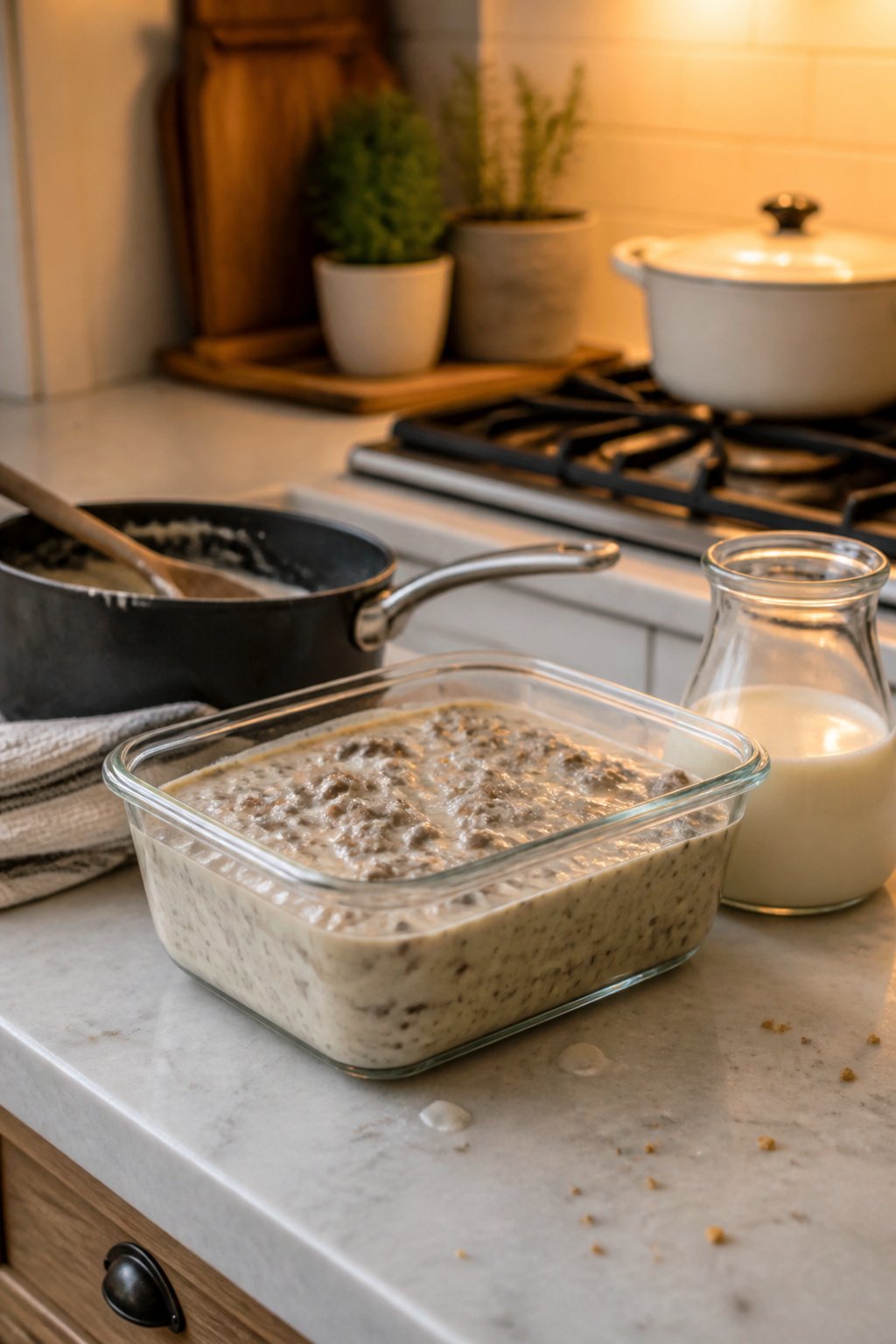
Leftover gravy keeps in the refrigerator for up to three days, though it thickens as it sits. A splash of milk while reheating over low heat brings it back to a pourable consistency.
Freezing works in a pinch, but the texture breaks slightly; stirring in a little fresh milk after thawing helps smooth it out again. Do not microwave on high.
The milk proteins seize, and the whole batch turns grainy. I learned that the hard way.
Frequently Asked Questions
How do you make sausage gravy?
u003cpu003eBrown 1 lb of sausage in a skillet until fully cooked and deeply colored, then stir in flour until the fat is absorbed and the raw flour smell is gone.u003c/pu003e u003cpu003eGradually whisk in 3–4 cups of milk and simmer 8–12 minutes until the gravy coats the back of a spoon. Season with salt and pepper at the end.u003c/pu003e
What can I serve sausage gravy with?
u003cpu003eBiscuits are the standard pairing and what most cooks reach for.u003c/pu003e u003cpu003eThe gravy also works over fried chicken, rice, toast, dumplings, mashed potatoes, hashbrowns, eggs, chicken fried steak, french fries, or roasted potatoes if that is what you have on hand.u003c/pu003e
Can I use canned sausage gravy?
u003cpu003eYes, canned sausage gravy works for quicker preparation. Some cooks use it as the base for a casserole with canned biscuits baked together in one dish to feed a crowd without standing at the stove.u003c/pu003e
What are common mistakes in sausage gravy?
u003cpu003eAdding milk too fast prevents the gravy from thickening properly, and too little fat makes the flour turn pasty. Breaking the sausage apart immediately instead of letting it sear leads to steamed, gray meat rather than browned flavor.u003c/pu003e u003cpu003eMicrowaving leftovers on high seizes the milk proteins and turns the gravy grainy.u003c/pu003e
What can I put in my sausage gravy to make it taste better?
u003cpu003eA pat of butter stirred in at the end adds silkiness. Deeply browning the sausage until mahogany fond forms on the pan gives the gravy its backbone.u003c/pu003e u003cpu003eSeparating the sausage into very fine clumps before or during cooking ensures every bite carries meat and flavor.u003c/pu003e
What is the recommended ratio of flour to milk for making sausage gravy?
u003cpu003eThe ratio is roughly equal parts fat and flour by volume, then 3–4 cups of milk for 1 lb of sausage. More flour thickens the gravy; more milk thins it.u003c/pu003e u003cpu003eStart with less flour and add until the rendered fat is fully absorbed, then adjust milk to reach your preferred consistency.u003c/pu003e
About The Author